The interview runs for 40 minutes. This feature condenses it. Four themes carry the piece: early action design, controlled risk, camera craft and team trust.
Camera choices can reduce repeated physical exposure. That is Fischer’s argument. Stunt work begins before the take.
The original interview is in German. The upload is on SlamArtist. It includes English subtitles and full transcripts.
Ferdi Fischer works across action direction, stunt coordination, physical performance and specialised camera operation. In his SWR1 Leute conversation with presenter Jens Wolters, those roles meet in one question: what has to happen before screen action can look effortless?
This condensed feature follows four ideas from the broadcast—early design, controlled risk, camera craft and the trust shared by the people behind the frame.
The stunt begins before the take
The conversation quickly moves beyond the familiar image of a stunt performer arriving on set simply to take the hit. Fischer’s central correction is that modern stunt work starts much earlier. The job has moved toward action and stunt design: planning physical performance around the actor, the camera, the story and the practical limits of the production.
Wire work can keep actors visible during simulated falls. When a specialist carries the physical performance, digital face replacement can preserve the actor’s onscreen identity. The technology has changed, but the objective has not: the audience should believe the danger without seeing the controls behind it.
Fischer contrasts that process with his childhood on BMX bikes and skateboards. Those years often looked less dramatic, he says, but were far less controlled. Professional action can look more dangerous precisely because it is planned, prepared, trained and secured.
SWR1 Leute / 40:16
Watch the full SWR1 Leute conversation
The interview is in German; the SlamArtist upload includes English subtitles. YouTube loads only after you choose to play it.
From fear to respect
Fischer does not describe fear as something to erase. Before a stunt, it can expose a weak assumption or stop the wrong decision. The work is to convert that response into respect through preparation, repetition and an honest reading of the situation.
Once the action begins, the framework should already be settled. The performer has to concentrate on the part they can control while trusting the checks, rigging and people around them. That distinction—question everything beforehand, then commit to the agreed plan—runs through the conversation.
He is equally direct about injuries: they are not medals. When somebody is hurt, something has gone wrong. The professional ideal is not fearlessness; it is calculated risk, assessed before the action begins.
When the camera becomes part of safety
WarpCam® grew out of a practical frustration: physically demanding stunts were sometimes missed or captured badly by equipment that could not move with the action. Fischer recalls having to jump into a grave 24 times because the action was not captured properly—an extreme example he says should never be normal.
The response was a smaller, lighter and stabilised camera system built for proximity and speed. On Fast & Furious 10, Fischer says his team had its own unit on set, allowing it to move freely and combine action experience with the camera system to capture perspectives other cameras could not.
The editorial point is larger than the device. A better camera can reduce repetition, and every avoided repeat removes another exposure to physical risk. Capturing the action clearly is therefore part of the stunt design, not coverage added after it. That relationship is examined at production scale in our tactical authenticity report and stunt-rigging field guide.
The fewer takes we do, the lower the risk of getting injured.— Ferdi Fischer — SWR1 Leute; English transcript published by SlamArtist.com · Source ↗
No one works alone
The interview repeatedly returns to dependence. Stunt performers carry mats, help with rigging, spot one another near edges and hand their safety to colleagues whose work may never appear in frame. That creates a closeness Fischer describes as different from most other departments on set.
The same principle applies to WarpCam®. It is not a one-person device: one operator moves the camera physically, a second controls framing remotely and a focus puller keeps the image sharp. The final shot belongs to a coordinated unit, not a single piece of equipment.
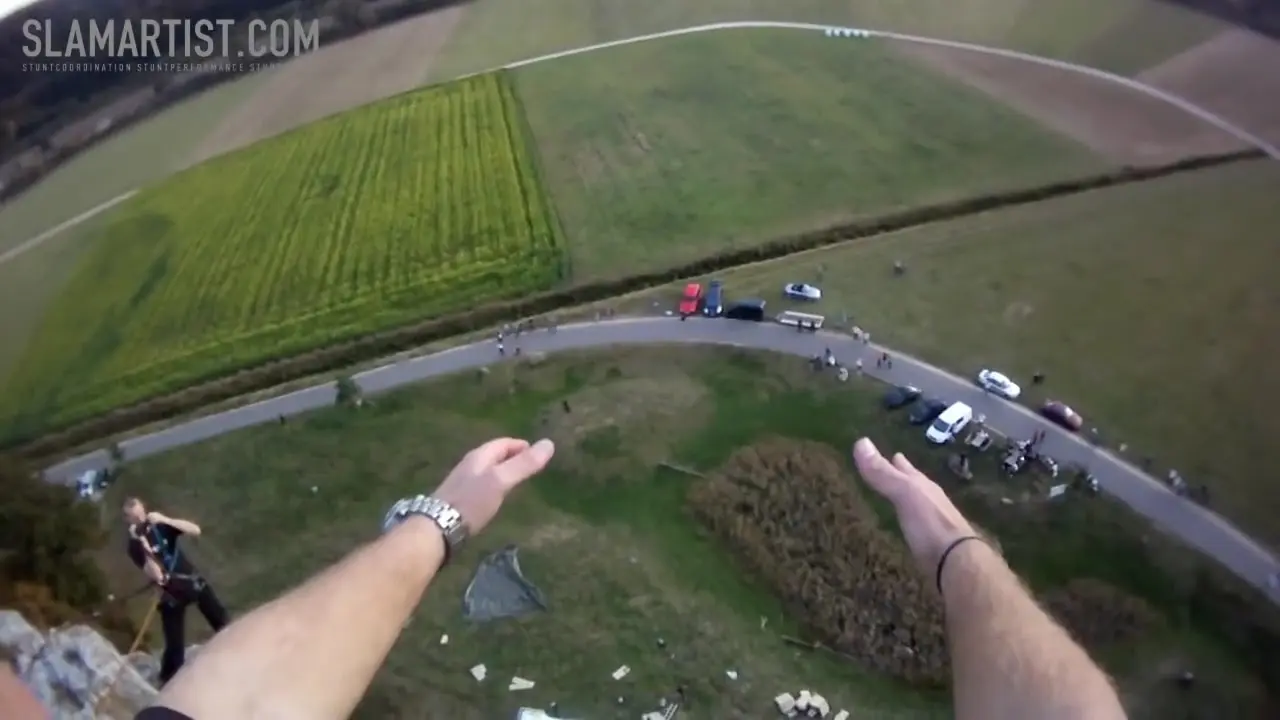
That team view also explains Fischer’s attitude toward visibility. He is more interested in helping actors and stories look convincing than in becoming the person audiences recognise. His first-person Burgsteinfelsen high-fall account shows what that dependence on a crew looks like outside an interview studio. The work succeeds when the illusion is clear and the machinery behind it disappears.
Sources and broadcast record
- SWR1 ‘Leute’ Interview: Behind the Scenes of Hollywood Stunts — Ferdi Fischer / SlamArtist.com, 2025-12-15. Accessed 2026-07-21.
- Stunt-Performer Ferdi Fischer: Blick hinter die Kulissen von Hollywood-Blockbustern — SWR / ARD Mediathek, 2024-07-25. Accessed 2026-07-21.
- Action und Stunts: Stuntman Ferdi Fischer ist der Mann für den Rumms in Hollywood — SWR1, 2024-07-17. Accessed 2026-07-21.
Loading approved comments…