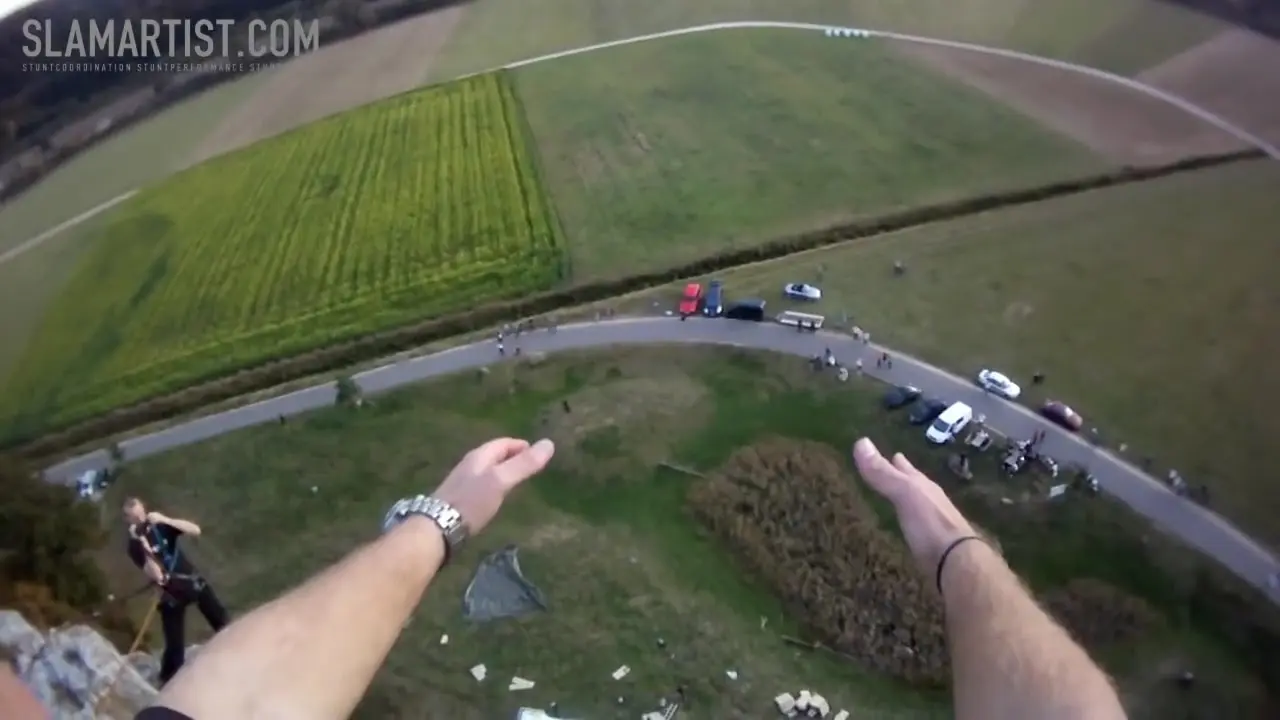
This retrospective is condensed. It is first-person. It covers Ferdi Fischer’s 2009 45-metre high fall at Burgsteinfelsen.
The account documents the event. It covers the people, media and decisions around it. It is not a specification or method for recreating it.
The account draws directly on Fischer’s archive. It is first-person. His original media accompanies it.
The setup
In 2009, stunt performer Ferdi Fischer stood at Burgsteinfelsen near Dollnstein, Bavaria, above a landing stack built from cardboard boxes. The height was 45 metres—roughly 150 feet.
The jump was staged for a ProSieben Galileo ‘Fake Check’ about whether a high fall of that scale into cardboard could be completed. Fischer planned a gainer: a backward rotation that required him to leave the rock cleanly rather than simply step from it.
The number describes the scale, but not the work below. Long before take-off, the decisive problem was turning thousands of ordinary boxes into a controlled landing area—and keeping that area usable while the day changed around it.
The landing stack
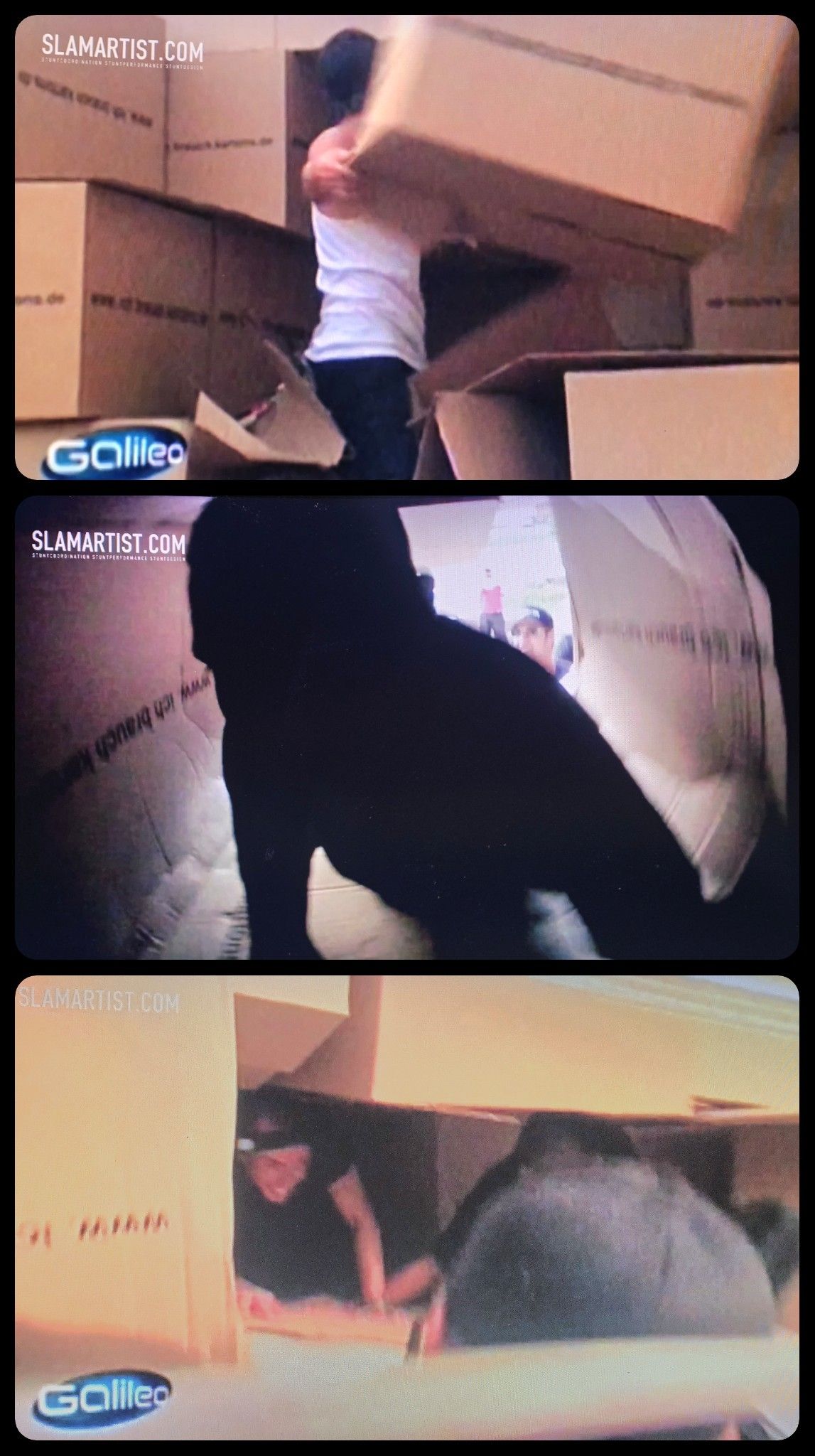
Fischer’s original account says the plan called for about 2,000 boxes of consistent dimensions. When the delivery arrived, only part of it matched. His team reorganised the available material, concentrating the most consistent boxes where they mattered most and using the remainder around them.
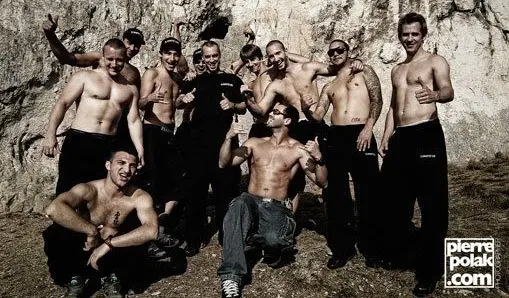
Friends and colleagues who normally worked with Fischer at Stuttgart’s Waranga bar taped, carried and stacked boxes across uneven ground. Staged tests from a work platform gave the team a limited check before the final attempt.
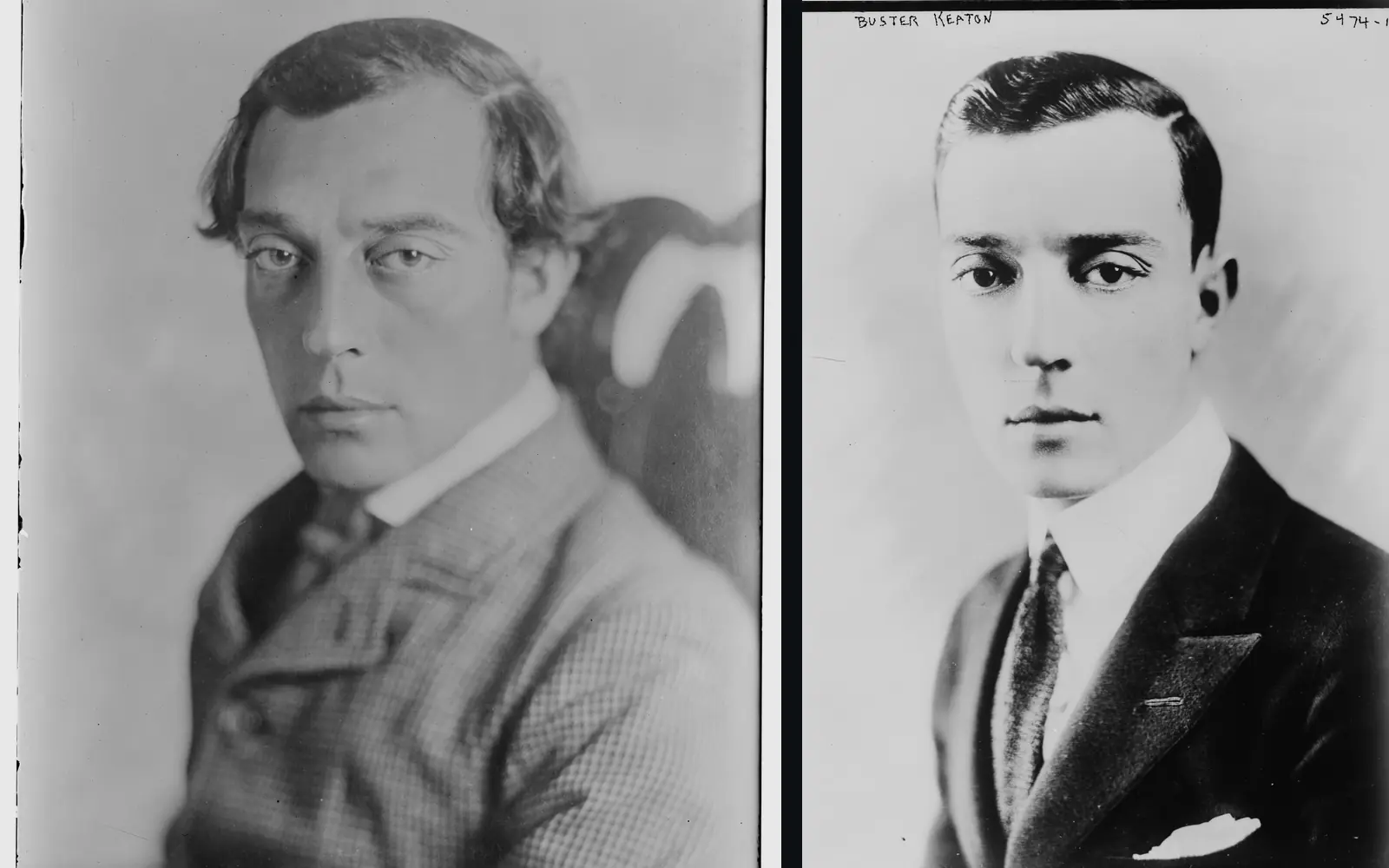
That history should not be mistaken for a repeatable formula. A real stunt depends on qualified people, production-specific engineering, controlled conditions and the authority to stop. Cardboard alone is not a safety system. Our Buster Keaton safety analysis examines how that authority moved from individual discretion into modern production systems.
Build archive / 04 frames
Building beneath the cliff
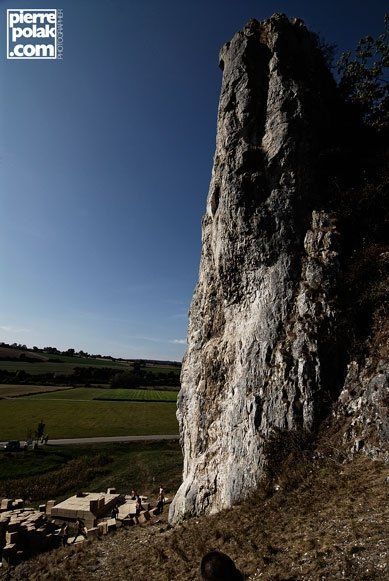
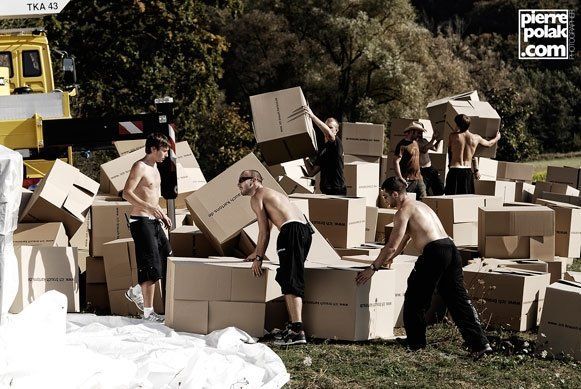
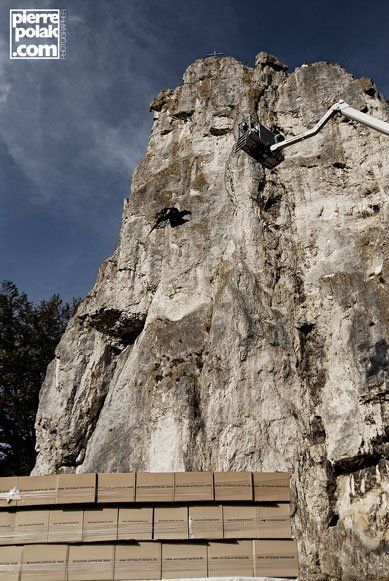
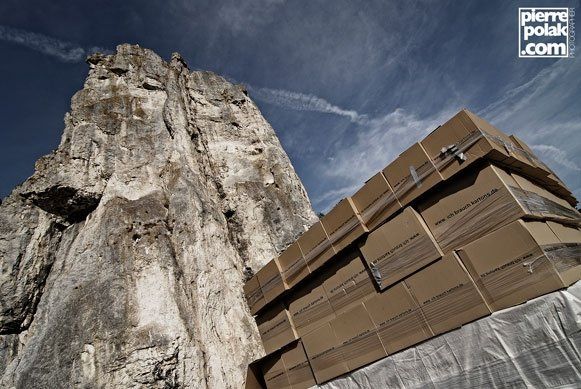
Images: Ferdi Fischer / SlamArtist.com
Source graphic
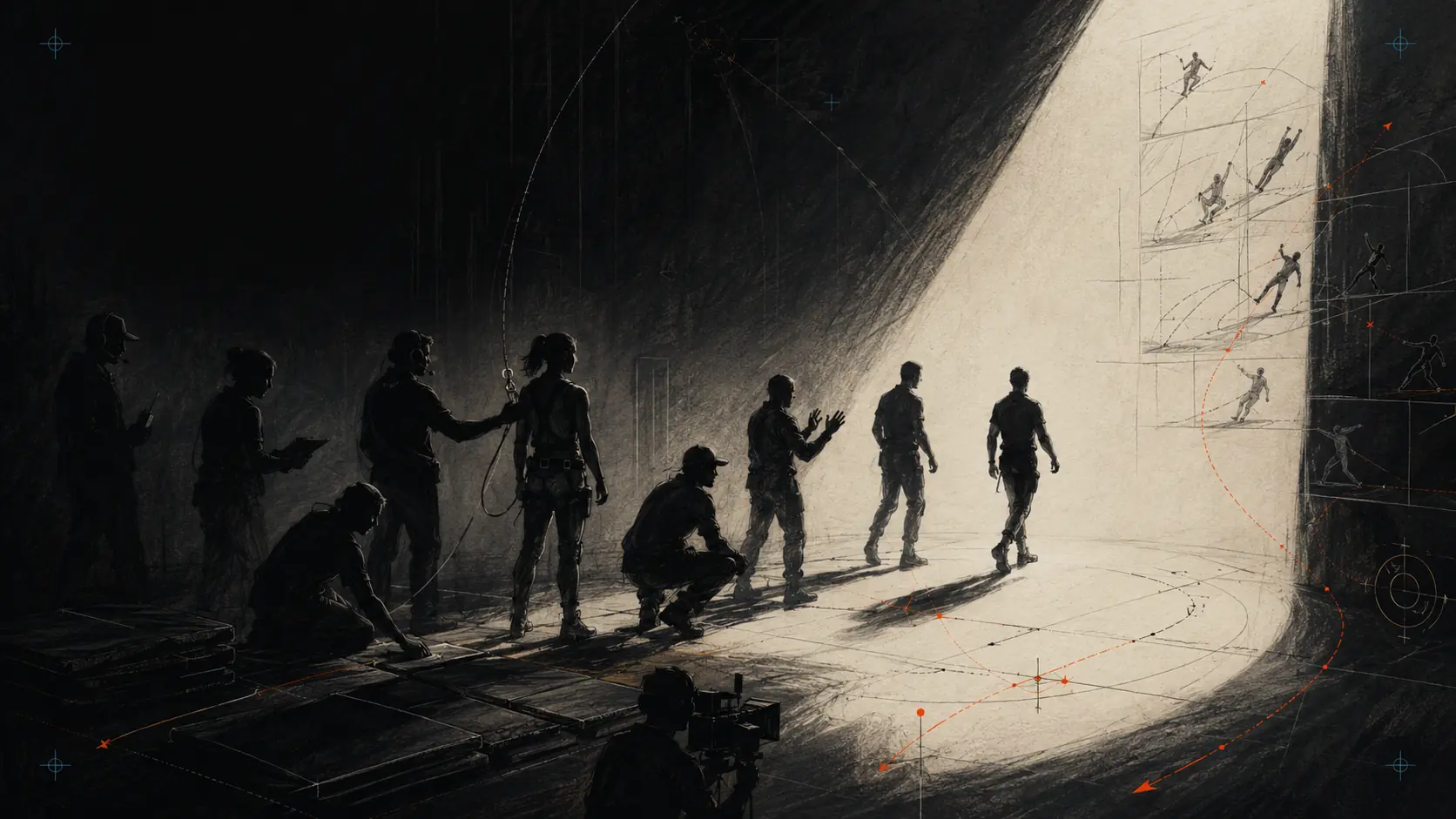
A scale graphic—not a method

The final hours
Fischer writes that an environmental official stopped the setup over concern about a falcon nesting near the cliff. The team spent roughly three hours looking for another site before returning to Burgsteinfelsen. By then, the light was fading and the cardboard had been exposed to changing evening conditions.
The crew finished the landing stack, positioned the available cameras and prepared for the attempt. The window was closing, and postponing would not preserve the material unchanged.
Location archive / 03 media
At Burgsteinfelsen before the jump
A silent location clip and two summit views show the rock, the valley and the scale of the landing area before the attempt.
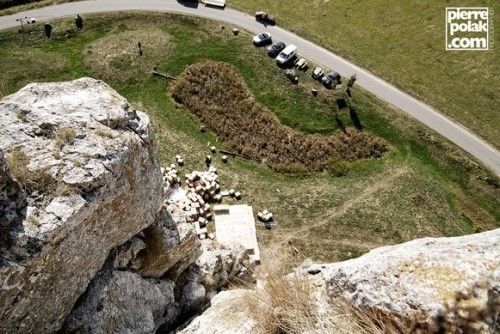
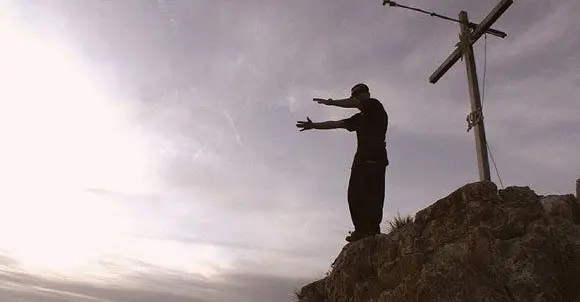
Media: Ferdi Fischer / SlamArtist.com
The jump
From the summit, the landing area appeared very small. Fischer checked the conditions, committed to the take-off and rotated away from the cliff. The fall stayed controlled until he disappeared into the boxes below.
The impact drove him deep into the stack. Cardboard absorbed and muffled the sound, so the people above could not hear him. The team immediately began moving boxes to reach the impact point.
Fischer emerged bruised but alive. He recalls that the deceleration tore both shoes from his feet. The original account says a dedicated high-speed recording did not preserve the decisive compression, while six other cameras captured the jump in real time.
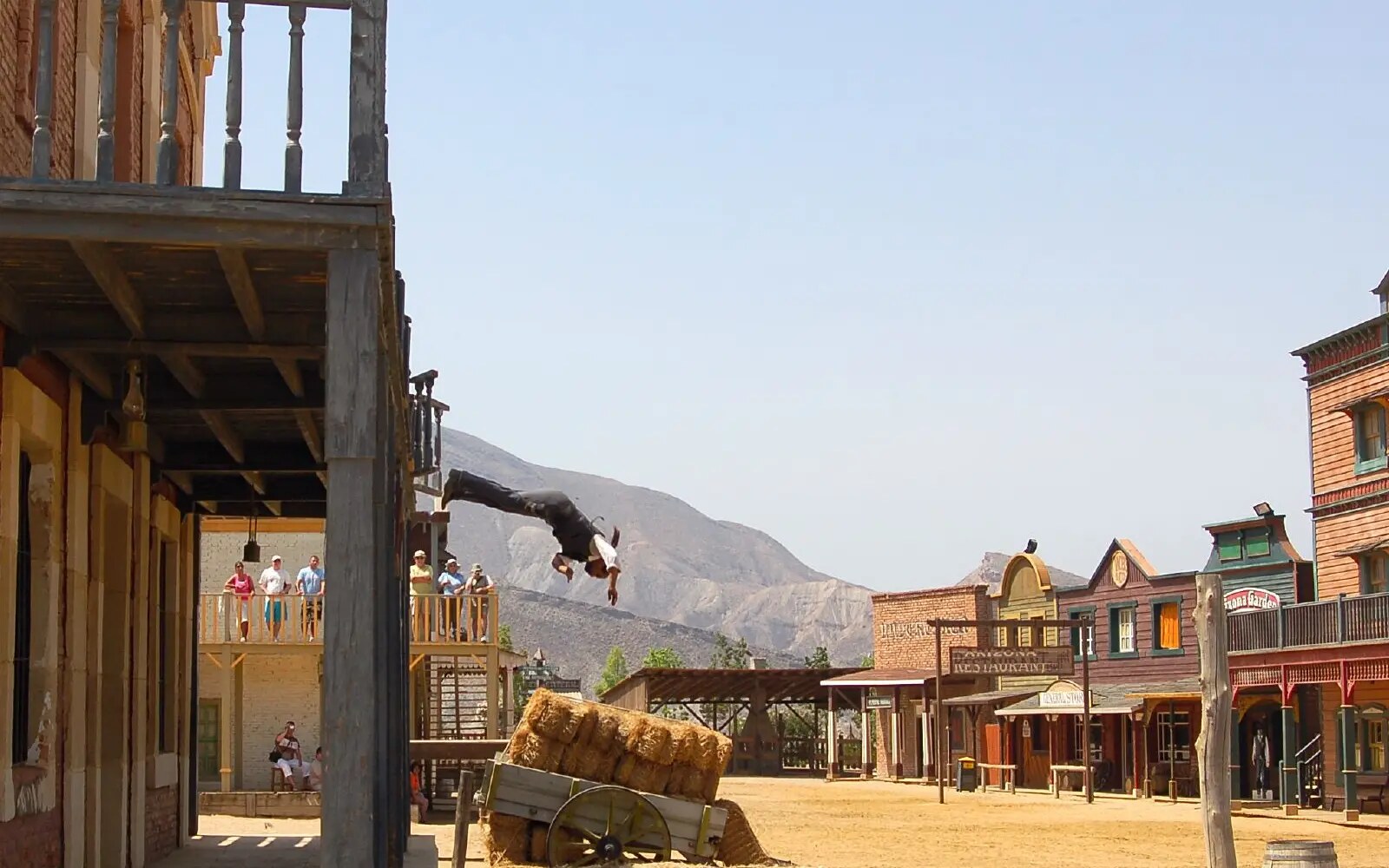
Licensed stunt reference / Separate performance
A fall that reads in a single frame
Film archive / 05 views
The jump from five views
The main edit and four uncut camera angles share one player. YouTube loads only after you choose to play a view.
And then, the world went silent.— From Ferdi Fischer’s original SlamArtist account · Source ↗
Recovery archive / 03 frames
From impact to recovery
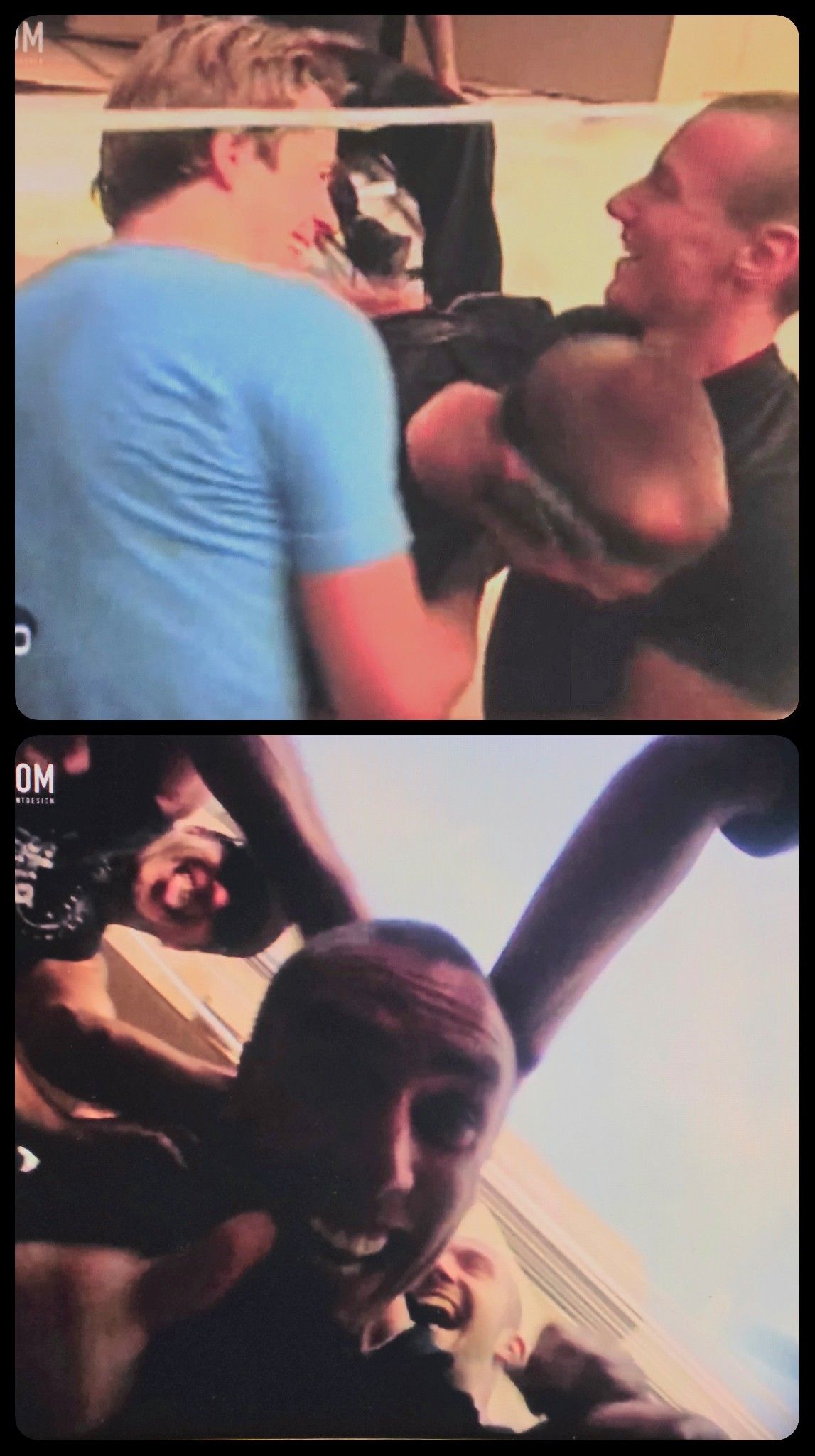
Images: Ferdi Fischer / SlamArtist.com
What remains
The headline number is 45 metres. For stunt design, the lasting subject is not the height but trust in the friends who built the landing area, carried equipment, operated cameras and kept digging until they reached Fischer. Fischer returns to that dependence on preparation and crew trust in his later SWR1 conversation.
This shorter version preserves that core without reproducing every dispute or technical detail. The full first-person account contains the longer story, complete image series, audio and original footage.
Source and archive record
- 45 Meters (150ft) into Cardboard (The True Story) — Ferdi Fischer / SlamArtist.com, 2026-01-29. Accessed 2026-07-21.
Loading approved comments…