Action grammar does not mean more spectacle. It means repeatable rules for how characters act, fail, protect themselves, absorb consequences and are filmed.
A series bible needs production logic as well as mythology: capability, injuries, space, camera, doubling, VFX, units, approval and continuity.
Series are not eligible for the new Stunt Design Oscar. Eligible television work has separate Emmy categories for Stunt Coordination and Stunt Performance.
Contemporaneous making-of can prove the practical execution it visibly records and preserve a season’s production memory; final-shot transformations still need their own record.
The audience detects the break without naming it
In episode two, the lead survives by reading space and waiting. In episode six, the same character becomes physically invulnerable. One director films proximity and consequence; the next films wide-angle impact without orientation. One unit builds behaviour, another builds only collision. The scenes may work in isolation, but the series no longer shares a physical truth.
The audience may never say ‘action grammar’. It still feels when character, tone and world change their rules. The answer is not a thicker bible full of moves. The showrunner has to define what action means in this series: how a character decides under pressure, what they can plausibly do, what violence costs, what information the audience receives, where the camera belongs and what a digital extension may change without erasing readable physical performance.
This applies far beyond action-led shows. A fall, struggle or escape can define a character more precisely than a page of dialogue. The physical language therefore belongs in the series architecture from the beginning.
Freedom needs a shared model, not a cage
The WGA East’s Showrunner Academy treats budgeting and creativity, risk management, executive relationships, episodic-director onboarding, post, VFX and the line-producer relationship as one leadership system. Action grammar should serve that system by naming constants while leaving directors room to discover the episode.
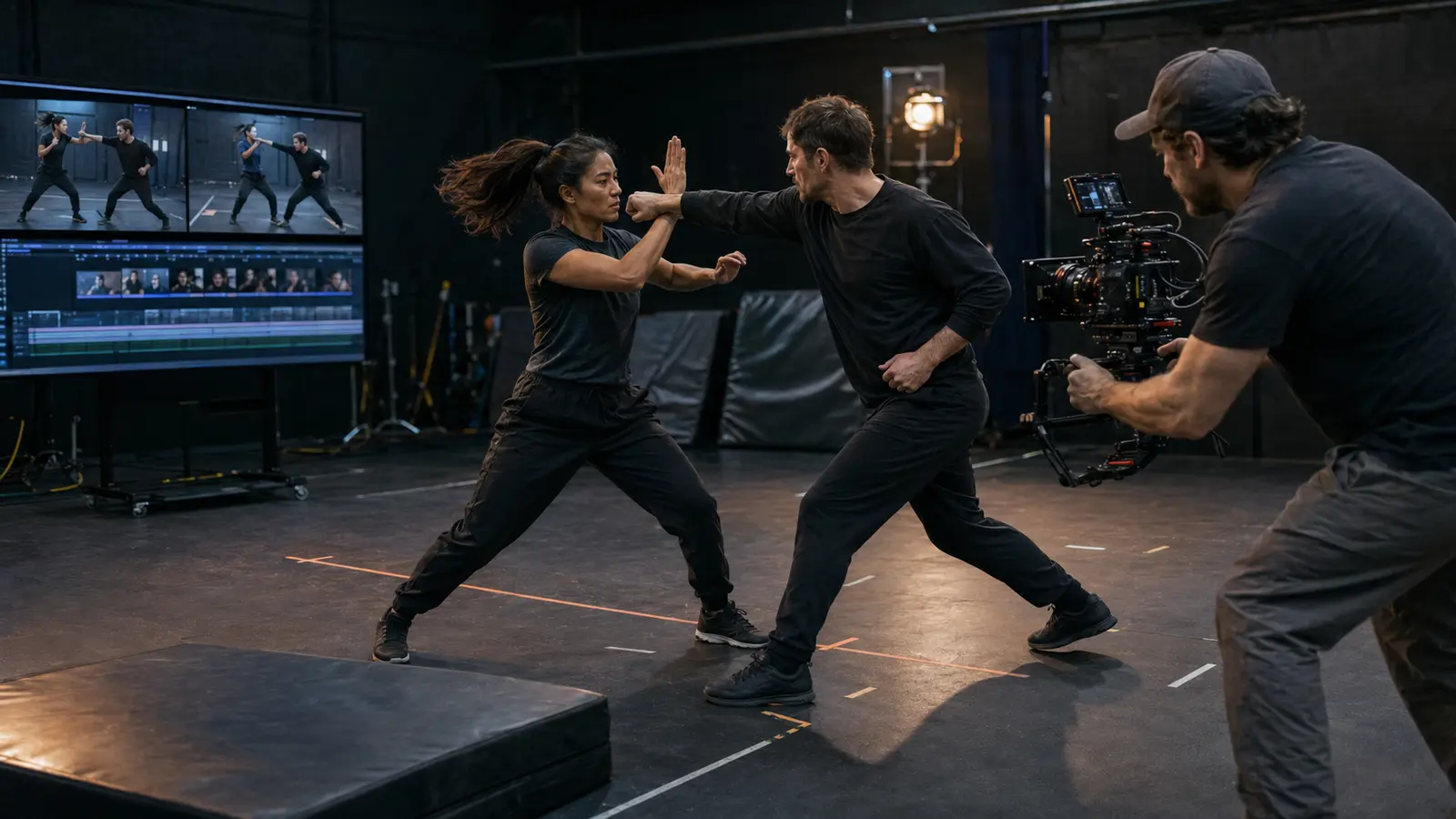
Edited previs can become a common model for story, cast, camera, protection and editorial rhythm. It is not a safety approval or an instruction to photocopy every frame. The Third Floor’s provider case study on Loki Season 2 describes testing camera positions, relative movement, angles and timing for a fight inside a constrained Ferris-wheel carriage—an example of series intention being translated into producible images.
A defined Action Direction function can help maintain that translation between story, performance, camera, units and post. It is not principal direction, and it does not replace Stunt Coordination, the 1st AD or episodic authority. Its value is continuity across the seams where local solutions can otherwise rewrite the series.
Where the series begins rewriting itself
Every handoff adds interpretation. The risk is not a percentage; it is whether the same physical and visual rules survive the transfer.
Without a shared model, local solutions accumulate into the series’ accidental grammar.
Five handoffs show where character, production and image rules can be reinterpreted between the writers’ room and a later season.
The Oscar is a film signal; the series route is Emmy
Achievement in Stunt Design begins with films released in 2027. A series shot or released in 2027 cannot derive an Oscar nomination from that category. Its strategic importance for showrunners is indirect: the category raises the status of designed physical storytelling across the wider market, while series must follow television rules.
For eligible television programmes, the Television Academy’s 2026 rules separate Stunt Coordination for comedy and drama from Stunt Performance. Coordination evaluates work across a series; Performance concerns a specific practical stunt or sequence that actually aired. A submission cannot consist entirely of AI- or VFX-generated action, although digital enhancement of practical work is not categorically excluded. International eligibility is not automatic.
The common lesson is that strong work has to be legible as responsibility and execution. Early qualified Stunt Design and coordination improve the chance of developing that quality because the story, performer, camera and unit decisions can be solved together. No process guarantees eligibility or recognition.
Making-of is the series’ physical memory
On configured WarpCam® setups, a supplementary 360° camera can record the working space around the hero camera while practical action is performed. The contemporaneous view can preserve the performer, rig, camera path, crew positions and physical event in one navigable record. For the practical act it visibly records, it is evidence that the act occurred on set; it is not a certificate for the released final shot.
The record is strongest when it names its boundaries. It does not claim that the released shot is untouched or wholly practical. Wire removal, compositing, retiming, face work, digital doubles, environment work or synthetic extensions may still shape the final image. A complete provenance package can link the 360° record to shot and timecode references, capture metadata, releases and a VFX change log.
Across a series, that same cleared record can preserve the evolution from storyboard and rehearsal to camera and digital finish, while supplying continuity, EPK, social and press material. The point is to capture the evidence where the work happens instead of asking a later campaign to reconstruct it.
Not every series needs five seasons plotted in advance. It does need rules a second season is not forced to contradict by accident. The 2027 overview frames the larger window; the producer report connects grammar to budget and units; the acquisition report explains why continuity becomes a durability signal for buyers.
Sources and series record
- WGA East Announces Graduates of 2025 WGAE Showrunner Academy — Writers Guild of America East, 2026-01-26. Accessed 2026-07-29.
- 2026 Emmy Awards Rules and Procedures — Television Academy, 2026-04-07. Accessed 2026-07-12.
- Academy Establishes Stunt Design Award for 100th Oscars — Academy of Motion Picture Arts and Sciences, 2025-04-10. Accessed 2026-07-12.
- Safety Bulletin #4 — Stunts — Industry-Wide Labor-Management Safety Committee / Contract Services, 2025-03-27. Accessed 2026-07-23.
- Loki — Season 2 — The Third Floor, 2024-04-26. Accessed 2026-07-23.
- C2PA Technical Specification 2.4 — Coalition for Content Provenance and Authenticity. Accessed 2026-07-20.
- WarpCam® Specialty Camera System — SlamArtist.com. Accessed 2026-07-23.
- WarpCam® 360 Documentation Configuration — Practice Record — SlamArtist.com. Accessed 2026-07-29.
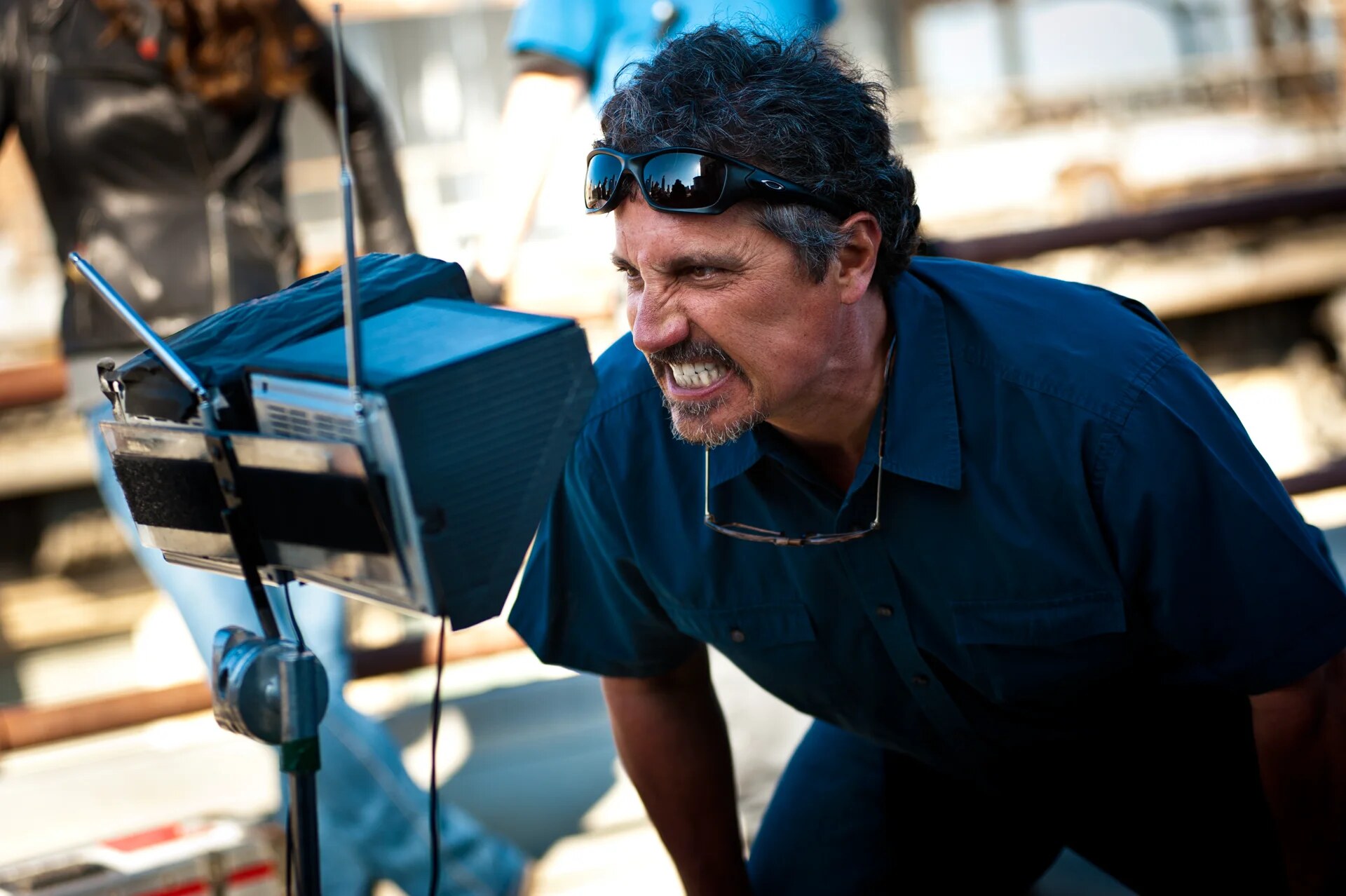
- Director Rob Bowman Filming a Castle Rooftop Fight — Marta Evry / Wikimedia Commons / Flickr, 2012-04-11. Accessed 2026-07-29.


Loading approved comments…