
A successful stunt and a successful image are separate outcomes: the decisive action must also be visible, readable and editable from the chosen camera position.
Fast action can close the usable frame before a monitor-led reaction loop catches it. An advance choreographic cue lets the camera begin before the obvious event appears on screen.
Camera platforms change access, payload and control, but none can decide which beat matters or make an unapproved camera path safe. Those decisions remain shared production work.
The fall lands exactly as rehearsed. The performer hits the mark, the reaction sells the impact and the spacing is controlled. Everyone who saw it happen knows the stunt worked.
Then playback reveals a different event. At the decisive instant, the body passes behind a foreground object. The lens compresses the distance that gave the fall scale. The pan starts after impact and spends the strongest frames catching up. The footage has no clean beginning, no readable force and no useful end.
Freeze that playback and make a diagnosis. What failed first: the performance, the operator's reaction, the camera position, the lens, the background or the edit?
Any one of those answers can be true, but the single-department model is incomplete. The physical action succeeded. The image failed at the point where several systems were supposed to overlap.
STUNT.BLOG calls that overlap the shot window: the limited interval in which the decisive action beat, camera path, lens cone, framing, background, editorial handoff and approved safe movement envelope become usable at the same time. It is a descriptive model created for this analysis, not an established technical term or a new piece of equipment.
The practical answer comes first: faster reflexes, a wider frame or a more advanced camera rig cannot guarantee the shot. The camera has to know which moment matters, where it will become readable and what cue allows the move to begin before that moment is already visible on a monitor.
The stunt happened. The question is whether the shot did.
A camera does not merely record action. In close, fast or continuous coverage, it performs the action with everyone else.— STUNT.BLOG Editorial Desk
By the time the monitor says go, the beat may be over
The intuitive model of camera operating is reactive: see the subject move, identify the direction, then pan, tilt, walk or drive to keep it composed. That model is reasonable because it works when motion is slow enough, the frame is forgiving enough and the equipment responds quickly enough.
Fast choreography exposes its limit. The monitor does not show the future; it shows light that has already reached the camera, passed through the imaging and transmission chain and arrived for a person to interpret. The operator still has to choose and begin a physical move. The camera system then has to accelerate.
Even a simple visual reaction is not instantaneous. In a calibrated study of 1,469 adults, the mean response to a basic visual stimulus was 231 milliseconds, or 213 milliseconds after correction for hardware delay. A more complex visual-choice task involving discrimination and response selection averaged about 550 milliseconds. These were laboratory tasks, not measurements of professional operators, so they are context rather than an operating benchmark. They establish only the narrower point that seeing, identifying, choosing and initiating a response consume time. (Simple reaction-time study; choice reaction-time study)
A production account from F1 turns that abstract delay into a camera consequence. Its custom remote system used buffering to smooth signal dropouts, and under some RF conditions the buffer could add as many as 12 frames of latency—half a second at 24 frames per second. Director, operators, stunt coordinator and drivers shared communications and coordinated where and when the action would happen. Focus pullers sometimes watched the operators' hands instead of delayed monitors. For certain trackside 180-degree whip pans, the vehicles passed so quickly that watching the monitor was described as almost useless; operators watched the cars and began at the anticipated moment. (Society of Camera Operators)
That figure does not mean every wireless system is half a second late. It belongs to one deliberately buffered architecture under specified conditions. The transferable result is the combined delay: human perception and choice can be followed by transmission latency and the inertia of a real camera platform. If the move starts only when the decisive beat becomes obvious on screen, the shot window may already have closed.
This changes the production diagnosis. A late frame is not automatically proof of a slow operator or an inconsistent performer. The reaction loop itself may have been designed to begin too late.
Original explanatory diagram
The same action, two different starting cues

The useful advantage is not faster reaction. It is earlier knowledge.
Before the next case, choose the most plausible fix: a wider lens, a second camera, a faster operator or a cue that arrives before the visible action. Only one of those changes the start of the reaction loop.
On Steven Spielberg's West Side Story, camera operator Mitch Dubin initially tried to whip-pan when he saw a dancer leave the floor. By the time the leap became visually obvious, he was late. The solution was not a claim of sharper reflexes. Choreographers and music personnel supplied advance cues tied to the score. Steadicam operator John ‘Buzz’ Moyer described his childhood as a professional dancer as an advantage because he could recognize critical points in a routine quickly. (Society of Camera Operators)
A visual cue says, ‘It is happening.’ A choreographic cue says, ‘It is about to happen.’ The first begins feedback after the event is apparent. The second supports a prediction before the decisive frame arrives.
Adjacent research supports that mechanism while also defining the evidence boundary. In one temporal-occlusion study, skilled goalkeepers predicted penalty-kick outcomes more accurately than less-skilled players—70 percent against 45 percent across the tested conditions—and extracted more information from early body cues. Elite basketball players predicted free-throw outcomes earlier and more accurately than observers with comparable visual experience, suggesting that performing a class of movement can add information that watching alone does not. A dance experiment found that learning a specific phrase changed how participants later perceived and anticipated it. (Goalkeeper study; basketball study; dance study)
No study located for this article directly compares stunt-trained operators with conventional camera operators. The transfer to stunt-camera work is therefore a production hypothesis supported by adjacent research, not a settled scientific result. It does not prove that one professional background is universally superior to another.
What it does explain is why rehearsal matters to the image. A person who knows a movement language can look for preparation, rhythm, weight transfer and intended trajectory before the obvious screen event arrives. Rehearsal does more than make a stunt repeatable; it makes the beat predictable to the camera.
For close action, the operator therefore needs more than the endpoint. The relevant knowledge includes the preparation, travel, reactions, variations, approved safe areas and exit. The camera move begins from a shared cue, not from a private guess.
The camera must know the move without revealing it
Earlier is not automatically better. In a confined hardware-store fight for Normal, cinematographer Armando Salas, ASC, described A-camera operator Matt Schween as a key collaborator and the camera as a third participant. Schween had to anticipate the movement without moving so early that the image announced the next action before the character should know it. The stunt team pre-shot the fight, and the scene was refined across departments. (American Cinematographer)
The target is narrower than simply keeping a performer centred. The camera has to arrive early enough to frame the beat, but not so early that it spoils the beat. It may need to let an opponent enter late from behind the lens, preserve a reveal, remain on a reaction rather than chase a strike, or allow an impact to travel through the frame before moving again.
The correct camera path therefore has narrative timing. It does not merely follow movement; it controls when the audience is allowed to understand it.
The same principle appears more physically on A Knight of the Seven Kingdoms. Its ‘Trial of Seven’ battle was discussed and storyboarded for months. Stunt coordinator Florian Robin operated a lightweight stabilized helmet POV and, according to cinematographer Gustav Danielsson, performed most of the rough handheld fight coverage. A Scorpio crane, Steadicam, handheld cameras, a Ronin 4D and a wire camera handled different relationships to the sequence. For the most embedded coverage, stunt and camera knowledge occupied the same operator. (American Cinematographer)
That does not make every stunt performer a camera operator. Operating still requires composition, lens judgment, focus awareness, horizon control, continuity, collaboration and an understanding of the edit. Conventional camera experience is not displaced. The useful combination is camera craft plus movement literacy: when the lens enters the action volume, knowledge of the choreography becomes a camera skill. The same co-design principle underlies the invisible architecture of stunt rigging and the geography of believable tactical action.
Solve the lens position with the stunt coordinator or action director present
The stunt coordinator or action director carries the complete beat map: performer paths, danger points, timing variations, safe areas, resets and abort conditions. Individual performers must remain part of the lens discussion because they know the detail of their own movement, but coordination owns the whole action volume and must be present when the lens position and camera route are solved.
This is not a courtesy review after choreography has been fixed. Camera height, distance, direction and stopping point can alter what a performer must do and where people or machines can safely travel. The action path and camera path belong in the same stunt design process from the beginning.
What has to align inside the shot window?
Starting early solves only the timing problem. The opening stunt could still disappear behind foreground, lose its apparent distance or arrive without a usable edit. Six spatial and narrative conditions decide whether the shot window opens.
First is the action beat: the exact phase that carries the story. In a punch, it may be preparation, apparent contact or reaction. In a fall, it may be the instant the body clears an edge, the moment scale becomes legible or the controlled end position. In a vehicle pass, it may be the change in relative speed rather than the highest absolute speed.
Second is the camera path. A lateral move can reveal separation between layers and create parallax. A head-on move may compress speed until the background begins to change. A low camera can make tyre travel and surface texture dominate; the same event from a high, long-lens position can become diagrammatic. None of those choices is inherently better. Each makes a different part of the movement readable.
Third is the lens cone: field of view, subject distance, focus tolerance, distortion and the rate at which a body expands inside the frame. A wide lens placed close does not merely show more. It changes the apparent velocity of objects crossing near the camera and gives the operator less room for positional error. A longer lens can isolate the performer but may hide depth and magnify angular mistakes.
Fourth is the background, silhouette and light. An action is not readable simply because it is in frame. Limbs, props and vehicles need separation. Direction has to make sense. The audience needs enough geography to understand force and enough obstruction to feel uncertainty—an intentional balance, not automatic coverage.
Fifth is the editorial handoff. The shot must offer a usable way in and out: an eyeline, motion direction, reaction, collision, occlusion or stable endpoint. A spectacular middle with no cuttable entrance or exit may remain an orphan in the timeline.
Sixth is the approved safe movement envelope. If the intended frame requires an operator, vehicle or rig to enter an unapproved path, the shot window is closed. Safety is not placed around the image after it has been designed. It is one of the conditions that make the image possible.
The causal model is an intersection, not a ranking: the action becomes a usable screen event only while beat, camera, lens, background, edit and safe movement occupy the same interval.
What playback can reveal about the closed window
| Observed result | Likely part of the window | Planning question |
|---|---|---|
| The decisive body shape is hidden or merges into the scene | Background, silhouette, light or lens cone | Where does the action become readable from the intended view? |
| The pan arrives after the impact | Advance cue, reaction loop or camera inertia | What shared cue can begin the move before the visible event? |
| The action is in frame but feels flat | Camera path, lens geometry or relative motion | Which spatial relationship must the audience understand? |
| The middle is spectacular but the shot will not cut | Editorial entrance, exit or motion handoff | What gives the editor a usable way into and out of the beat? |
| The desired frame requires an unapproved route | Safe movement envelope | Can the image be redesigned inside the agreed stunt plan? |
Can a better camera system keep the window open?
It can widen physical access. It cannot identify the decisive beat. The tempting equipment model—more axes, more payload, more reach, more speed—mistakes technical capability for narrative timing. Every system trades one type of freedom for another.
The Academy's 2025 Scientific and Technical Awards make the range unusually clear. The DJI Ronin 2 was recognized for broad adoption, three-axis stabilization and varied control inputs. Freefly's Mōvi gimbals enabled single-person or collaborative remote operation for shots previously difficult without dollies or crane-supported heads. ARRI's TRINITY 2 combines a body-worn inertial system with an electronic stabilized head for complex transitions. The Steadicam Volt adds motorized assistance and adjustable tactile behaviour to inertial stabilization. Stabileye's compact size, live adjustment and low latency support close work in tight spaces and instinctive local or remote operation. (Academy of Motion Picture Arts and Sciences)
A second development matters just as much as stabilization: the moving package is shrinking. High-resolution sensors, split recording bodies, lighter electronics and compact cinema lenses can place production-level image quality in a lower-mass envelope. Less mass can mean less inertia, faster changes of direction, tighter clearances and more freedom to accelerate or stop with a performer. Smallness is useful only when the sensor, lens and recording path still meet the production standard.
Those citations do not identify a universal winner. They describe different relationships between operator, payload, control and movement.
Human-carried systems trade separation for bodily feedback
Handheld, shoulder-mounted, Steadicam, TRINITY and motorized gimbals can keep the camera physically responsive to performers. The operator can feel acceleration, floor conditions and spacing directly. That supports immediate adaptation, but it also makes the operator's route, strength, footing, clearance and stopping distance part of the shot.
For close action, weight and size are creative variables. A lighter head can reverse direction sooner, pass through narrower gaps and travel from floor level to eye line with less preparation. That does not make the smallest platform universally best; it makes low moving mass a genuine cinematographic advantage when the sensor, lens and recording path still meet the production standard.
A stabilizer can control unwanted angular motion. It cannot decide which movement is unwanted. Perfectly level footage may be wrong for a fight that should feel unstable. On Ferrari, Michael Mann's camera team sometimes reduced stabilization so road vibration and speed remained perceptible. Smoothness is an aesthetic parameter, not a universal measure of quality. (American Cinematographer)
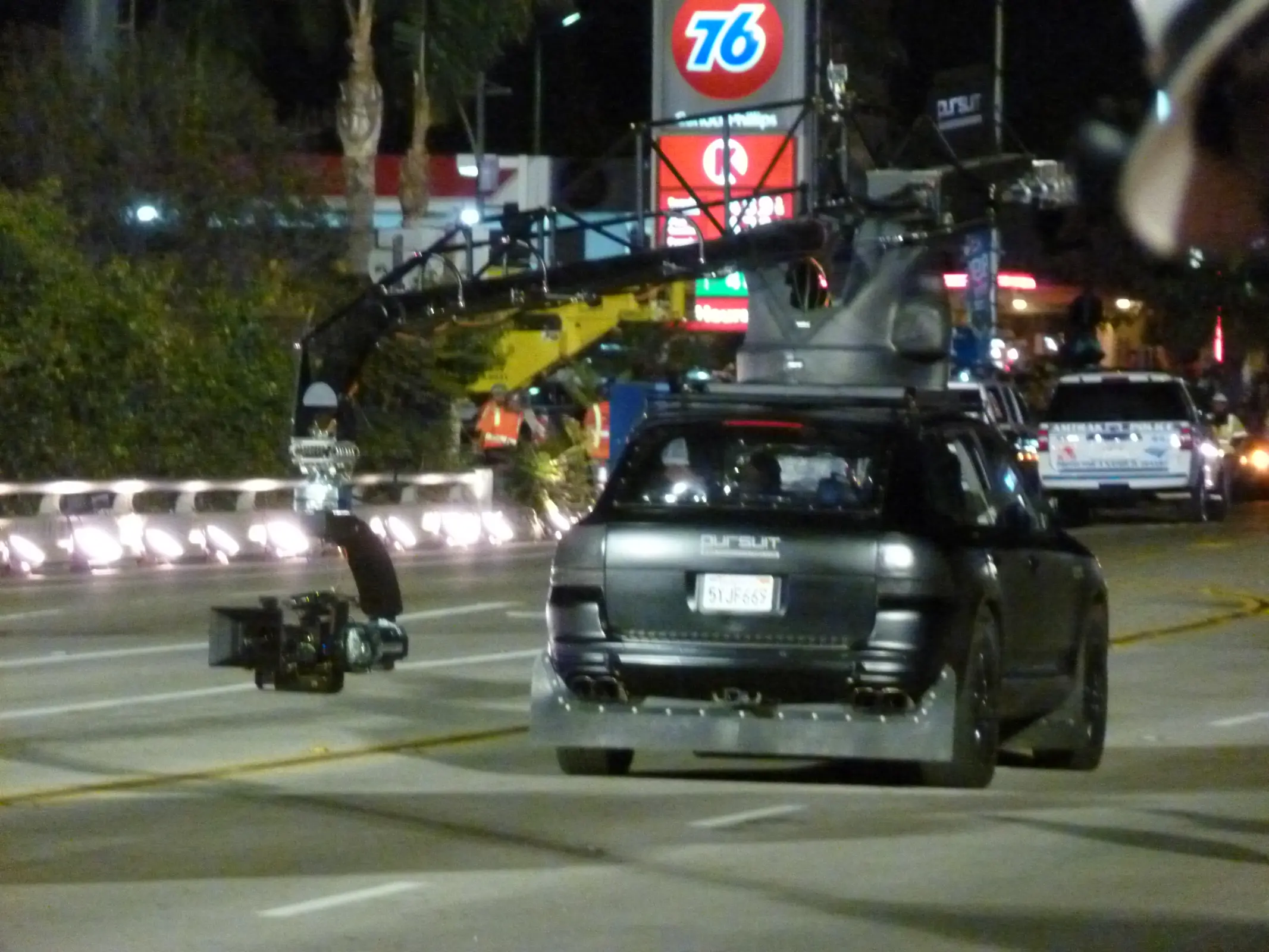
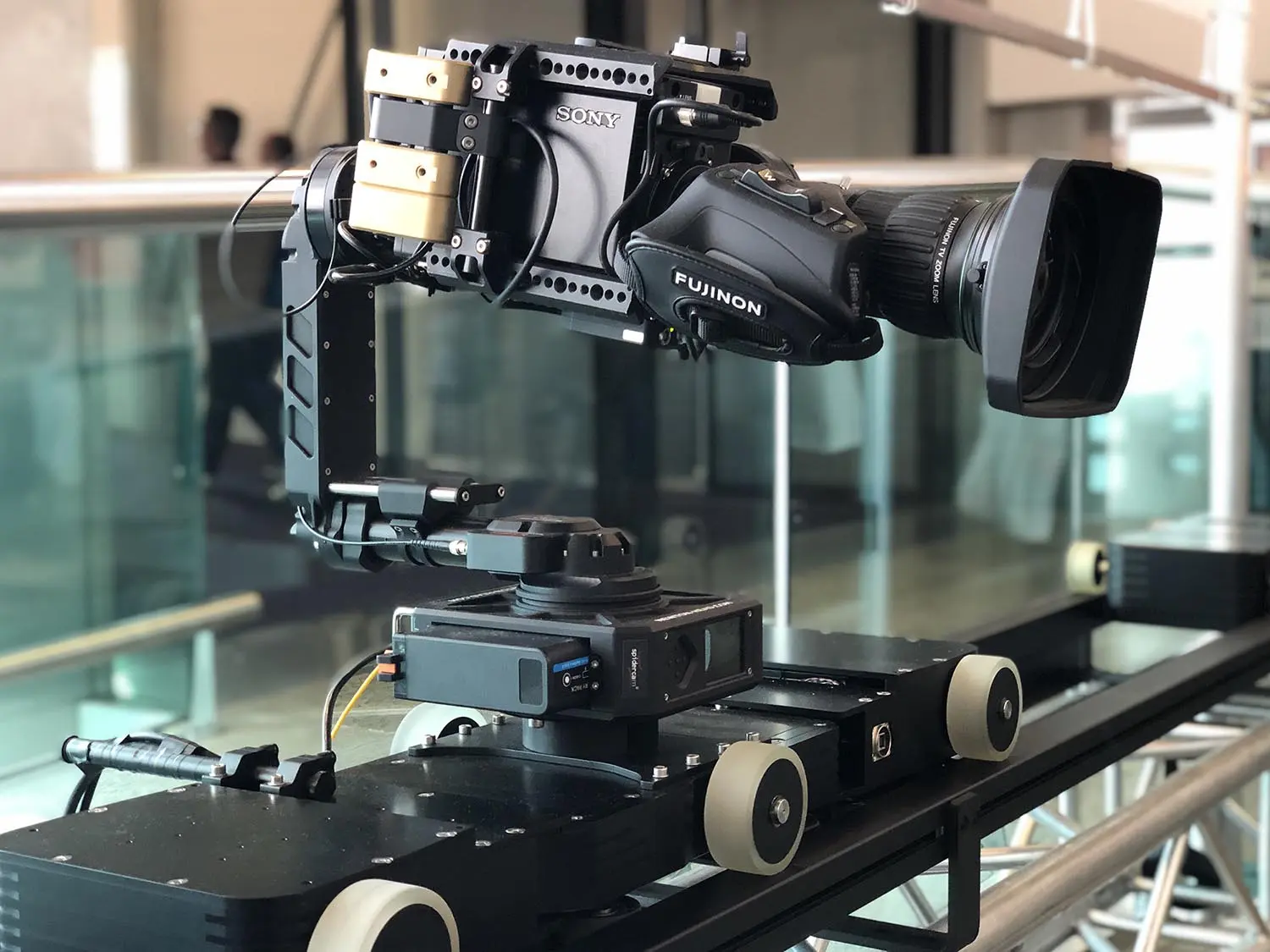
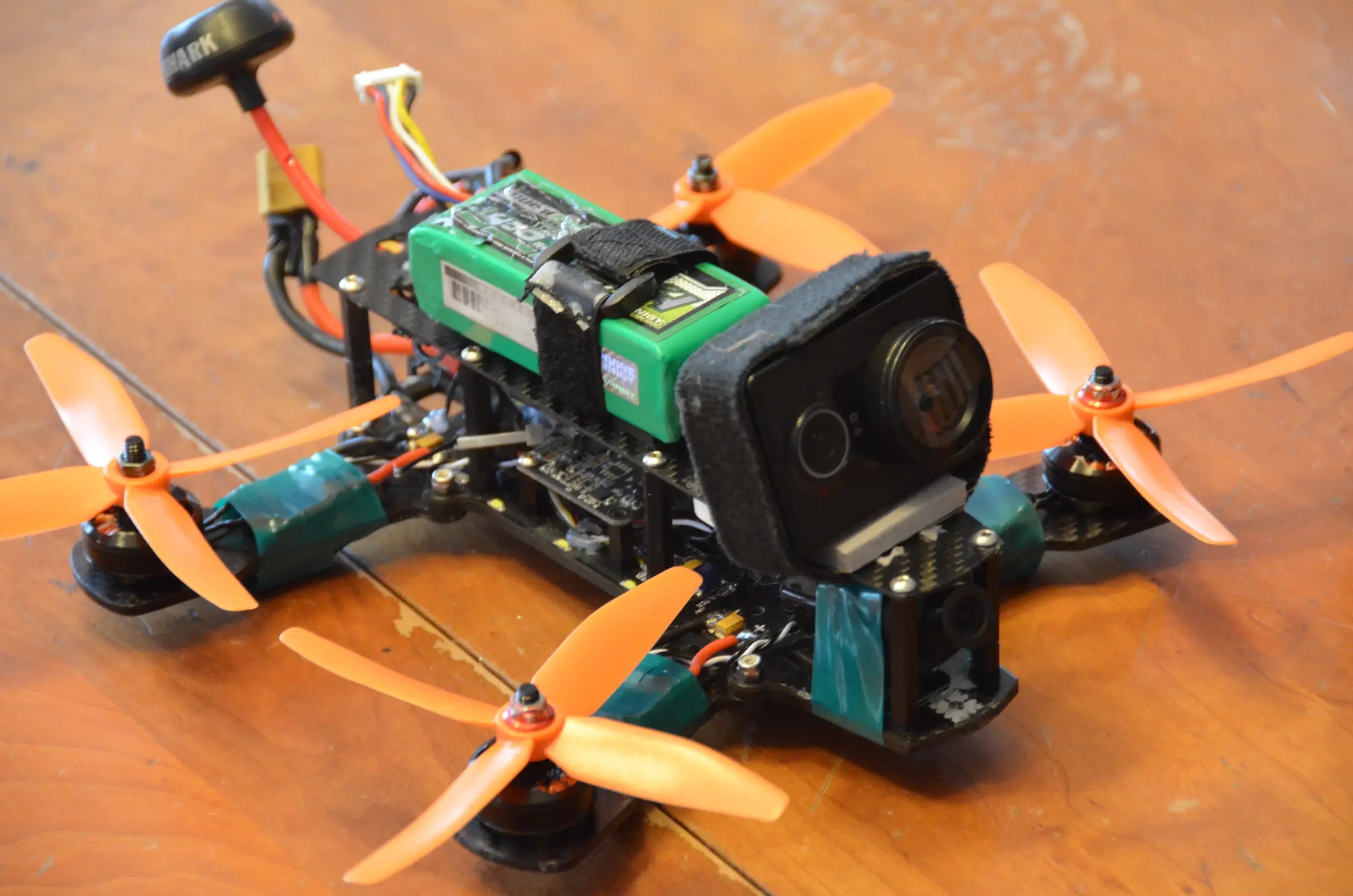
System comparison / 04 production and product photographs
Four systems, four different movement envelopes
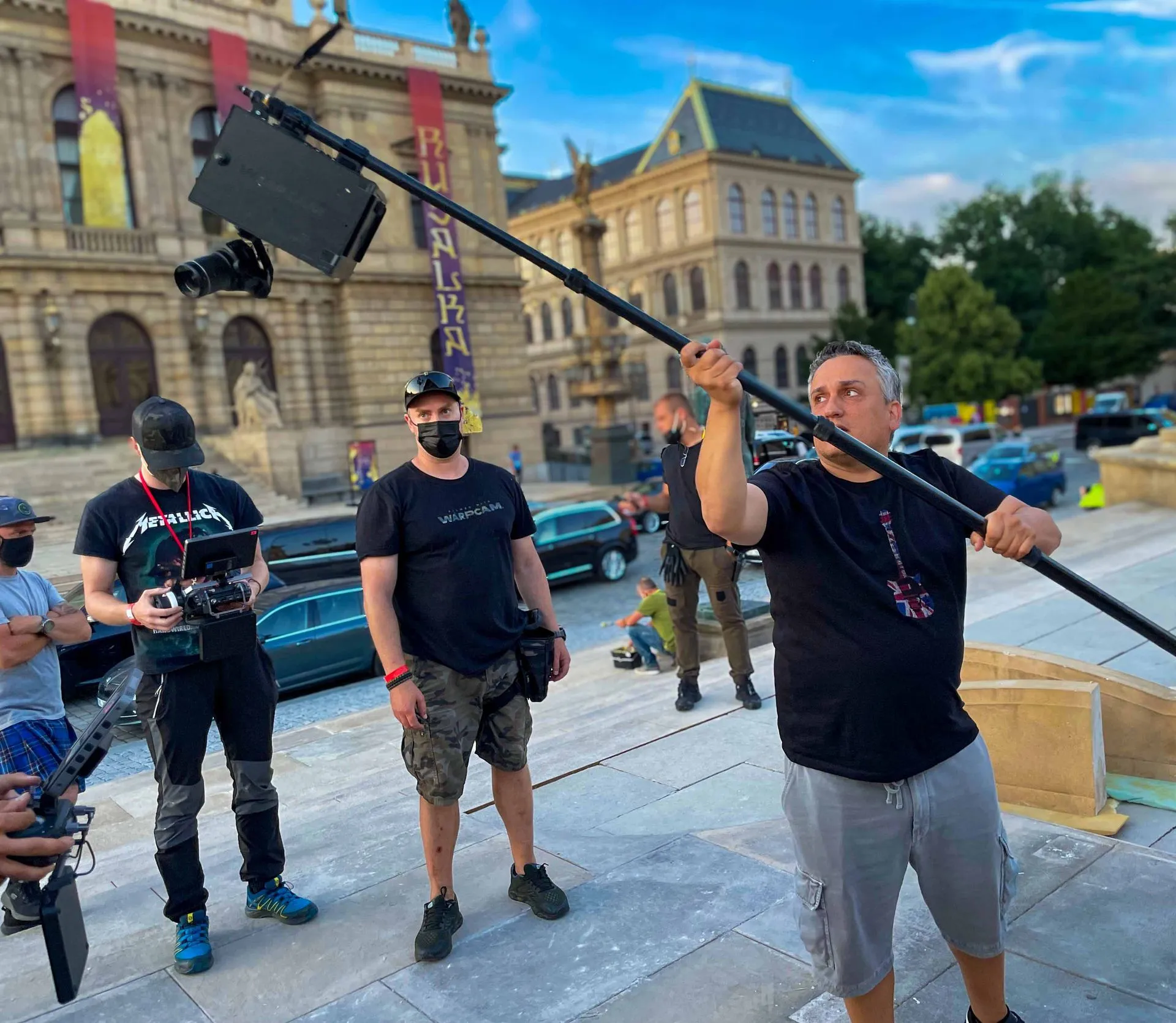
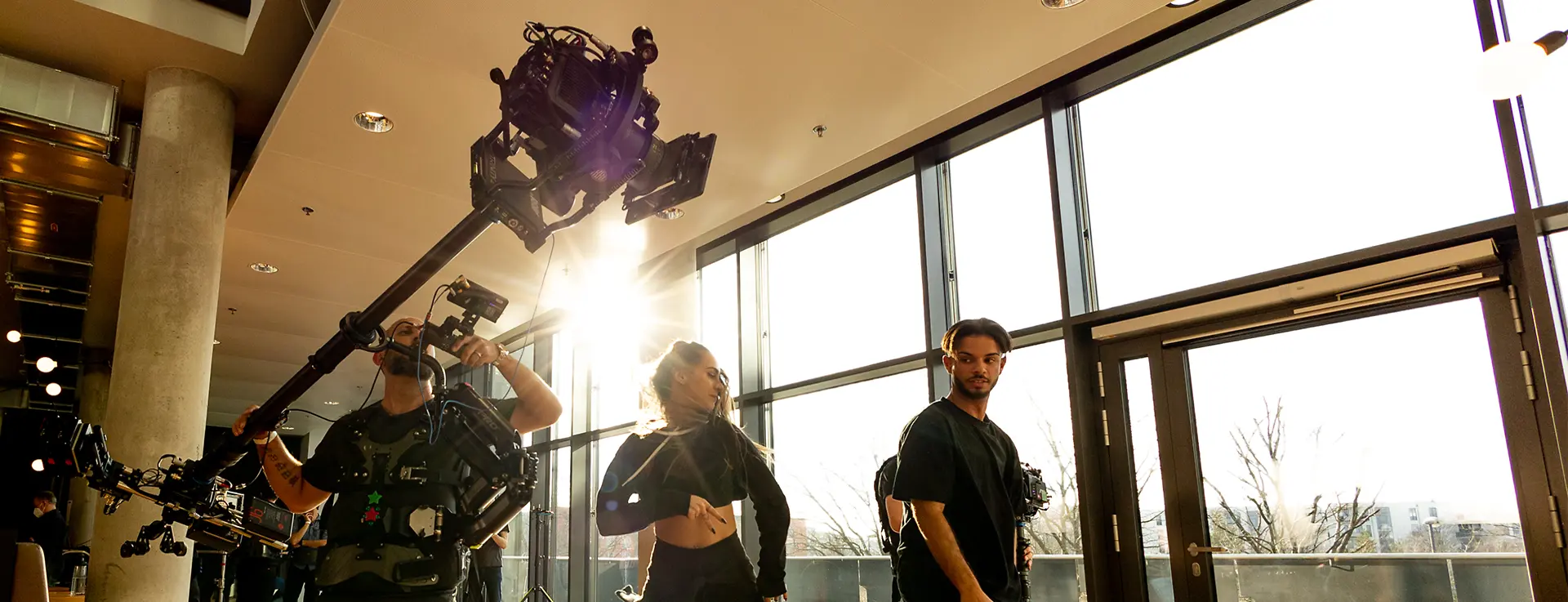
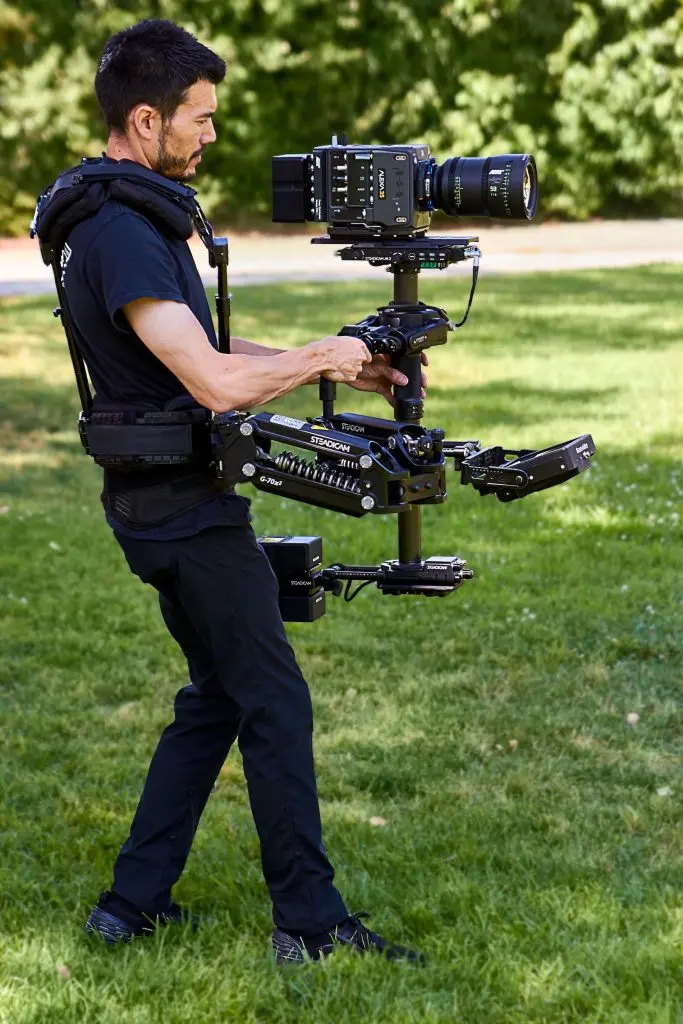
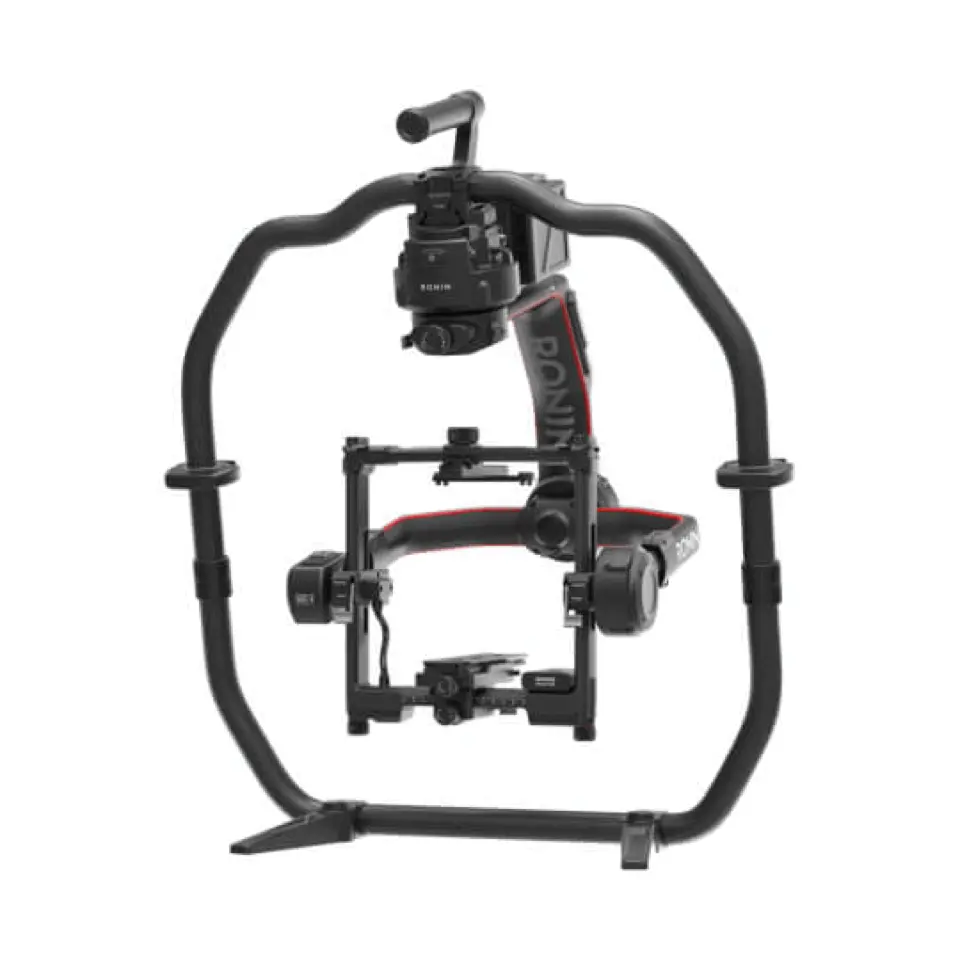
Splitting the job does not split the beat
A ring-carried gimbal may be one person's instrument, a vehicle-mounted remote head or a two-person system in which the physical carrier handles the route while another operator frames. Dividing those tasks can reduce conflict, but it creates a handoff that must be rehearsed. Both operators still need the same advance cue and the same understanding of the intended beat.
Which platform changes which part of the problem?
| Platform | Physical advantage | Coordination cost | What still requires choreography knowledge |
|---|---|---|---|
| Handheld / shoulder | Immediate bodily response and intentional texture | Operator carries framing, movement and physical load | Beat, safe route, reveal timing and editorial handoff |
| Steadicam / TRINITY | Body-worn travel with controlled angular motion and vertical transitions | Operator route, balance, footing and stopping distance | Advance cue, performer spacing and narrative timing Source ↗ |
| Motorized gimbal | Compact three-axis control; local, mounted or remote operation | Physical carrier and framing operator may become separate roles | Shared cue, lens line and recovery plan Source ↗ |
| Compact / split-body cinema system | Production-grade sensor and lens access with low moving mass, fast direction changes and confined-space reach | Physical route, framing, recording and camera control may be divided across operators | Movement literacy, advance cue, clearance and stop authority Source ↗ |
| Remote head / crane | Reach, payload and separation of operator from lens | Tracking, head, focus and grip cues divide across people | One common beat and one common path model |
| Pursuit arm / camera car | High-speed tracking over longer distances | Driver, arm, head, focus and picture vehicle form one move | Relative trajectories and agreed abort logic Source ↗ |
| Cable system | Accurate travel through suspended three-dimensional space | Winches, head, focus, flight planning and protected space | Performer route, cue structure and handoff point Source ↗ |
| Compact hard mount | Lens access where a full cinema body or operator cannot fit | Mount loads, vibration, aerodynamics and fixed framing | Preplanned geometry and system testing Source ↗ |
| FPV | Rapid changes of altitude, direction and proximity | Pilot, camera control, RF conditions and airspace | Trajectory, decisive beat, safe separation and exit |
When one camera move belongs to several people
Separating the operator from the camera can place the lens where a person cannot safely stand and can move a larger payload at speed. It also distributes one shot across a team. A tracking-vehicle driver controls one trajectory; a crane-arm operator controls reach and elevation; a remote-head operator controls pan, tilt and sometimes roll; focus and zoom may be separate again. Their combined result is one camera move.
The Academy described the Ultimate Arm as a remote, gyro-stabilized flexible crane built for high-speed and rough-terrain action. Cablecam and Spydercam systems created accurate three-dimensional camera travel through suspended space. The Blind Driver Roof Pod changed another geometry by expanding stunt-driving speed and range while opening camera positions on a picture vehicle with visible talent. (Academy, 2006; Blind Driver Roof Pod)
These systems do more than move a camera farther. They redistribute control and risk. Every additional handoff makes shared cues, rehearsed paths and a common model of the action more important.
Open-licence system study / 02 photographs
One lens path, several operators
A rail remote head and a pursuit camera car solve different access problems. Each photograph is used to identify the visible division of movement and control.
Small cameras open spaces; they do not remove consequences
Compact cameras and separated sensor heads can enter spaces where a conventional cinema body cannot. Modern sensors and cine lenses weaken the old assumption that such access must be bought with visibly lower image quality. The practical advantage is lower moving mass around a production-capable image—not smallness as a marketing claim.
For the biplane action in Mission: Impossible — The Final Reckoning, compact Z Cam bodies and lightweight lenses were hard-mounted where larger rigs would not fit. Every mount affected the aerodynamics, so the production worked with pilots, tested combinations and balanced loads. Even after extensive testing, bodies exposed to 80-mph wind did not always land where expected in frame, and the coverage evolved over more than a year. The camera plan was inseparable from the aircraft's behaviour. (American Cinematographer)
FPV changes access in another direction. A small flying platform can alter altitude, direction and proximity with a freedom unavailable to a helicopter or full-size pursuit arm. Yet it still needs a readable subject, an intentional trajectory and a predictable editorial handoff. RF conditions, horizon behaviour, lens choice, approved flight space and knowledge of performer or vehicle paths determine whether that access becomes cinema.
Open-licence system study
Small systems change access, not the need for prediction
Personal experience
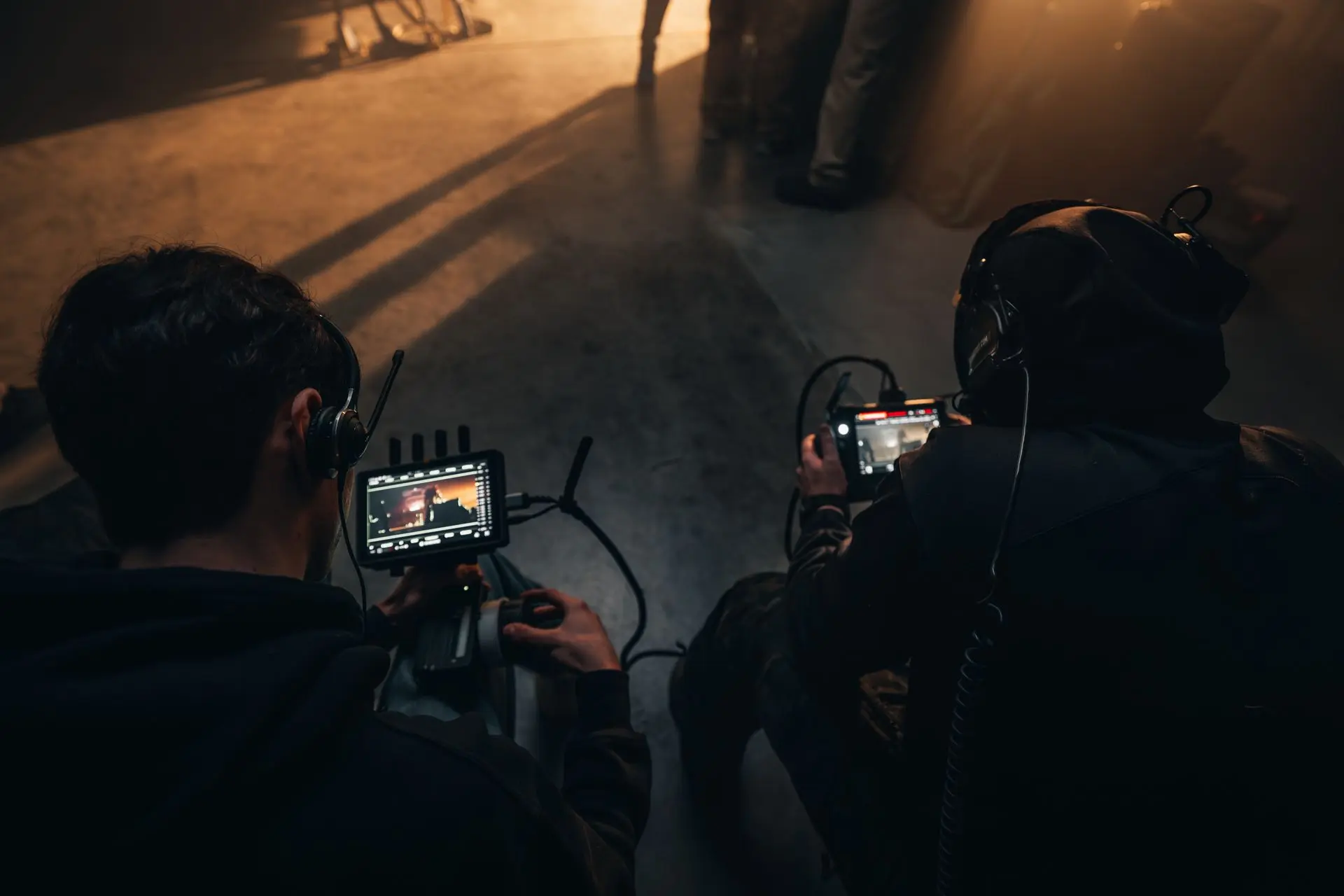
Ferdi Fischer, who invented the compact stabilized system WarpCam®, estimates from his own set experience that a conventional operator first learning a fast beat through a monitor misses the decisive timing in roughly nine out of ten initial attempts. The more important design choice is that a stunt-trained physical operator can move through choreography whose rhythm, spacing and danger points are already understood, while a second operator concentrates on framing and image control. In that specific and consequential sense, it is an **absolute game changer in the film world**: not because it replaces Steadicam, TRINITY, Ronin, Mōvi, remote heads, pursuit arms, cable systems or FPV, but because it treats stunt literacy as part of the camera system rather than an afterthought. An SWR profile confirms that the small, mobile camera system was developed after difficult stunts were repeatedly captured poorly or missed.
The broader principle applies to every platform: stabilization controls the camera; choreography knowledge controls the moment.
Supplied production still
Separate the physical route from image control
Does movement literacy permit a riskier camera position?
No. Understanding the action should produce better planning, not greater improvisational risk. The argument for movement literacy is not permission to place an operator closer to danger.
The Industry-Wide Labor-Management Safety Committee's revised Safety Bulletin #4 recommends that stunt coordination be involved in the safe placement of cameras and operators. It calls for appropriate planning, qualified personnel, rehearsals, communication, inspection and reassessment when conditions change. The bulletin is guidance rather than law, and applicable rules still govern each production, but its principle is unambiguous: camera placement belongs inside the stunt-safety process. (Safety Bulletin #4)
A stunt-trained operator does not gain unilateral authority to enter the stunt area. The stunt coordinator remains responsible for the proposed stunt activity within the production's formal structure. Camera routes, marks, communications, safe areas and stop authority must be understood by everyone whose work touches the sequence.
The best action-camera operator is not the person willing to stand closest. It is the person who can translate the intended frame into a repeatable movement without breaking the safety logic that makes the action possible.— STUNT.BLOG Editorial Desk
How to design the shot window before choosing gear
The opening failure can now be diagnosed before another take: define what the audience must see, identify what closes the frame, and solve the action, camera and safety paths as one system.
1. Name the screen event
What single change must the audience understand? ‘The car is fast’ is too broad. ‘The pursuing vehicle gains until it fills the mirror’ is a beat. ‘The defender realizes the attack changed sides’ is a beat. ‘The fall continues beyond the expected stopping point’ is a beat.
If the beat cannot be named, the camera cannot know what to anticipate.
2. Design the action path and camera path together
Do not finish the physical choreography and then ask where a camera can fit. Plot what the performer or vehicle does, what the camera must reveal, when it must arrive and how both movements end. Include the operator, grip, driver, pilot, remote-head operator and focus team whose actions produce the frame.
3. Find the cue that arrives before the image
What tells the operator that the beat is coming before it becomes visible on the monitor? It may be a count, a line, a musical phrase, a vehicle position, a performer's preparatory motion or an agreed communication cue. The cue belongs to the rehearsal and safety plan; it is not an improvised secret.
4. Choose the platform by movement envelope
Define the physical demand first: travel, height change, angular speed, payload, clearance, proximity, acceleration, stopping behaviour, line of sight, signal conditions and transition to the next platform. Then choose among handheld, body-worn stabilization, gimbal, remote head, pursuit arm, cable, compact mount, RC or FPV.
The right platform is the one that can reach the intended frame inside the approved movement envelope. Sensor status alone cannot answer that question.
5. Rehearse the image, not only the feat
A physical rehearsal asks whether the action can be executed. A camera rehearsal also asks whether the intended beat is legible, whether the lens arrives early enough, whether the background separates the motion, whether focus has a workable handoff and whether the beginning and end cut.
Playback should diagnose the whole system, not simply grade the performer.
6. Preserve a planned response to variation
Action varies. An effects object travels farther, a costume catches differently, a vehicle arrives with another closing speed or a performer must adjust. An operator who knows only one endpoint may lose the frame when reality departs from the diagram. An operator who understands the beat can preserve the story while staying inside the approved safety response.
7. Judge the usable screen event
The most expensive camera is not automatically the most valuable, and the closest image is not automatically the most immersive. Ask whether the footage communicates direction, force, scale, character and consequence—and whether it gives the editor a usable route through the sequence.
The output of action cinematography is not proof that a stunt occurred. It is a screen event the audience can understand and feel.
What the shot-window model does not promise
The shot window is a planning and diagnosis model, not a universal law. It does not mean every obscured beat is a mistake. A director may intentionally withhold geography, lose part of a body at the frame edge or let the camera arrive late to express confusion, surprise or subjectivity.
It does not mean wider coverage or more cameras automatically solve readability. Extra angles can preserve options, but each adds placement, communication, continuity and safety decisions. A wide master can prove that an event happened while removing the proximity that made it feel consequential.
Prediction is not guessing. It depends on shared rehearsal, communication and knowledge of the intended variation. When conditions or the action plan change, the model must be reassessed with the responsible departments.
The anticipation research cited here is adjacent evidence. It supports a plausible mechanism for reading early movement cues; it does not prove that stunt-trained operators outperform conventional camera operators as a group. Camera craft, movement literacy and production experience remain separate skills that can be combined in different ways.
Nor does the model identify one best platform. Human-carried, remote, pursuit, cable, hard-mounted and FPV systems open different physical routes. The decision remains conditional on the beat, the image standard, the environment, the crew and the approved safety envelope.
The operator should know before the audience does
Return to the playback that opened this story. The performance was controlled, but the decisive shape disappeared behind foreground, the lens reduced the sense of distance, the pan began after impact and the shot offered no useful handoff. No single correction explains all four losses. The overlap closed.
Modern camera systems have expanded action cinema's physical vocabulary. Body rigs, remote heads, vehicle arms, split-head cameras, cable systems, compact mounts and FPV platforms each open a different route through space.
None of them knows when the story turns.
That is the corrected model. For fast, close or continuous coverage, the camera is not a passive witness waiting for action to appear. It is another moving element in the choreography. The operator has to recognize the advance cue, enter the intended geometry and arrive with the action—without leaving the approved safety envelope or revealing the beat too early.
The audience should discover the hit, the fall, the pass or the reversal at the exact moment it happens.
The operator should know one beat earlier.
Research and image-source record28 entries
- WarpCam® — SlamArtist.com. Accessed 2026-07-20.
- Factors Influencing the Latency of Simple Reaction Time — Frontiers in Human Neuroscience, 2015-03-26. Accessed 2026-07-20.
- Age-related slowing of response selection and production in a visual choice reaction time task — Frontiers in Human Neuroscience, 2015-04-23. Accessed 2026-07-20.
- F1: The Movie — Operating at Racing Speed — Society of Camera Operators, 2026-06-25. Accessed 2026-07-20.
- West Side Story — Camera Operating as Dance — Society of Camera Operators, 2022-03-09. Accessed 2026-07-20.
- Expertise differences in anticipatory judgements during a temporally and spatially occluded task — PLOS ONE, 2017-02-07. Accessed 2026-07-20.
- Action Anticipation and Motor Resonance in Elite Basketball Players — Nature Neuroscience / PubMed, 2008-08-10. Accessed 2026-07-20.
- Segmentation of dance movement: effects of expertise, visual familiarity, motor experience and music — Frontiers in Psychology, 2015-01-07. Accessed 2026-07-20.
- Normal: Camera as the Third Participant — American Cinematographer, 2026-05-15. Accessed 2026-07-20.
- A Knight of the Seven Kingdoms: Trial of Seven — American Cinematographer, 2026-05-31. Accessed 2026-07-20.
- 2025 Scientific and Technical Awards — Academy of Motion Picture Arts and Sciences, 2025-02-18. Accessed 2026-07-20.
- The Professionals: The Killer and Ferrari — American Cinematographer, 2024-01-24. Accessed 2026-07-20.
- 2006 Scientific and Technical Awards — Academy of Motion Picture Arts and Sciences, 2006-02-18. Accessed 2026-07-20.
- Scientific and Technical Achievements to Be Honored — Blind Driver Roof Pod — Academy of Motion Picture Arts and Sciences, 2012-01-04. Accessed 2026-07-20.
- Mission: Impossible — The Final Reckoning: Compact Camera Mounts in Flight — American Cinematographer, 2026-04-29. Accessed 2026-07-20.
- SWR1 Profile: A Stuttgart Stunt Professional and His Mobile Camera System — Südwestrundfunk, 2023-08-28. Accessed 2026-07-20.
- Safety Bulletin #4 — Stunts — Industry-Wide Labor-Management Safety Committee, 2025-03-27. Accessed 2026-07-20.
- TRINITY 2 Product and Operating Architecture — ARRI. Accessed 2026-07-20.
- Ronin 2 Product Page — DJI. Accessed 2026-07-20.
- Mōvi Pro Product Page — Freefly Systems. Accessed 2026-07-20.
- Tiffen Advances Steadicam Volt 3 — American Cinematographer, 2026-04-15. Accessed 2026-07-20.
- Stabileye Nano in Close-Action Production — Y.M. Cinema, 2023-08-15. Accessed 2026-07-20.
- Remote Controlled TV Camera with a Newton Stabilized Head on Rail Dolly System — Testosterossa / Wikimedia Commons, 2019-09-17. Accessed 2026-07-20.
- Toyota Tundra Endeavor Film Car — Bluesnote / Wikimedia Commons, 2012-10-12. Accessed 2026-07-20.
- Racing Drone — Commanderbryce / Wikimedia Commons, 2016-03-14. Accessed 2026-07-20.
- Robycam at a Football Stadium in France — Victorpakhomov / Wikimedia Commons, 2019-07-02. Accessed 2026-07-20.
- Sky Cam at Stanford — Jrienstra / Wikimedia Commons, 2009-11-28. Accessed 2026-07-20.
- The 2010 World Cup Debut of Spidercam — Jimmy Baikovicius / Wikimedia Commons, 2010-07-02. Accessed 2026-07-20.


Loading approved comments…