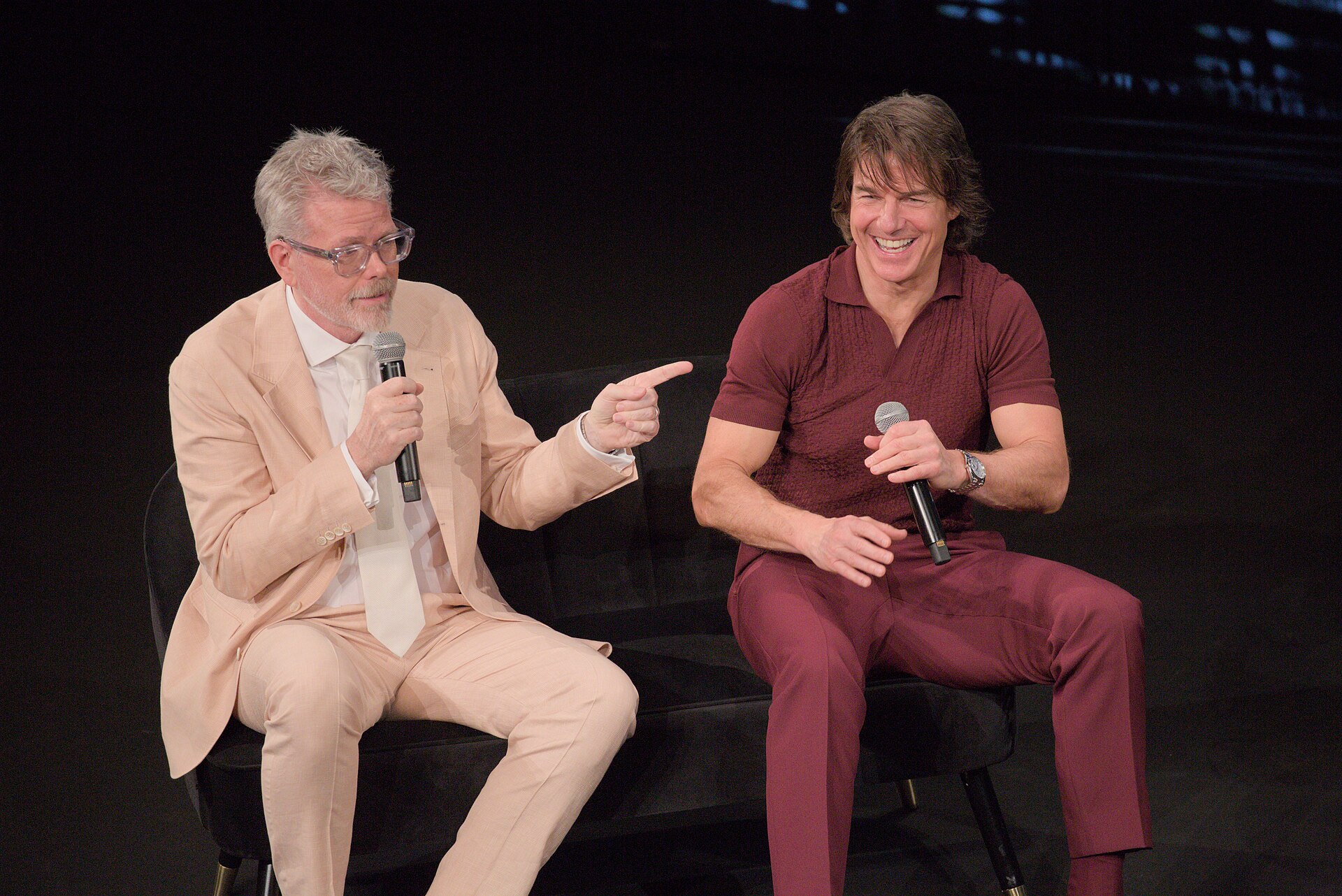
Analysis
The slogan is true in the place audiences care about most: Tom Cruise is often the body and face inside the dangerous-looking frame. He held the exterior of an airborne biplane, released a motorcycle over Helsetkopen and completed the repeated burning-parachute jumps Guinness later verified. The physical commitment is neither a rumour nor a visual-effects trick.
The grammar is incomplete. Doing the stunt and making the stunt are different achievements. The first can belong to the principal performer; the second belongs to a production system that designs, tests, rigs, pilots, photographs, resets, protects and finishes the image. Read the credits and Cruise becomes no less impressive. The cinema around him becomes more visible.
Cruise personally performs many documented hero elements. That does not mean every action beat is undoubled, unrigged or untouched by visual effects.
The 2026 Actor Awards list 52 professionals in The Final Reckoning's winning stunt ensemble—and that list still excludes much of the aerial, camera, safety and VFX workforce.
The useful distinction is simple: Cruise performs the action; a large, credited system makes the stunt repeatable, photographable and finishable.
What does the slogan get right?
Cruise's unusual value is continuity. When the actor's face, physical effort and character decision remain in one shot, the audience does not have to bridge a cut between performance and action. That is an artistic advantage, not only a publicity claim. His power as actor-producer also gives ambitious physical ideas time and resources that few performers can command.
The record is concrete. Guinness World Records verified 16 burning-parachute jumps completed in South Africa on 4 June 2025 for The Final Reckoning. The Academy's 2025 Honorary Award announcement separately cited Cruise's commitment to the stunt community. Neither record says he created the work alone; both establish that his contribution is real and exceptional.
This is why a debunk would miss the point. The question is not whether Cruise was there. It is how a production made it possible for him to be there, survive the take and give editors a finished sequence.
A stunt has two verbs: perform and make
Wade Eastwood's credits combine second-unit direction and stunt coordination. In his account of Dead Reckoning Part One, the action grew through a creative exchange with Cruise and Christopher McQuarrie, then moved through specialist preparation. Eastwood names skydiving coordinator Jon DeVore, fight coordinator Ruda Vrba, assistant stunt coordinator Scott Armstrong and teams devoted to motocross, aerial work and rehearsal.
For the Helsetkopen motorcycle-to-BASE-jump sequence, Eastwood reported a year of preparation, more than 500 skydives and 13,000 motocross jumps. Those are production figures, not an independently audited sporting ledger. Their value is not the headline number; it is the scale of repetition behind a few seconds of apparent spontaneity.
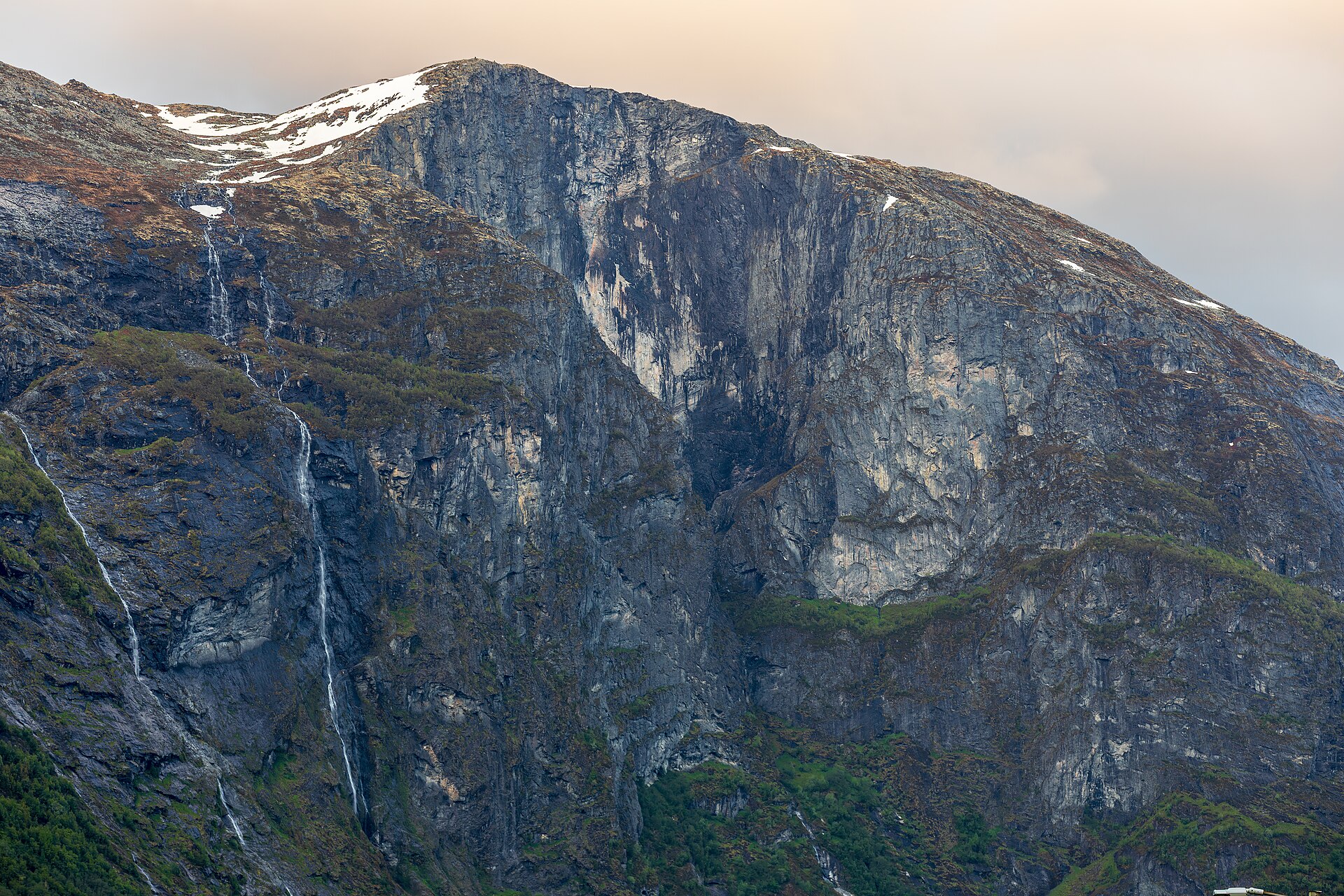
ILM's account completes the picture. Cruise's motorcycle release and airborne performance remained, while artists replaced the constructed ramp, adjusted terrain and bike detail, added dust and atmosphere, and removed camera drones. Practical performance was the foundation. Digital work made the foundation disappear into the story.
Location · Helsetkopen, Norway
The cliff is real. The shot is constructed.
Five Cruise moments, five larger systems
| Moment | Cruise's documented element | What the finished image also required |
|---|---|---|
| The Final Reckoning · biplane | Exterior performance on an airborne Stearman; Cruise also piloted some separate cockpit material. | A green-suited pilot for exterior work, reinforced wings, camera mounts, mechanics, grips, aerial crews, safety rigging and VFX removal. Source ↗ |
| The Final Reckoning · burning parachutes | Sixteen verified jumps beneath burning parachutes. | A repeated production method, parachute and aerial specialists, camera coverage, safety limits and selection from multiple takes; the record does not enumerate every department. Source ↗ |
| Dead Reckoning Part One · cliff jump | Motorcycle release and airborne performance retained in the final sequence. | A year of reported preparation, skydiving and motocross teams, computer planning, a constructed ramp and ILM replacement/cleanup. Source ↗ |
| Top Gun: Maverick · F/A-18 cockpit | Rear-seat acting under real flight loads, with cast operating cockpit cameras after takeoff. | Qualified front-seat pilots, technical advisers, Navy engineers, approved mounts and flight envelopes. Cruise did not fly the F/A-18. Source ↗ |
| The Final Reckoning · submarine | Cruise's physical performance in a large practical water-and-gimbal environment. | A rotating set, water and safety teams, digital particulate and environments, plus CG torpedoes when practical drops were judged unsafe. Source ↗ |
Why does one biplane frame contain so many departments?
The image reads as one man against open air. American Cinematographer's production account describes a more complex machine: reinforced wings, compact hard-mounted cameras whose mass changed the aircraft's behaviour, rebuilt engines, mechanics working between flights, pursuit aircraft and crews coordinating the usable window. Our related report on the shot window between stunts and camera choreography follows that camera problem in detail.
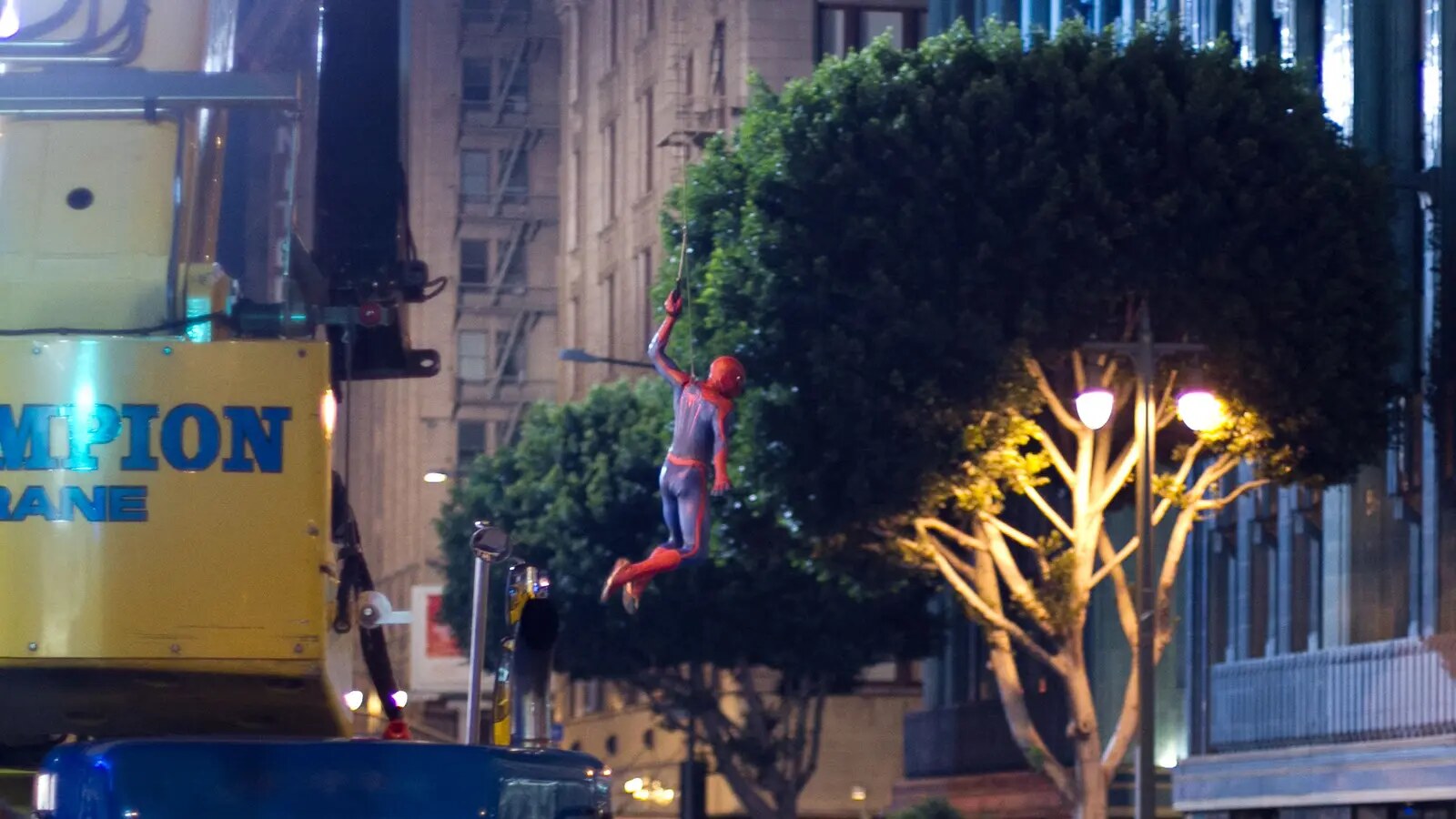
VFX supervisor Alex Wuttke adds a second layer. When Cruise was outside the aircraft, a green-suited pilot controlled it; the pilot and safety rigging were removed. That does not convert the performance into animation. It explains how a real performance could be photographed without pretending that an aircraft flew itself.
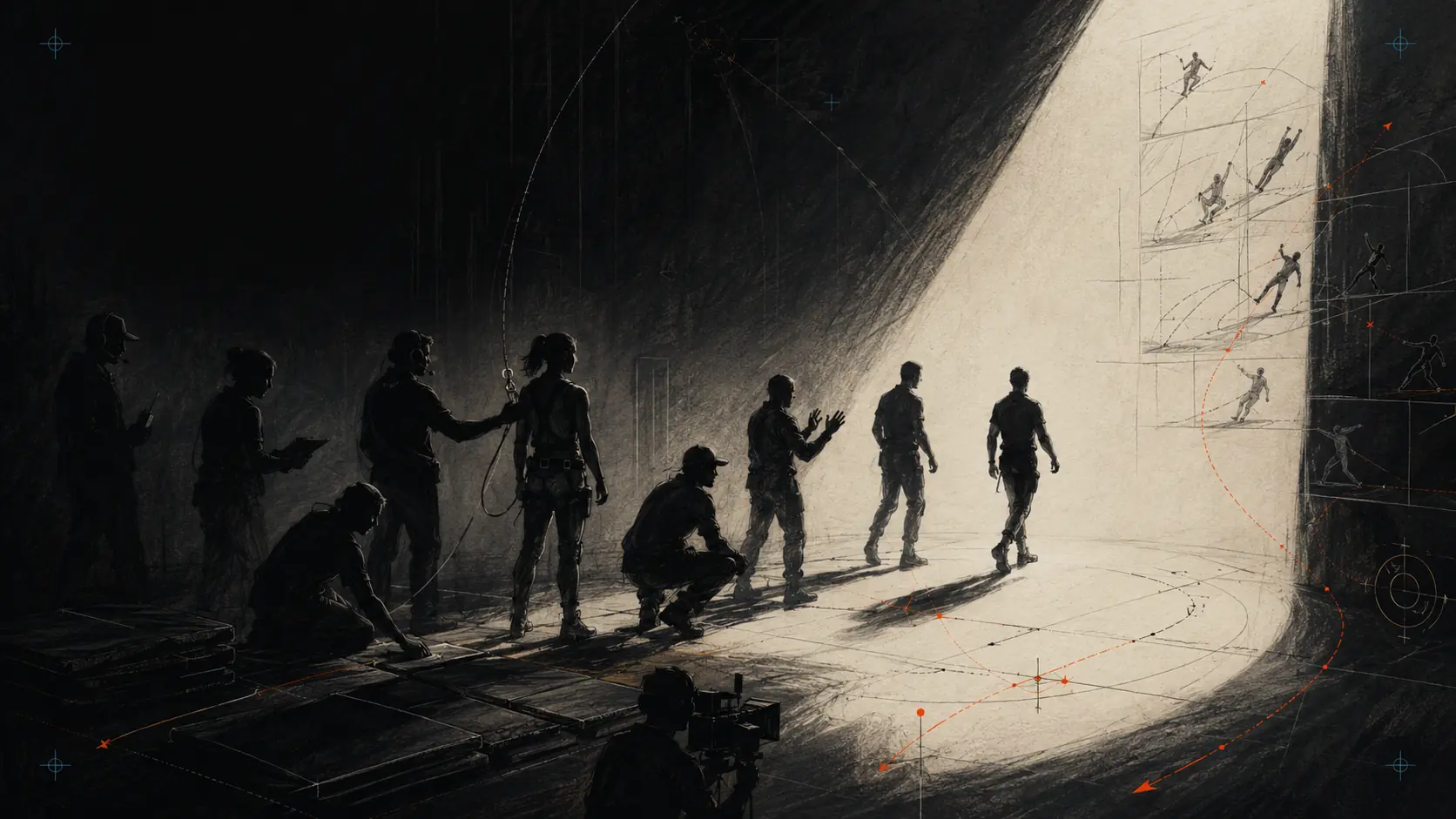
The useful production model has eight linked stages. Remove any one of them and the moment may remain brave but fail as cinema.
From idea to finished action
One frame, eight linked systems
The names and departments vary by sequence. The dependency does not.
Cruise is the body in the frame; the credits are the system around it.
A flow from story and performance through stunt design, training, rigging, aviation, camera, safety and visual-effects finishing.
What changes when all 52 names stay on the page?
The 2026 Actor Awards gave The Final Reckoning its Outstanding Action Performance by a Stunt Ensemble award. Its public ensemble record names 52 professionals. Some coordinated; some performed; many worked across action involving other cast members, tests and moments that never became marketing clips. The list does not include every rigger, pilot, mechanic, safety specialist, camera technician or VFX artist.
It also does not prove that a double secretly replaced Cruise in the biplane or burning-parachute work. That would be a different unsupported myth. Doubles are collaborators who protect continuity, test beats and carry physical action wherever the shot, schedule or performer requires it. Our actor–stunt-double handoff analysis explains why using a double is a production choice, not a lesser form of authorship.
Kept together, the names turn ‘his own stunt’ from a claim of solitude into a description of who is visible at the centre of a much larger design.
The Final Reckoning · officially listed 2026 stunt ensemble
- 01–04
- Joel Adrian Slaatto · Izaiah Aduhene · Ray Armstrong · Scott Armstrong
- 05–08
- Oliver Bailey · Russell Balogh · Marco Bianco · Tola Bishi
- 09–12
- Tamiko Brownlee · Kabelo Chalatsane · Lee Charles · David Cheung
- 13–16
- Paul Philip Clark · Jonathan Cohen · Lucy Cork · Campbell Gaston Dalziel
- 17–20
- Sanda Damba · Wade Eastwood · Matthew Fraser-Dawson · Kyle Freemantle
- 21–24
- Luke Gomes · Martin Gordon · Allan Hewitt · Theo Hill
- 25–28
- Nick Homewood · Jack Jagodka · Igor Karpovich · Joe Kennard
- 29–32
- Bogdan Kumshatsky · Michael Li · John Macdonald · Kai Martin
- 33–36
- Alexis McNaughton · Stefan Mihalache · Cali Nelle · Haruka Oshima
- 37–40
- Tomas Paredes · Stevie Parker · Tilly Powell · Ralph Ridge
- 41–44
- Tom Rodgers · Luke Scott · Jon Slayer · Mike Snow
- 45–48
- Leos Stransky · Malachi Templeton · James Unsworth · Matthew Van Leeve
- 49–52
- David Van Zeyl · Ruda Vrba · Martin Wilde · Jahgo WilliamsNames reproduced from the official Actor Awards listing; capitalization normalized.
U.S. Navy archive · Top Gun production, 1985
Before Maverick: the production system was already visible
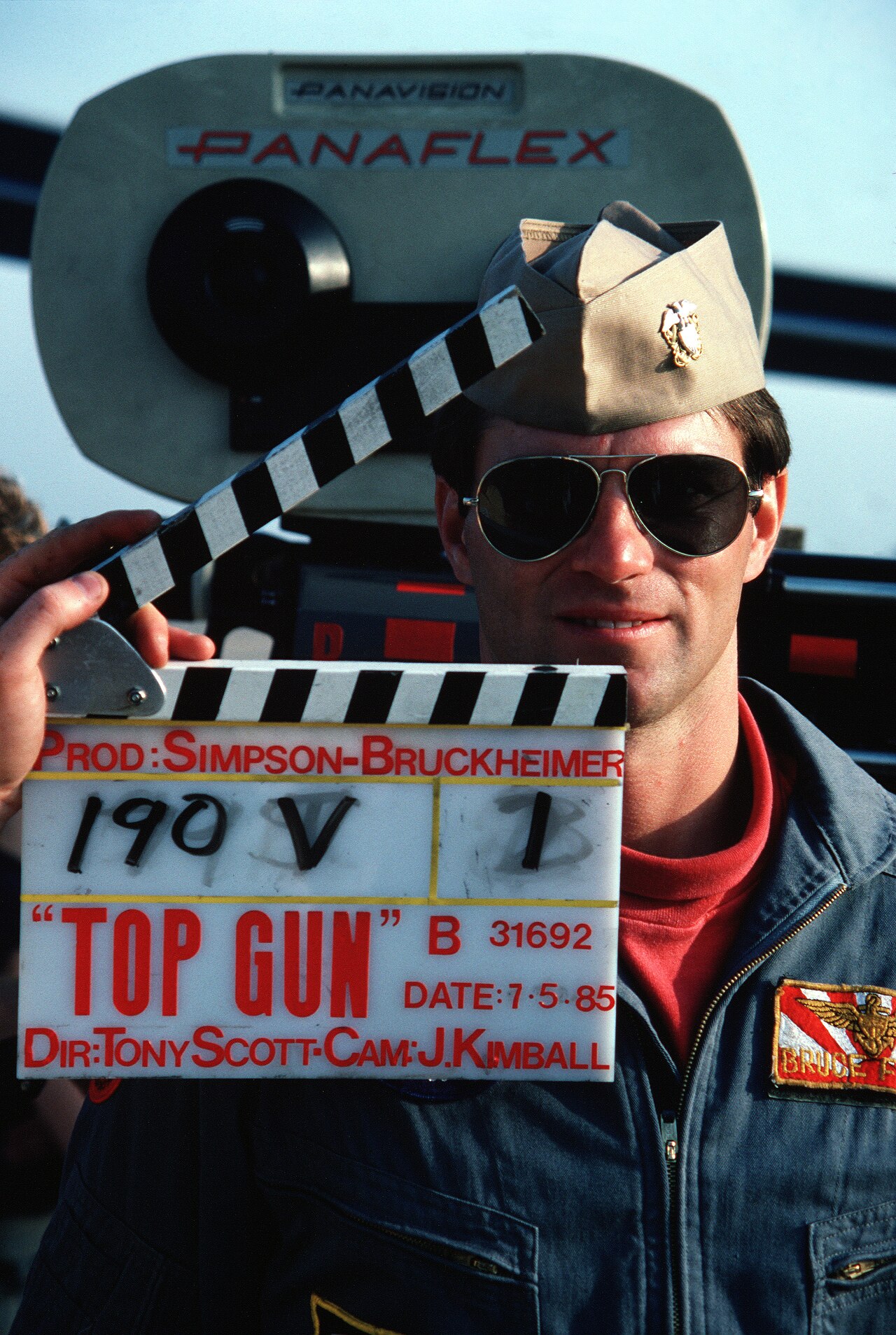
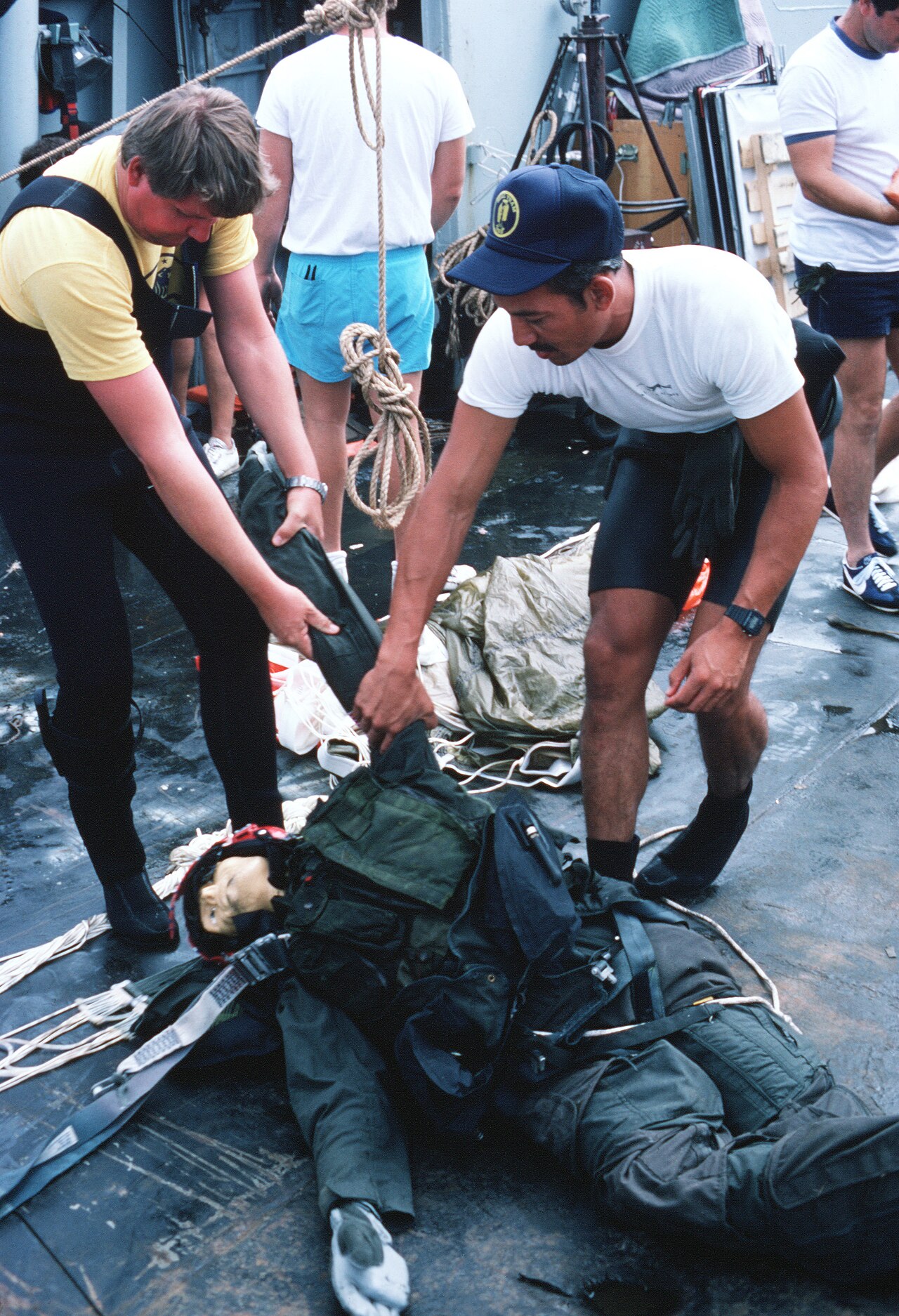
Images: PH2 Michael D. P. Flynn / U.S. Navy / U.S. National Archives, public domain in the United States; via Wikimedia Commons. Source derivative reproduced without crop or filter.
Did Cruise fly the F/A-18 in Top Gun: Maverick?
No. Cruise and the cast performed in the rear seats of real F/A-18Fs under real flight loads; qualified naval aviators flew from the front. The actors operated the cockpit camera systems once airborne. That distinction preserves the achievement instead of inflating it: an actor delivering a usable performance under G load is difficult even when somebody else correctly controls the aircraft.
Official Navy records name the engineering work behind those images. Teams designed, analysed, fabricated, quality-controlled and approved camera enclosures and mounts while protecting ejection paths, airflow and aircraft limits. Capt. Brian Ferguson described the technical-adviser and aerial-coordinator job as translating desired shots into capabilities the aircraft could safely provide.
The two 1985 archive photographs above are not Maverick evidence. They show a longer continuity: a camera, a naval adviser, a scene device and production gear beside the star-making image. Thirty-seven years later, the equipment changed; the collaborative grammar did not.
Does visual-effects work make a practical stunt less real?
No. A practical stunt is not a shot without visual effects. It is a shot that begins with something real. Wuttke put The Final Reckoning at roughly 4,000 VFX shots across the film. The number is not a count of fake stunts; it includes removals, environments, composites and work that lets practical action read without exposing the controls.
The submarine sequence makes the hybrid obvious. Cruise's body, water and a huge rotating practical environment supplied weight and disorientation. Digital artists added particulate and extended the space. When practical torpedo drops were considered unsafe, the torpedoes became CG. The result does not ask viewers to choose between real and digital. It uses each where it can carry the image responsibly.
The same logic governs the biplane and cliff jump: remove a pilot or ramp, extend a background, clean a wire. The performance remains. The apparatus stops competing with the story.
A practical stunt is not a shot without visual effects. It is a shot that begins with something real.— STUNT.BLOG Editorial Desk
Why safety belongs inside the creative credit
Reinforced wings, loose-object inspections, tested mounts, communications, alternate plans and authority to stop are not paperwork surrounding the art. They decide which angle can exist and whether the second take remains available. Safety is the craft that lets spectacle survive the take.
Preparation does not erase residual risk. During Fallout, Cruise broke his ankle on a building jump and production paused. The lesson is not that injury authenticates the image. It is that danger cannot be reduced to zero, so judgement, rehearsal and reassessment matter. Our field guide to stunt risk assessment beyond ‘common sense’ examines that system without turning it into a how-to manual.
A culture that treats ‘the star did it’ as the highest possible achievement can accidentally make doubles and controls sound like compromise. Professional action asks a better question: did the design serve character, produce a readable shot and keep decision-making honest under pressure?
Why do the credits matter more now?
Recognition is catching up with the work. Wade Eastwood received the inaugural Critics Choice award for Best Stunt Design in January 2026. The Final Reckoning's stunt ensemble won at the Actor Awards in March. The Academy will introduce Achievement in Stunt Design at the 100th Oscars for films released in 2027; recipient and voting rules were still to be announced in the Academy's original notice.
That new vocabulary changes the audience question. ‘Did Cruise really do it?’ remains useful, but it is only the entrance. ‘Who designed, performed, doubled, rigged, piloted, photographed, protected and finished it?’ describes the film. Our guide to the Academy's Stunt Design award tracks the formal rules; the Stunt Design craft guide gives the term its broader production context.
Cruise is central to this history, not outside it. His scale of ambition has made the invisible system unusually visible—if viewers let the credits run.
The bigger story makes the stunt bigger
Tom Cruise does many of his own stunts. The careful version of that sentence is more interesting than the absolute one. He performs documented, high-consequence physical elements with rare commitment, while collaborators build the conditions in which that commitment can become a movie.
The actor may look alone on the wing. The shot is anything but. Mechanics have made the aircraft ready. A pilot is flying. Cameras are inside the same aerodynamic problem. Riggers and safety specialists have set limits. Editors and VFX artists will carry the performance across the final gap. The credits do not shrink Cruise's achievement. They reveal its true scale.
Sources and evidence record14 entries
- Most burning parachute jumps by an individual — Guinness World Records, 2025-06-04. Accessed 2026-09-01.
- Mission: Impossible — The Final Reckoning: Compact Camera Mounts in Flight — American Cinematographer / American Society of Cinematographers. Accessed 2026-09-01.
- 2026 Oscar Contenders Blend the Storytelling Powers of Practical and Digital Effects — VFX Voice / Visual Effects Society. Accessed 2026-09-01.
- 32nd Annual Actor Awards — Nominees and Recipients — Actor Awards presented by SAG-AFTRA. Accessed 2026-09-01.
- Outstanding Film and Television Performances Honored at the 32nd Annual Actor Awards — Actor Awards presented by SAG-AFTRA. Accessed 2026-09-01.
- Defying Death With Mission: Impossible — Dead Reckoning Part One Second Unit Director & Stunt Coordinator Wade Eastwood — The Credits / Motion Picture Association, 2024-01-11. Accessed 2026-09-01.
- Declassifying the VFX of Mission: Impossible — Dead Reckoning Part One — Animation World Network. Accessed 2026-09-01.
- Best Stunt Design 2026 — Critics Choice Association. Accessed 2026-09-01.
- Academy to Honor Debbie Allen, Tom Cruise, Dolly Parton and Wynn Thomas at 2025 Governors Awards — Academy of Motion Picture Arts and Sciences, 2025-06-17. Accessed 2026-09-01.
- FRCSW Goes to the Movies: Top Gun: Maverick — U.S. Navy Fleet Readiness Center Southwest. Accessed 2026-09-01.
- Top Gun: Maverick Technical Advisor Talks Aviation Authenticity — U.S. Navy. Accessed 2026-09-01.
- Top Gun: Maverick: Cameras in the Cockpit — U.S. Department of the Navy Chief Information Officer. Accessed 2026-09-01.
- Tom Cruise's broken ankle shuts down M:I 6 filming — for now — ABC News, 2017-08-16. Accessed 2026-09-01.
- Academy Establishes Stunt Design Award for 100th Oscars — Academy of Motion Picture Arts and Sciences, 2025-04-10. Accessed 2026-07-12.

Loading approved comments…