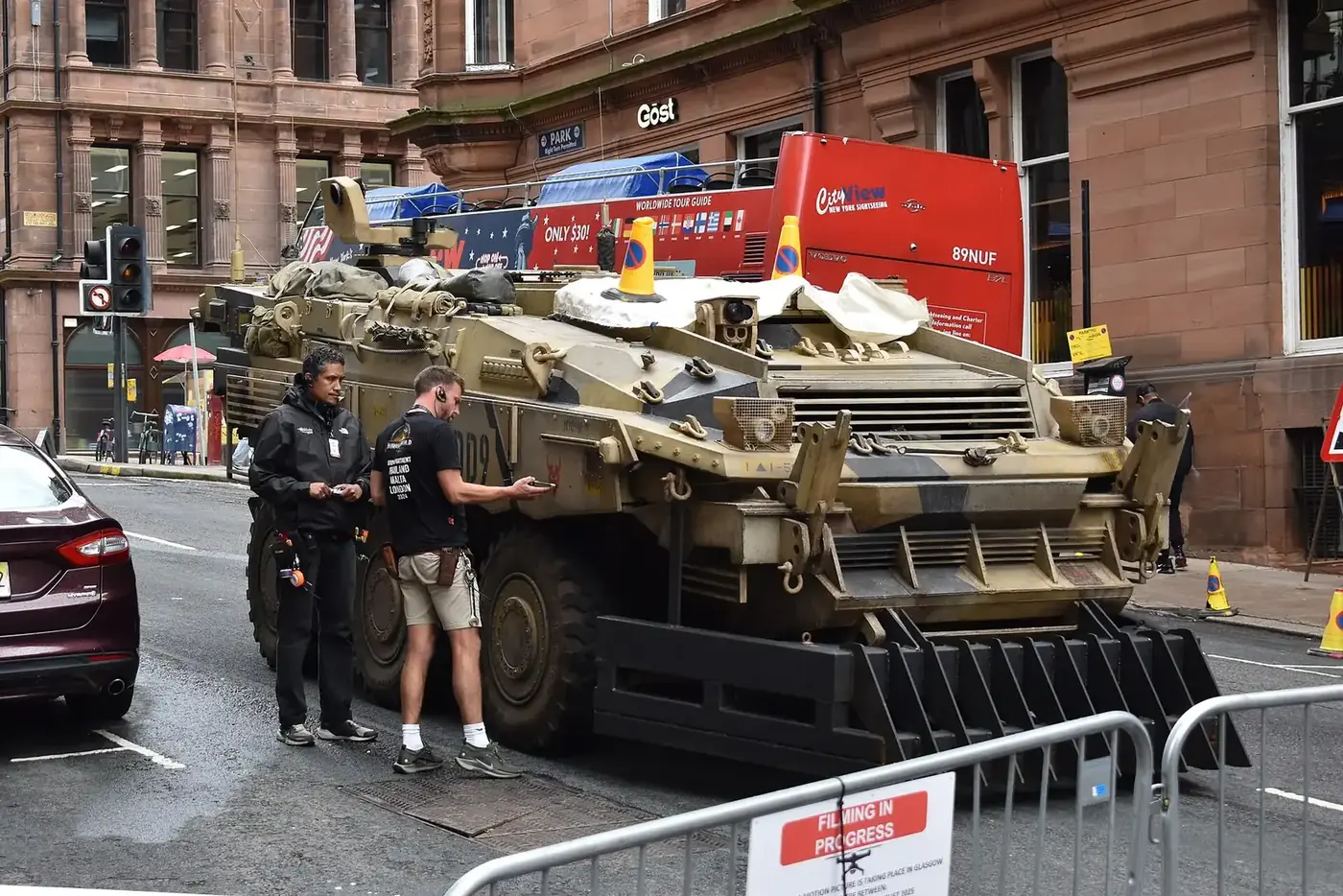
Confirmed fact
The most useful sentence in the entire risk-assessment debate is not “we completed the form.” It is: “this is what changed because we completed it.”
In 2023, Britain's Health and Safety Executive said the risk assessment for a Fast & Furious 9 wire stunt had failed to address a rope snap or link failure. It also found no system for double-checking the connection, no between-take check for deformation, an overdue harness inspection and crash matting that was not extended after the set and stunt changed. The document existed. The decision system around it did not do enough.
That case exposes the central mistake. A risk assessment is not the stunt's safety system. It is the written interface between Stunt Design, specialist knowledge, production resources, crew behaviour and the authority to change or stop the plan.
There is no universal Stunt Risk Assessment form and no single accident or law that invented it. Today's documents grew from general occupational-safety duties, stunt specialisation and production workflow.
A completed form is weak evidence of safety. The useful test is whether the assessment changed a decision, assigned a control, reached the affected people and remained valid after the action changed.
Common sense can cover visible, stable and familiar conditions. It cannot substitute for information about hidden hazards, specialist systems, moving zones, cues, altered equipment or failure paths a normal crew member cannot know.
There is no correct page count. A document is too short when a competent reader cannot reconstruct the decision; it is too long when the people at risk cannot find the part that changes their behaviour.
A form is not a safety system
The suspicion that risk assessments are written for insurers is not irrational. Productions may be asked for them by studios, insurers, completion guarantors, locations, permit authorities or clients. A dated document also creates a record after the event. But public evidence does not support the stronger claim that one universal form is always an insurance condition, or that a particular page count automatically protects coverage.
The operational value sits in a chain of actions: identify the hazard; describe a credible failure path; choose controls; resource them; assign them; brief the people affected; verify the controls in the real location; and reassess when an assumption changes. Break that chain and the PDF becomes evidence that paperwork happened—not that risk was managed.
There is no controlled, film-industry study showing that a standalone Stunt Risk Assessment form reduces a particular percentage of injuries. A broader 2007 systematic review found insufficient evidence to recommend for or against specific occupational health-and-safety management-system interventions. That uncertainty matters. It prevents a form from borrowing scientific authority it has not earned.
It does not follow that hazard assessment is useless. Official investigations repeatedly identify unrecognised failure modes, missing controls and unreviewed changes as contributing factors. The defensible conclusion is narrower: assessment can be useful because it makes those decisions explicit, but documentation alone is not the active ingredient.
Paper completion versus operational control
| Question | Paper outcome | Safety outcome |
|---|---|---|
| Hazards | A list of nouns: vehicle, height, fire, wire | A causal scenario: trigger, exposure, consequence and contributing conditions Source ↗ |
| Controls | “Experienced team”, “take care”, PPE | A specific change with an owner and a way to verify it |
| Risk score | A low residual number that closes the form | A prioritisation aid that can still require redesign or no-go |
| Distribution | An attachment was emailed | Relevant people understand the zone, cue, control and stop condition for their role |
| Revision | The original PDF remains on file | A meaningful change stops work until assumptions, controls and briefing are current Source ↗ |
No single accident invented the Stunt Risk Assessment
The familiar daily PDF has no single inventor. Three histories converged: general occupational-safety law began demanding systematic assessment; stunt work became a specialised, coordinated production discipline; and studios turned those duties into repeatable documents that could travel with scripts, call sheets and safety memos.
France already required a prior study plus protection and rescue measures for unusual filming risks in 1971. The European Union's 1989 framework directive then pushed risk evaluation and prevention principles into national systems. Germany's 1996 Arbeitsschutzgesetz made assessment and documentation explicit, while its production-specific rules already treated dangerous scenic action as work requiring protection, rehearsal and suitable people.
The forms became more visible from the 1990s onward because the legal process, specialist role and digital production workflow finally met. The 2010s and 2020s brought more public templates, initial-versus-residual scoring, revision fields and specialist plans. That is a history of standardisation—not proof that every production uses the system equally well.
Confirmed fact
How the modern document took shape
US general duty
The Occupational Safety and Health Act establishes a broad federal employer duty without creating a film-specific RA form.
A film-specific French precursor
A now-repealed French rule requires prior study and protection or rescue measures for filming with unusual risks.
European framework
Directive 89/391/EEC makes risk evaluation and prevention principles part of the EU-wide employer-duty model.
German assessment and scenic-action duties
The Arbeitsschutzgesetz formalises assessment and records; DGUV/VBG production rules require protection, rehearsal and suitable people for dangerous scenic processes.
German stunt-specific method
DGUV Information 215-315 publishes a proportional, individual assessment process with roles, a matrix and examples.
Italy names the coordinator's document role
Within its collective-agreement scope, the Italian stunt CCNL—effective from 31 October 2024—expressly links the Stunt Coordinator to risk evaluation through completing the Risk Assessment.
California pilot makes written SRAs explicit
Qualifying Tax Credit Program 4.0 productions enter a five-year pilot requiring independent Safety Advisors and written assessments for defined high-risk activities, including major stunts.
The duty travels; the form does not
Germany, Britain and the European Union state the assessment duty more explicitly than US federal law, but none of those systems prescribes one global Stunt Risk Assessment layout. What must exist is the process: identify, evaluate, control, document, communicate and review.
In Germany, §§ 5–6 ArbSchG require the employer to assess work-related hazards and retain appropriate records. § 3 BetrSichV adds a competent, change-sensitive assessment before work equipment is used. DGUV Information 215-315 then translates the general duty into special scenic action and says the assessment's extent should follow the degree of hazard.
Britain requires a “suitable and sufficient” assessment. HSE's film guidance says production complexity should shape the management system and that an employer cannot delegate away the legal duty. The Stunt Coordinator may supply the technical truth; production remains responsible for making the system possible.
At US federal level, the General Duty Clause addresses recognised serious hazards, and OSHA publishes Job Hazard Analysis guidance, but there is no nationwide law requiring every stunt to use a document with that exact title, a particular matrix or a 24-hour deadline.
California's current pilot is narrower and more explicit. From July 2025 through June 2030, productions in Film and Television Tax Credit Program 4.0 must use a dedicated Safety Advisor and written general or specific assessments. Major stunts are among the activities requiring a Specific Risk Assessment. The rule does not apply to every California shoot, and the programme's own evaluation is not due until 2029.
Same safety question, different legal architecture
| System | What is required | One stunt form? | Distinctive feature |
|---|---|---|---|
| Germany | Employer assessment, records, competent input, controls and review | No | DGUV adds a stunt-specific method and proportionality guidance Source ↗ |
| United Kingdom | A suitable and sufficient employer assessment | No | HSE film guidance keeps overall duty with the employer Source ↗ |
| US federal | General duty plus applicable standards and state rules | No | Studio, union, insurer, permit and location systems fill much of the documentary gap Source ↗ |
| California pilot | Written general and specific assessments for qualifying tax-credit productions | Industry sample forms; no mandatory state layout | Independent Safety Advisor; meaningful changes require revision Source ↗ |
| France | General employer assessment plus advance documentation for unusual risks in covered film-sector productions | No | A film-specific lineage reaches back to 1971 Source ↗ |
| Italy | Employer DVR duties plus the 2024 stunt collective agreement | No state-wide template | Within its scope, the agreement expressly assigns stunt-RA completion to the Coordinator Source ↗ |
Where common sense ends
“Use common sense” sounds attractive because nobody wants a document that warns experienced crew that gravity exists. HSE itself says assessment should focus on risks capable of real harm, not every trivial or fanciful possibility. But common sense is not shared technical knowledge, and it is not a control for information one department has withheld from another.
Common sense can reasonably cover conditions that are visible, stable, familiar and within an ordinary worker's experience—after the production has provided a safe workplace and the information needed to recognise them. It stops carrying the load when a hazard is hidden, specialist, moving, changed, compounded or outside the person's authority.
A camera operator cannot infer a modified vehicle path. Background cannot intuit a new exclusion zone. A performer cannot inspect an engineering assumption they were never shown. A new crew member may not recognise a local cue. Fatigue, language, darkness and time pressure can also move an apparently ordinary risk beyond ordinary judgement. The same interface problem appears in our map of Stunt Department roles and reporting lines.
No one can apply common sense to information they were never given.— STUNT.BLOG Editorial Desk
A practical boundary for “common sense”
| Condition | What can be expected | What production must provide |
|---|---|---|
| Visible, stable, ordinary | Everyday alertness within a properly managed workplace | A safe baseline, clear access and normal instruction |
| Known to specialists, hidden from others | No reliable inference by general crew | Role-specific warning, isolation and a clear behavioural instruction |
| Dynamic or changed | The old mental model is no longer dependable | Stop, reassess, re-brief and verify before continuing Source ↗ |
| High-consequence specialist system | Competence within the person's actual discipline | Qualified ownership, technical assessment and controlled interfaces |
| New, fatigued or language-constrained crew | Less assumed familiarity and spare attention | Information adapted to the person, task and conditions |
Do not list everything imaginable
A plausible assessment is not a catalogue of the universe. Include a risk when it is connected to the planned activity, has a credible causal path under the actual conditions, can expose identifiable people, has a consequence or repetition that matters, and can be changed by a control or decision.
Low probability does not automatically mean irrelevant. A catastrophic outcome belongs in the assessment when a credible failure path exists. The discipline is to describe that path—not to add “helicopter crashes” or “car loses control” as free-floating sentences that neither define exposure nor change the plan.
If an aircraft carries the camera, the aviation operator should own the flight and airworthiness assessment. Production's stunt assessment should own the ground interface: who can be exposed, where the production boundary sits, how departments coordinate and what change would stop the activity. Cross-reference the specialist plan; do not duplicate an aviation manual badly or leave a gap between departments.
The same applies to a vehicle and a camera crew far from the intended action. If terrain, barriers and geometry remove any credible path, a generic runaway-car paragraph adds noise. If the route, surface, energy, slope, possible deflection or changed stopping area creates a credible path, distance alone does not make the exposure fanciful. The assessment should follow the causal geometry, not an arbitrary imagination contest.
How long is long enough?
There is no correct number of pages. A one-page daily assessment can be adequate for a tightly bounded, low-complexity action. Twenty pages can still be inadequate if they repeat generic policy while hiding the one changed assumption that matters.
In a private working archive reviewed for this article, the formats ranged from one-page German daily sheets to a 19-page general location assessment, beat-by-beat packs with initial and residual ratings, and narrative safety breakdowns. Length did not predict usefulness. Specificity, ownership, revision and a visible connection to the planned action did.
A useful layered structure solves the reading problem. The full assessment and method remain available to the people making and verifying decisions. Specialist annexes hold engineering, aviation, vehicle, effects or rescue detail. The crew-facing layer distils only what changes behaviour that day: scope, affected zones, responsibilities, cues, stop conditions and material changes.
The document is too short when another competent person—absent from the original meeting—cannot understand the activity, credible failure, people exposed, controls, owners and change triggers. It is too long when the critical instruction cannot be found, generic text obscures the scene-specific decision or the affected crew receive a technical archive instead of usable information.
Safe Work Australia makes the same cross-industry point bluntly: a safety method statement should be short, specific and easily understood; excessive detail can make it difficult to apply, monitor or review. The principle transfers well to film even though the cited document governs Australian high-risk construction work, not stunts.
Do people actually read it?
There is no reliable public film-industry dataset showing what proportion of crew read an entire Stunt Risk Assessment, how much they retain or whether a signature reflects understanding. Claims either way should be treated as anecdote.
The public rules reveal something more useful. Disney requires its four-page Stunt Hazard Assessment to be completed and distributed 24 hours before general crew call. California's pilot makes assessments electronically accessible on request and separately requires daily safety meetings. Neither distribution nor availability proves comprehension.
Different readers need different depth. Production, the Stunt Coordinator, Safety Advisor and relevant department heads need the full decision record. Specialists need the interfaces that touch their work. Affected crew need a clear brief, the chance to ask questions and confirmation that the plan they heard is the plan about to happen.
The comprehension test is behavioural, not clerical: can the person explain the boundary, cue, control or stop condition that applies to their role? A name on a circulation list cannot answer that question.
What a plausible assessment contains
The assessment should describe decisions, not perform expertise. It does not replace the engineering plan, aviation procedure, effects plan, medical protocol or Stunt Coordinator's method. It connects those systems and makes their assumptions visible—the same reason fight previs must become a production decision tool, not merely an impressive clip.
Start with the exact creative and production scope: scene, activity, place, date, version and the people or departments involved. Then write hazards as events. OSHA's useful structure is environment, exposure, trigger, consequence and contributing factors. “Vehicle” is a category. “A changed path exposes a crew position after loss of control” is a scenario a production can act on.
Record the risk before additional controls so the document does not disguise the problem it was built to solve. Then move through the control hierarchy: eliminate or redesign first; isolate or engineer next; use administrative controls and PPE where necessary. A matrix can help prioritise. It cannot certify that a stunt is safe.
Every material control needs an owner, a time, a verification point and enough authority to be enforced. Residual risk is the decision after those controls—not a number chosen to make the cell green. The document must also state what change invalidates the assessment and who has authority to stop, revise and re-brief.
Risk Assessment, Method Statement and call sheet answer different questions. The assessment asks what can fail and what must control it. The method describes how the agreed work is organised. The call sheet communicates the day. They may travel together or appear in one RAMS pack, but one cannot silently substitute for the others.
Eight quality gates
| Gate | The document should make visible | Failure signal |
|---|---|---|
| 1. Scope | Exact activity, scene, location, date and version | Generic title or stale production details |
| 2. Failure path | Trigger, exposure, consequence and contributing conditions | Hazard nouns without a causal scenario Source ↗ |
| 3. People | Performers, cast, crew, departments, public and vulnerable groups who can be affected | Only the stunt performer is considered |
| 4. Initial risk | The problem before additional controls | Everything begins and ends as low risk |
| 5. Controls | Specific prevention or mitigation linked to the failure path | Experience, caution or PPE used as universal answers |
| 6. Ownership | Who implements, checks and resources each material control | Passive language with no responsible role |
| 7. Residual decision | What remains, whether it is acceptable and what stops the activity | A green score treated as proof |
| 8. Change control | Assumptions, revision trigger, re-brief and current version | The plan changed but the assessment did not Source ↗ |
What accident reports can—and cannot—prove
Accident reports are unusually clear about how risk-assessment systems fail. They do not prove that a better PDF, by itself, would certainly have prevented the event. They show which foreseeable questions were absent, disconnected from controls or not revisited when the work changed.
The BBC's report into Richard Hammond's 2006 Top Gear jet-car crash found that a supplier assessment was generic, contained the wrong location, treated all risks as tolerable and offered sparse mitigation for foreseeable failures. It also described a disconnect between controls written down and arrangements to implement and check them. Distribution was not the same as a suitable system.
WorkSafeBC's investigation into the 2017 Deadpool 2 motorcycle-stunt fatality found no adequate risk assessment addressing safety controls, speed and equipment limitations. A second transition ramp was added during rehearsal, yet the changed geometry and possible acceleration path were not adequately assessed; barriers were absent. The report also identified orientation, supervision and headgear failures. The lesson is not “add more rows.” It is “treat rehearsal information and physical changes as new evidence.”
HSE's Fast & Furious 9 case presents the third pattern: an assessment existed but omitted critical failure modes and between-take verification, while crash protection did not follow changes to the set and sequence. The £800,000 fine came after the production company pleaded guilty to breaching its statutory duty to people not in its employment.
Can a risk assessment be credited with preventing an accident? Sometimes a documented redesign, cancellation or added control provides a credible prevention story. But the strongest outcome—nothing happened—rarely produces a public investigation, and the avoided counterfactual cannot be measured directly. California's pilot is designed to collect final safety evaluations and is due to be assessed by 2029. Until then, claims of a quantified stunt-RA effect would outrun the evidence.
Analysis
Repeated gaps in three official investigations
Number of selected cases in which the official record explicitly documented each risk-management gap (n=3).
Three investigations, three different gaps
| Production / year | Assessment finding | System lesson |
|---|---|---|
| Top Gear / 2006 | Generic and inaccurate assessment; sparse failure mitigation; weak implementation link | A circulated document can still be unsuitable and insufficient Source ↗ |
| Deadpool 2 / 2017 | No adequate stunt-specific assessment for speed, equipment limits and changed set geometry | Rehearsal observations and layout changes must alter the decision system Source ↗ |
| Fast & Furious 9 / 2019 | Existing assessment omitted failure modes, checks and changed crash protection | A form is only current when controls follow the actual take Source ↗ |
The final test: can it change the plan?
A credible Stunt Risk Assessment should be able to change at least one real production variable: the shot, action, exposure, people, equipment, place, time, resources, safeguards or decision to proceed. If nothing in the document can affect anything on the day, it is a record—not a control.
That is where common sense belongs too. Common sense is the last metre of human judgement inside a well-designed system. It is not the missing briefing, the hidden technical assumption or the budget line the production chose not to fund.
The PDF matters when it carries specialist knowledge across departmental boundaries and survives revision. It fails when it becomes a talisman: attached, signed, scored low and forgotten. The stunt is not made safer by the weight of the file. It is made safer by the decisions the file can still force.
Law, guidance, investigations and evidence record22 entries
- Company fined as stunt performer sustains life-changing injuries during filming of Fast and Furious movie — Health and Safety Executive, 2023-11-24. Accessed 2026-07-29.
- Incident Investigation Report — TCF Vancouver Productions Ltd. — WorkSafeBC, 2019-10-02. Accessed 2026-07-29.
- Investigation into the Elvington Airfield Incident — BBC, 2007-06-21. Accessed 2026-07-29.
- Arbeitsschutzgesetz §§ 5–6 — Assessment of working conditions and documentation — Federal Republic of Germany. Accessed 2026-07-29.
- Betriebssicherheitsverordnung § 3 — Risk assessment for work equipment — Federal Republic of Germany. Accessed 2026-07-29.
- DGUV Information 215-315 — Sicherheit bei Veranstaltungen und Produktionen: Besondere szenische Darstellungen — Deutsche Gesetzliche Unfallversicherung, 2015-02-01. Accessed 2026-07-29.
- DGUV Vorschrift 17 — Veranstaltungs- und Produktionsstätten für szenische Darstellung — Deutsche Gesetzliche Unfallversicherung, 1998-04-01. Accessed 2026-07-29.
- Council Directive 89/391/EEC on the introduction of measures to encourage improvements in the safety and health of workers at work — European Union, 1989-06-12. Accessed 2026-07-29.
- Management of Health and Safety at Work Regulations 1999 — Regulation 3 — UK Government, 1999-12-01. Accessed 2026-07-29.
- Safety in film, TV and broadcasting — Health and Safety Executive. Accessed 2026-07-29.
- Frequently asked questions — risk assessment — Health and Safety Executive. Accessed 2026-07-29.
- Arrêté du 9 juin 1971 relatif aux mesures de prévention dans les productions cinématographiques — République française / Légifrance, 1971-06-09. Accessed 2026-07-29.
- Arrêté du 15 octobre 2016 portant extension de mesures de prévention dans la production de films — République française / Légifrance, 2016-10-15. Accessed 2026-07-29.
- Contratto Collettivo Nazionale per gli Stuntman — ANICA and signatory organisations, 2024-07-12. Accessed 2026-07-29.
- Occupational Safety and Health Act — Section 5 duties — US Occupational Safety and Health Administration, 1970-12-29. Accessed 2026-07-29.
- Job Hazard Analysis — OSHA 3071 — US Occupational Safety and Health Administration. Accessed 2026-07-29.
- Safety in Motion Picture Productions — Frequently Asked Questions — California Division of Occupational Safety and Health, 2025-01-01. Accessed 2026-07-29.
- Specific Risk Assessment — Contract Services. Accessed 2026-07-29.
- Stunt Hazard Assessment — The Walt Disney Company, 2021-09-01. Accessed 2026-07-29.
- Safe Work Method Statement for High Risk Construction Work — Safe Work Australia, 2014-12-01. Accessed 2026-07-29.
- The effectiveness of occupational health and safety management system interventions: a systematic review — Safety Science / NCBI review record, 2007-03-01. Accessed 2026-07-29.
- STUNT.BLOG working-document review — stunt risk assessments — Private production archive supplied by Ferdi Fischer, 2026-07-29. Accessed 2026-07-29.
Loading approved comments…