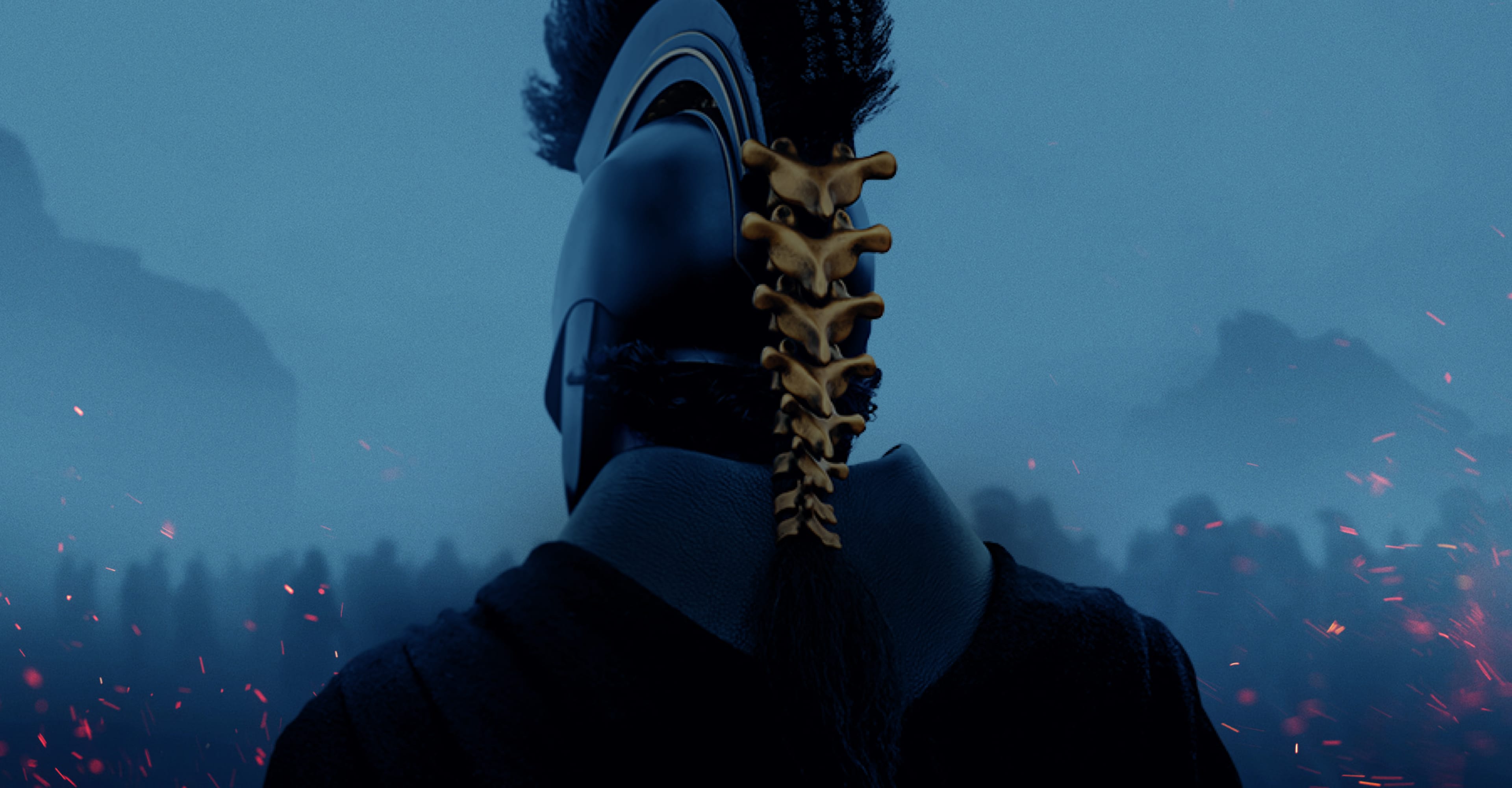
A real wave of critics and viewers described The Odyssey as exceptionally or even uncomfortably loud. Those reports establish a reception pattern—not one verified sound-pressure level for every screening.
The film creates pressure through contrast: quiet passages make sudden peaks feel larger, while Ludwig Göransson's Risset rhythm produces the sensation of acceleration even when the pattern can continue indefinitely.
IMAX 70mm describes the picture format, not a guaranteed volume. Auditorium calibration, fader position, loudspeakers, seat location and the exact presentation system all affect what reaches a listener.
Analysis
The image above already feels pressurised. Seen from behind, a dark Greek helmet fills the frame; a row of gold vertebrae turns armour and anatomy into one silhouette while red sparks cut through a storm-blue field. But a still has no decibels. The physical reaction begins when the soundtrack gives metal, breath and impact acoustic weight and makes the surrounding space tangible.
After The Odyssey opened, that reaction became a story of its own. A CinemaBlend critic wrote that, in one IMAX screening, some action moments were louder than anything he had experienced at that cinema and that a companion covered his ears. The Washington Post reported a wider online trail of complaints and earplug use. Reddit discussions repeated the same words—painful, vibrating, dialogue-masking—while other viewers reported ordinary or even restrained levels in different rooms.
So the responsible answer begins with a split. Yes, many people experienced the film as extraordinarily loud. No, there is no published, calibrated measurement proving that every IMAX or 70mm screening played at one exceptional level. The pattern is real; the universal number is not.
The reports are real. The number is not.
A loudness debate becomes unreliable when dozens of subjective accounts are turned into one imaginary meter reading. A viewer can accurately report pain, pressure or masked dialogue without knowing the sound-pressure level. A phone app can display a number without being calibrated for the room, the microphone, frequency weighting or peak response. Neither should be promoted into a laboratory result.
The variation is evidence too. In the same online discussions, some people describe the Cyclops sequence as overwhelming, others say their regular cinema sounded comfortable, and at least one viewer found the presentation too quiet. Different rooms, systems, fader choices, seats and individual sensitivity can all sit between the same digital soundtrack and the final experience.
This is why the headline says felt. The word does not weaken the reaction; it locates it correctly. Loudness is a physical signal interpreted by a particular listener in a particular room over a particular duration.
Four kinds of evidence that must stay separate
| Evidence | What it can establish | What it cannot establish |
|---|---|---|
| Audience report | How one listener experienced one screening | The calibrated level in every auditorium Source ↗ |
| Professional review | A named critic's comparative experience and interpretation | A universal engineering measurement Source ↗ |
| Creative interview | What the filmmakers intended and which compositional device they used | The playback conditions at a local cinema Source ↗ |
| Cinema calibration record | How a room is aligned against a reference signal | The average or peak level of The Odyssey Source ↗ |
The loudest trick is acceleration
In Entertainment Weekly's cast interview, Tom Holland describes Ludwig Göransson's Troy music as intensely stressful. Nolan names the device: a Risset rhythm. It is the rhythmic cousin of the Shepard tone—layers cycle so that the pattern appears to become faster and faster without needing a conventional endpoint. The body hears pursuit even when the composition has found a way to keep running.
The rhythm does not work alone. Nolan told Vulture that much of the score begins in sounds that seem to emerge from the environment. At Troy, struck metal, alarms, percussion, voices, fire and music can lose their clean borders. A sound may begin as an object in the scene and end as part of the score. That fusion makes the world itself appear to accelerate.
Then contrast does the multiplication. Rolling Stone Canada described the film as moving between forceful bursts and quiet contemplation. A peak after restraint feels larger than the same peak inside constant noise. Silence restores the listener's scale; the next transient breaks it again. What audiences call loud is therefore partly maximum energy and partly the distance the film travels to reach it.
The room becomes the final instrument
Cinema sound has a reference system so that mixers and theatres can speak the same technical language. SMPTE describes a nominal calibration relationship in which a -20 dBFS reference signal produces 85 dBC from a screen channel. Dolby's current processor manual uses fader 7.0 during alignment. Those figures are often misunderstood. They are calibration conditions—not a claim that a film averages 85 dB, a ceiling on peaks or a health verdict.
A properly aligned room still has choices and variables: actual fader position, maintenance, equalisation, amplifier and loudspeaker headroom, screen loss, room size, bass behaviour and seat location. Low frequencies may register as chest pressure before a listener calls them loud. A seat near a loudspeaker array can differ from the reference listening position even inside the same auditorium.
IMAX adds another source of confusion. Some laser rooms advertise 12-channel sound and substantial headroom. More channels can improve placement and coverage; headroom lets short peaks pass without clipping. Neither automatically means louder. And 15/70 film determines how the image travels through the projector, not how far the sound fader is turned. Our separate IMAX format analysis follows the picture pipeline; it should not be used as a shortcut for the audio question.
Four tempting explanations—and the correction
| Claim | Correction |
|---|---|
| It was loud because it was IMAX 70mm. | 70mm identifies the picture print. Sound level depends on the soundtrack, sound system and auditorium operation. |
| Twelve channels means twelve times louder. | Channel count describes spatial routing, not a multiplier for sound-pressure level. |
| The loud IMAX cameras made the cinema loud. | Camera noise is a production-sound and ADR problem. Exhibition loudness is a separate playback decision. |
| Fader 7 means every scene plays at 85 dB. | Fader 7 is a nominal operating reference; 85 dBC belongs to calibration with a specified signal, not every moment of a movie. |
Six action images, six different acoustic jobs
The Odyssey hero is only the first case. The five productions below make a broader point: a spectacular image does not tell a mixer simply to make everything louder. It asks what the audience must feel, understand and anticipate at that exact instant.
These examples are not offered as a ranking of mixes. They are visual case studies in hierarchy: which sound carries the story, which supplies weight and which must step back.
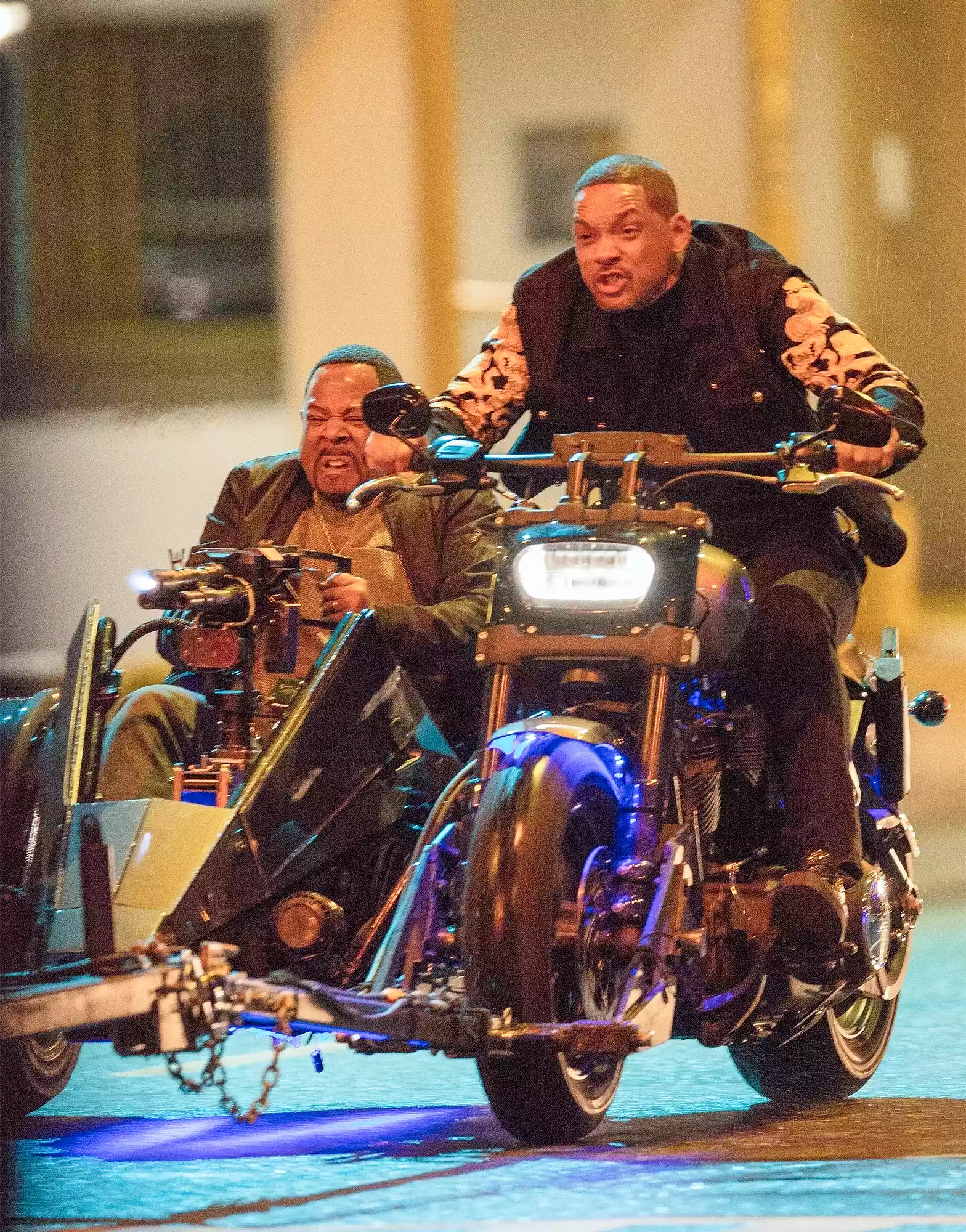
Bad Boys for Life: separate the moving machine
The motorcycle-and-sidecar image compresses engine, weapon action, dialogue, wind and body movement into one moving unit; if every layer holds maximum weight, speed turns into mud, while a readable mix can let the engine establish motion, clear space for a line, sharpen a shot as a transient and return the vehicle to the foreground.
Bad Boys for Life / Production set
Engine, weapon, voices: one frame needs an order
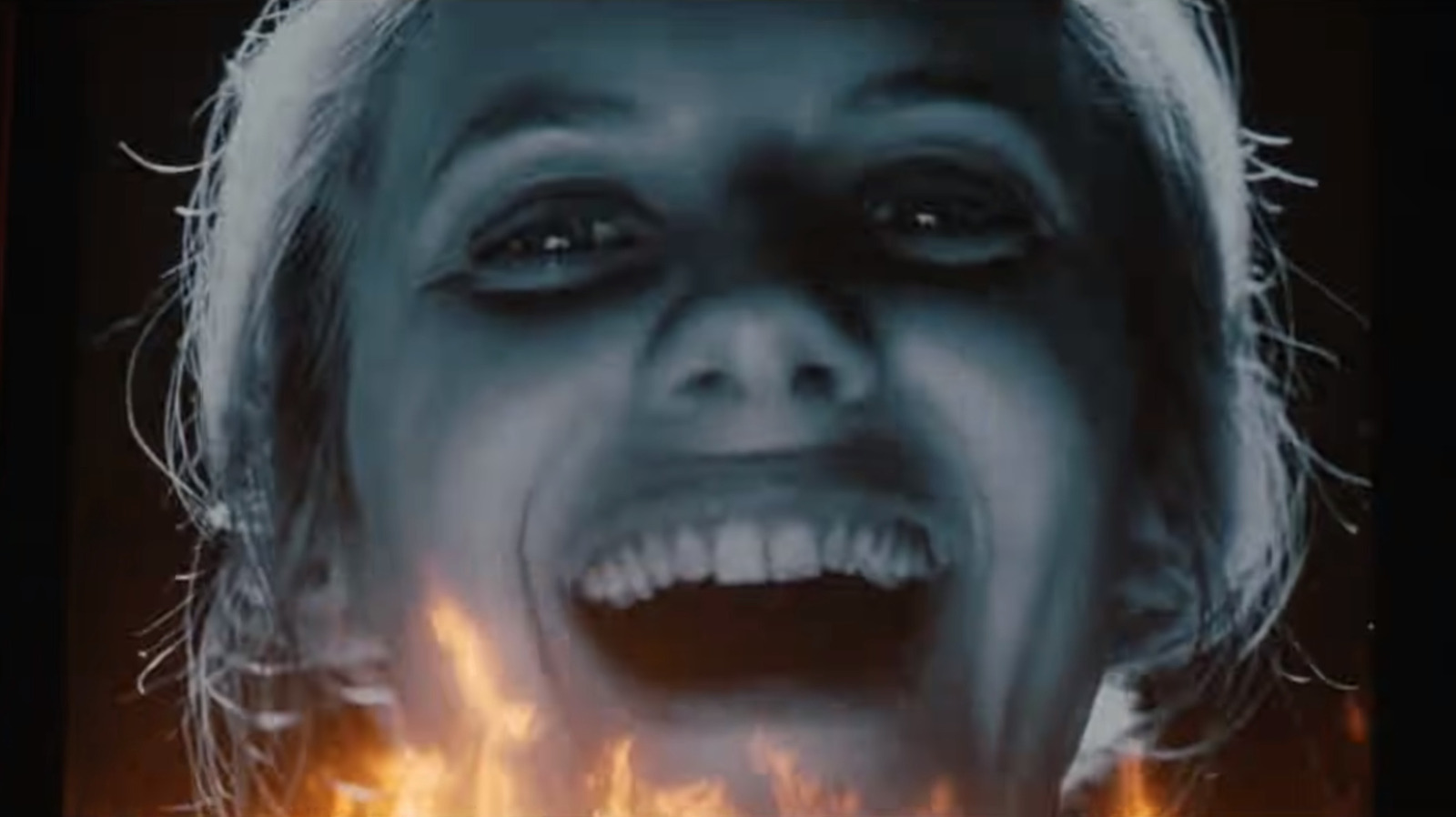
Inglourious Basterds: let one voice cross the fire
The cinema climax is built from competing realities: Shosanna's recorded address, a projected face, the audience below, gunfire and a burning room. Its force depends on recognition. The voice must remain an idea, not just another frequency inside the blaze.
Inglourious Basterds / Film frame
A recorded message above a burning auditorium
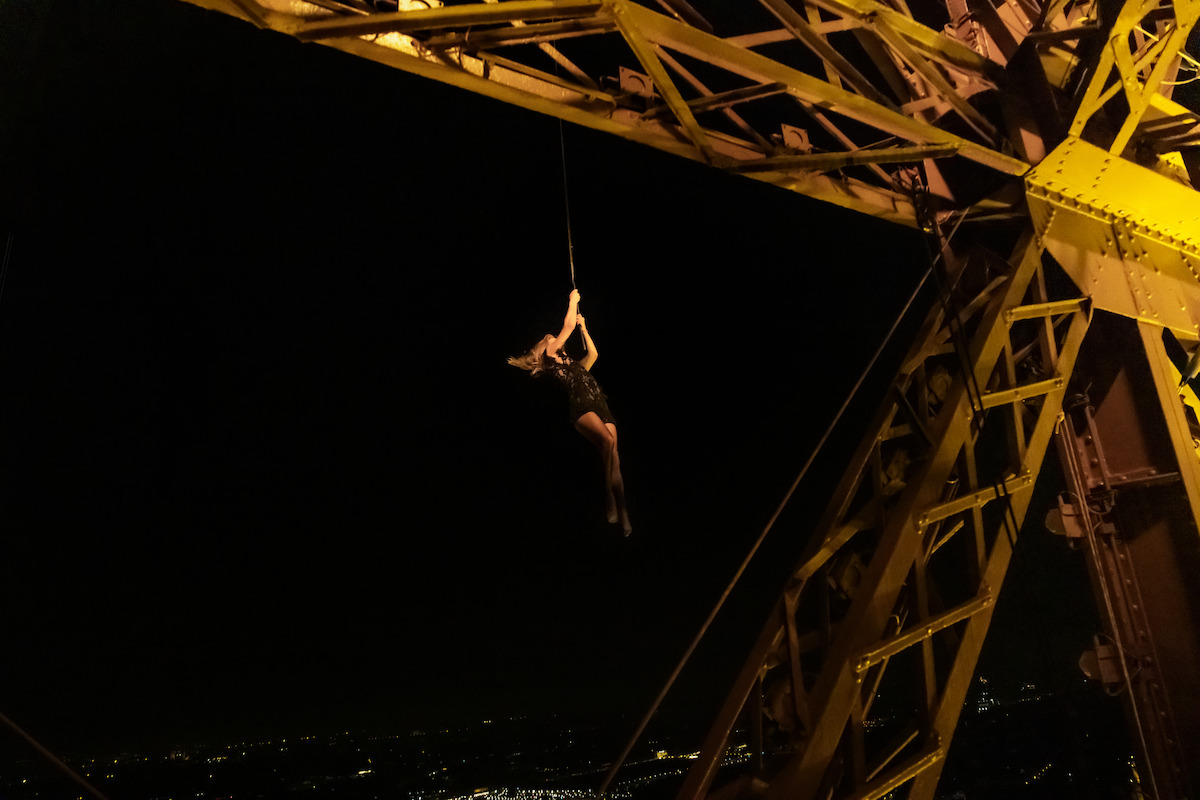
Murder Mystery 2: height can be quiet
A body outside the Eiffel Tower does not need continuous impact. Wind, breath, cable movement and small metal sounds can make height intimate. Removing scale from the mix for a moment may bring the viewer closer to the performer than a huge musical cue.
Murder Mystery 2 / Production photograph
The quieter information inside a high fall
Jawan: keep the pursuit readable
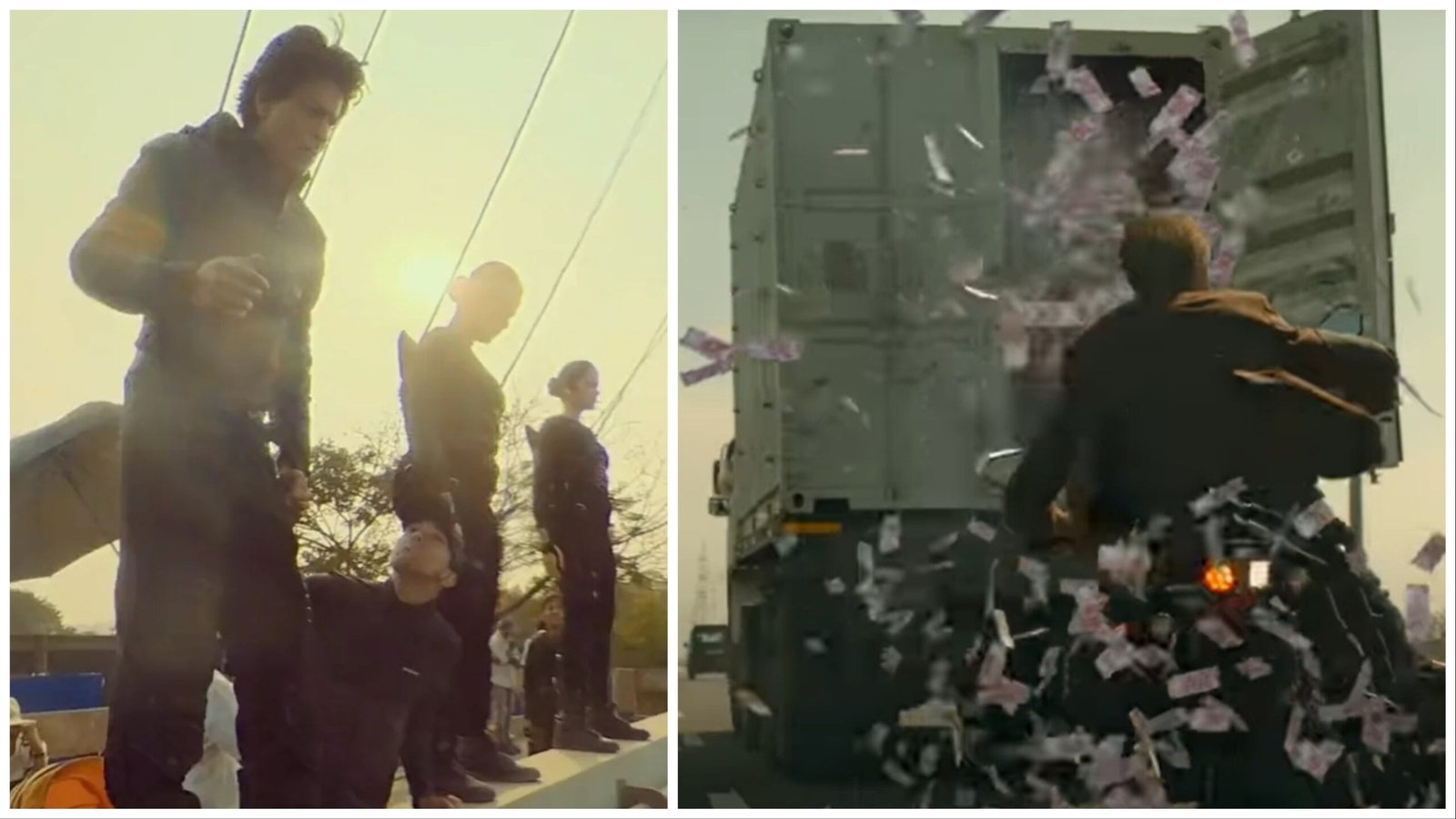
The split image places production context beside a finished pursuit: a motorcycle closes on an armoured truck while banknotes fill the air. Distinct engine signatures, tyre noise, paper flutter, wind and score can tell the ear what is gaining, what is escaping and where the distance is closing. Our Shot Window report makes the same argument visually: readable geography beats undifferentiated intensity.
Jawan / Behind the scenes and trailer
Production context and finished pursuit, held side by side
Fast X: weight arrives in layers
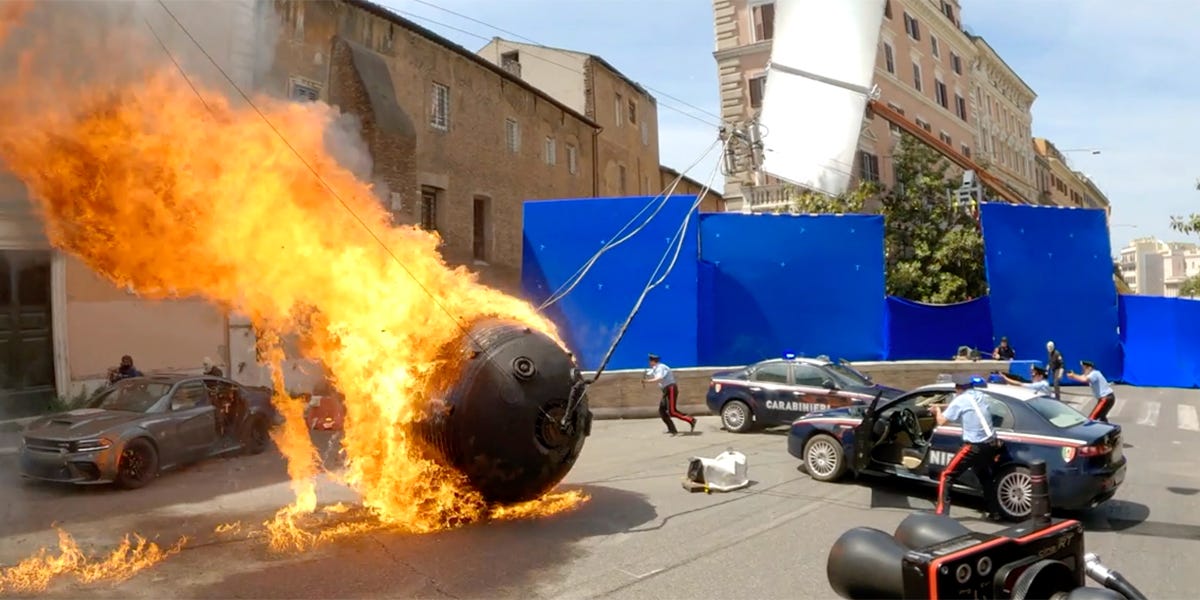
The practical fireball supplies visible mass, but the soundtrack decides how that mass reaches the body—a hard initial transient, grinding metal, debris, low-frequency energy and perhaps a short absence of sound after impact—while practical scale is evidence of what happened on set, not proof of one inevitable mix.
Fast X / Rome production
A practical object still needs acoustic weight
Why dialogue disappears at home
The same wide dynamics that make a cinema peak thrilling can make a living room frustrating. A theatrical mix assumes substantial headroom, separate channels and a controlled room. A television, laptop or phone may collapse those channels into small speakers while domestic noise competes with the quiet passages. Viewers turn dialogue up; the next peak arrives with the new gain still in place.
The useful controls have plain names: night mode, reduced dynamic range, dialogue enhancement or a correctly adjusted centre channel. They change the experience, and some can flatten intentional contrast, but they are better tools than chasing the remote through every scene. Subtitles solve access to words, not the acoustic balance itself.
In a cinema, discomfort is information. Move away from a loudspeaker if seats are available, tell staff, use hearing protection or leave. The World Health Organization's general guidance is simple: risk depends on level and duration together. This article has no calibrated measurements for The Odyssey and does not diagnose any screening; it does not ask a listener to endure pain for artistic intent.
Stunt Design is also heard
A clear action beat gives sound something precise to reinforce: the preparation, the change in force, the contact and the consequence. When screen geography is confused, a mix may try to manufacture coherence with more energy. When the action is designed around readable intention, sound can choose rather than shout.
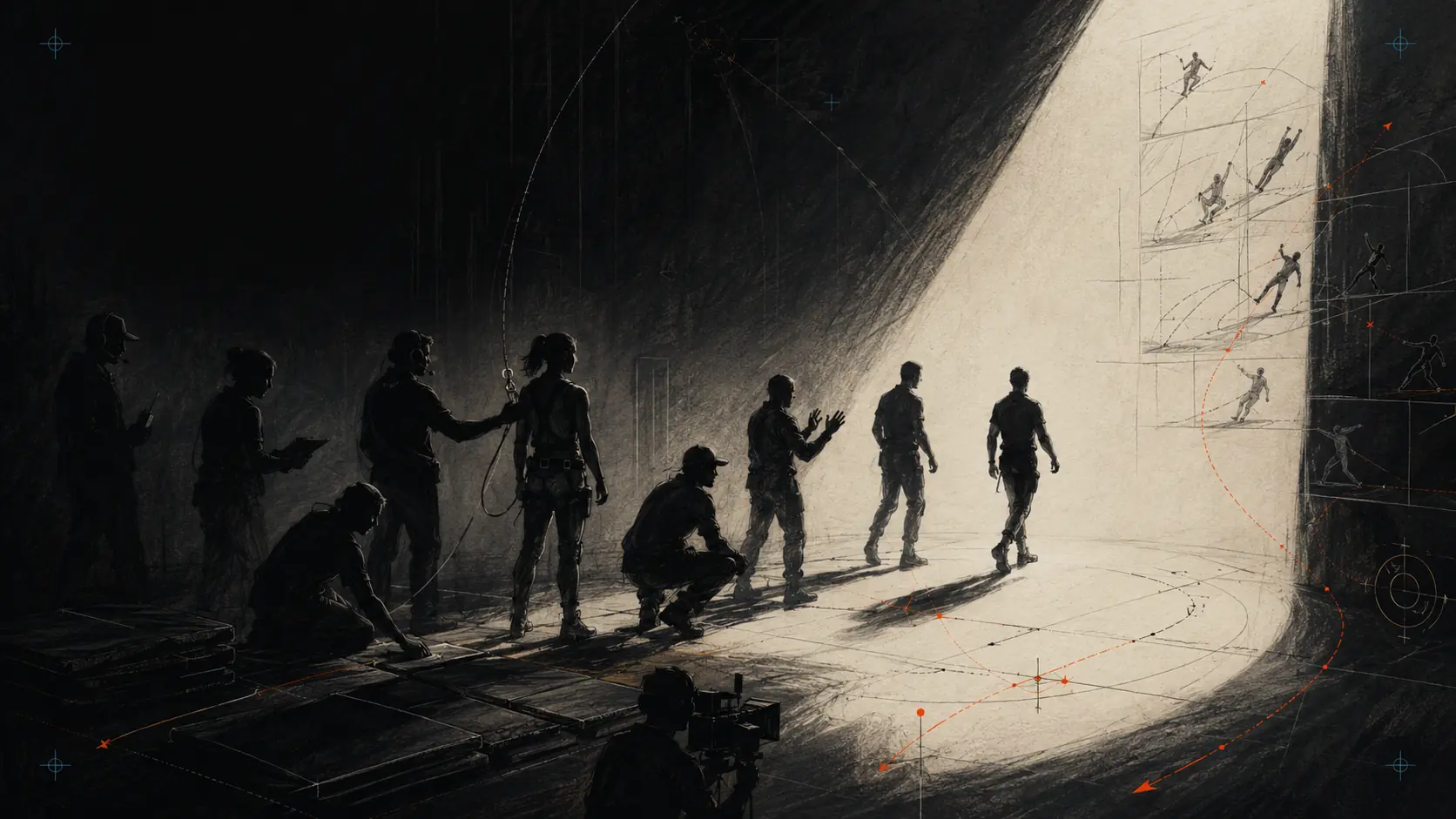
That is the connection to Stunt Design. Physical performance, camera, edit and sound are not separate layers competing for intensity; they are one chain of attention. The strongest hit may be the loudest moment. It may also be the moment before the hit, when the soundtrack makes room for the audience to anticipate it.
The Odyssey feels enormous because it understands both ends of that chain. Its accelerating rhythms, elemental textures, low-frequency force and sudden peaks can make the room feel hostile. Its quieter passages reset the scale. The film was not equally loud in every seat or every cinema—but it was designed so that, when the pressure arrived, many viewers would feel pursued by it.
Limits
STUNT.BLOG had no access to The Odyssey's final mix sessions, mastering records, auditorium logs or calibrated measurements from the reported screenings. Audience posts are treated as attributed reception, never measurement. Technical standards explain the playback chain but do not reconstruct a particular show. Five film and production images are reproduced as sourced; the Odyssey hero is official website key art reproduced unmodified from Universal's film site. Every image appears only beside image-specific analysis under the documented editorial quotation rationale, and participation in a production does not transfer image copyright to the publisher.
Sources, audience reports and image records18 entries
- The Odyssey cast go behind the sacking of Troy and the scene that surprised Matt Damon — Entertainment Weekly, 2026-07-20. Accessed 2026-07-23.
- Christopher Nolan Tried Not to Overwhelm You — Vulture, 2026-07-14. Accessed 2026-07-23.
- Christopher Nolan's The Odyssey Goes Big—Really Big—to Go Home — Rolling Stone Canada, 2026-07-15. Accessed 2026-07-23.
- The Odyssey Is a Technical Achievement in Many Ways, but the ADR Is a Mess — CinemaBlend, 2026-07-19. Accessed 2026-07-23.
- Which viewing option for The Odyssey is right for you? A definitive guide — The Washington Post, 2026-07-23. Accessed 2026-07-23.
- The Odyssey was way too loud — Reddit / r/ChristopherNolan, 2026-07-18. Accessed 2026-07-23.
- The Odyssey was too loud — Reddit / r/moviereviews, 2026-07-18. Accessed 2026-07-23.
- Dolby Cinema Processor CP950 and Dolby Atmos Cinema Processor CP950A Manual, Issue 13 — Dolby Laboratories, 2024-08-15. Accessed 2026-07-23.
- 25CSS Working Group on Cinema B-Chain Characteristics and Expectations — Society of Motion Picture and Television Engineers. Accessed 2026-07-23.
- IMAX with Laser Is Here — IMAX Corporation. Accessed 2026-07-23.
- The Odyssey — Explore Premium Formats — Universal Pictures. Accessed 2026-07-23.
- Deafness and hearing loss: Safe listening — World Health Organization. Accessed 2026-07-23.
- The Odyssey — Official Website Key Art — Universal Pictures. Accessed 2026-07-23.
- Will Smith and Martin Lawrence Ride Motorcycle on Bad Boys for Life Set — People, 2019-04-17. Accessed 2026-07-23.
- Filming Inglourious Basterds' Fiery Climax Was a Scary Experience — Slashfilm, 2022-12-12. Accessed 2026-07-23.
- Jennifer Aniston's Murder Mystery 2 Eiffel Tower Stunt — Netflix Tudum, 2023-03-31. Accessed 2026-07-23.
- Jawan truck-chase behind-the-scenes video — Hindustan Times, 2023-09-10. Accessed 2026-07-23.
- Fast X rolled a real metal ball through Rome — Business Insider, 2023-05-19. Accessed 2026-07-23.

Loading approved comments…