Analysis
Stabilization does not remove energy. It removes visual noise. Action feels dead when the camera moves mechanically, arrives late to the choreography or reveals a sequence that only worked while shake, blur and rapid cutting were hiding its weaknesses. When the action is strong enough to survive being seen clearly, stabilization usually makes it more immediate, physical and modern.
The useful distinction is not stable versus shaky. It is controlled and motivated versus uncontrolled and accidental.
Stable framing exposes weak performance, choreography, focus, props, effects and background action; it does not create those weaknesses.
A fast operator cannot wait for the monitor. Camera movement has to anticipate known choreography and match—or deliberately oppose—its energy.
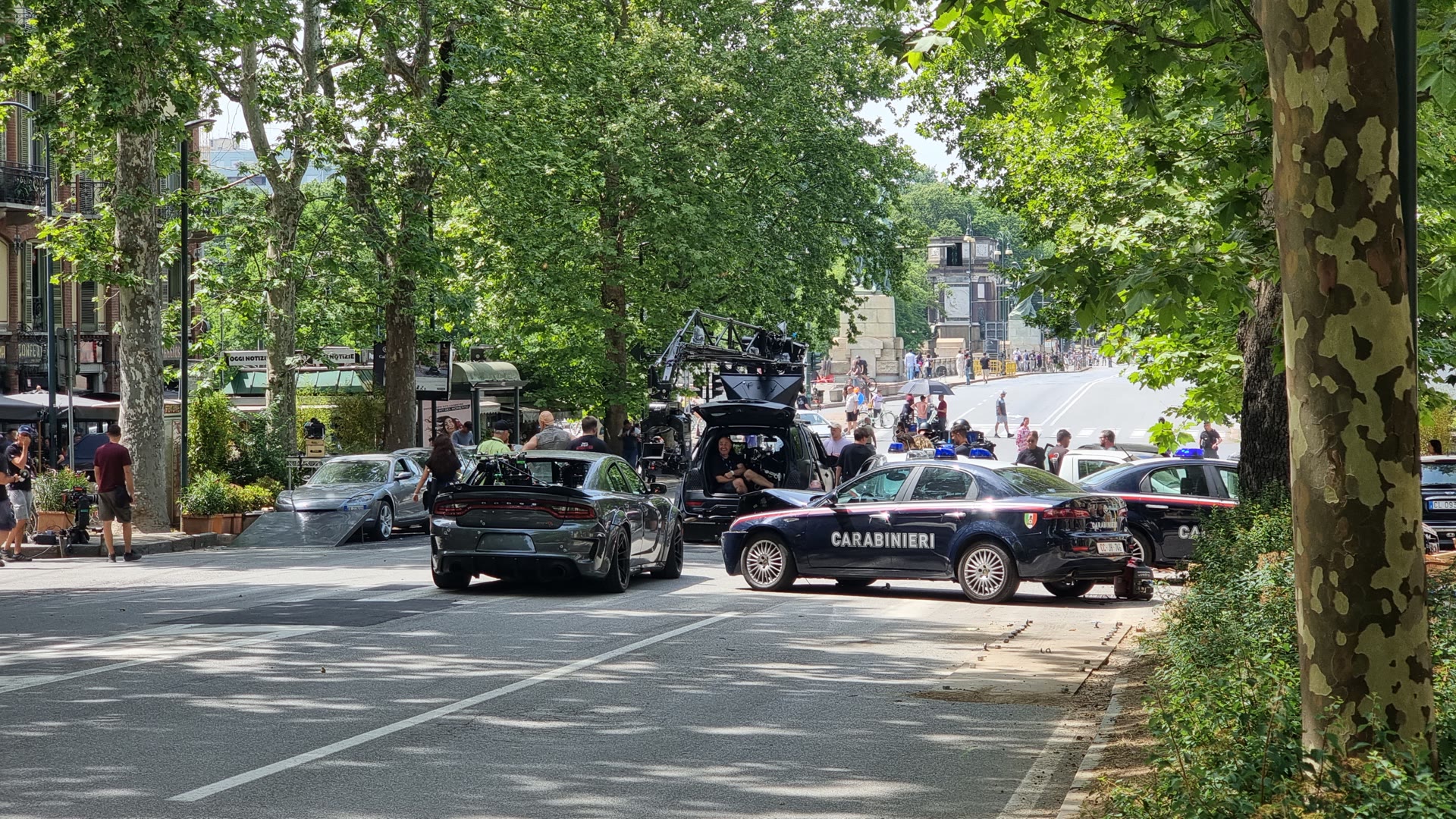
The Fast X Rome work combined high-speed FPV with a stabilized WarpCam® gimbal-camera system for the first independently confirmed FPV-gimbal shots worldwide in a major Hollywood production.
The problem is not that the image is too stable
A calmer image gives the audience cleaner information. The viewer can follow more choreography, read more space and notice more of what every department has put into the frame. That is an advantage until the image exposes something the production was relying on the camera to conceal: an actor whose movement quality does not match the stunt performer opposite them; a strike that does not connect; weak footwork; late focus; a missed camera mark; an artificial-looking weapon; an underdressed set; empty background space; or practical effects that do not carry the intended impact.
In German stunt terminology, a clearly visible miss may be called a Luftloch. In English: the hit didn’t connect. This helps explain the emergency note, ‘It has to be handheld.’ What is often meant is shake, tighter lenses, cropped bodies, whip pans and cutting fast enough to stop the audience examining the action.
That can be a legitimate rescue strategy when the production is already on set and the underlying problem can no longer be fixed. It is not evidence that uncontrolled shake is the superior way to photograph action. The useful distinction is not stable versus shaky. It is controlled and motivated versus uncontrolled and accidental.
A stable image raises the standard for every department
A close shot only has to make the visible Lens Cone convincing. A stable wide may have to support the whole room. In a club fight that can mean the confrontation, secondary fights, reactions, dancers, narrative information entering in the background and foreground elements crossing the lens. In vehicle action it can mean the hero car, a threat, cross traffic, road texture, architecture, pedestrians, water, dust, leaves or debris.
The stable image does not create the weakness. It makes the weakness legible. When choreography, performance, set dressing, props, effects, focus and background action work together, clarity becomes a multiplier. The audience understands more without being removed from the energy.
Stabilized does not mean static
A stabilized camera can sprint, accelerate, rotate, drop, rise, lead, follow, cross a vehicle interior, pass through a doorway or stop violently with an impact. What stabilization removes is not motion. It removes disturbances that carry no useful information: random vibration, unintended horizon drift, late corrective pans, visible hesitation and arbitrary changes of direction.
Human perception does not experience every step, head movement or vehicle vibration as an unreadable visual earthquake. The body can move rapidly while the visual system works to preserve a coherent view. The cinematic objective is not to imitate defective vision. It is to create a moving perspective that remains physically believable and readable. The perception model here provides context; the production method is grounded in the team's operating practice.
Mechanical Movement and Biological Breathing
A dolly, crane, robotic arm, Russian Arm or hard-mounted camera follows a mechanically defined path. That path can be elegant, precise and completely right. It can also feel detached from physical action when height and distance remain constant, acceleration is mathematically even and the route never adapts to the performance.
Biological Breathing is a term coined by Ferdi Fischer for the WarpCam® operating practice. It describes stabilized movement that preserves the subtle qualities of a living presence moving through three-dimensional space: a slight rise or fall, lateral displacement, an organic shift around a performer, physically initiated acceleration, responsive deceleration and a path that bends through space instead of appearing fixed to a rail.
The frame stays controlled. The subject is not lost accidentally. The horizon does not drift without reason. But the camera breathes. The WarpCam team also uses Floating for free, readable movement no longer tied to the obvious path of a conventional body-mounted rig, dolly or crane.
Biological Breathing does not mean the camera must always imitate a human body. Inertia, loss of balance, recovery after impact and protective reaction are effects in the arsenal. They are used when the scene requires them. Mechanical movement remains valid for detachment, surveillance, symmetry, control or deliberate artificiality. The question is whether its energy belongs to the scene.
Two movement languages, neither a universal winner
| Language | Visible quality | When it can belong |
|---|---|---|
| Mechanical Movement | Repeatable geometry, defined height and route, controlled acceleration | Symmetry, surveillance, detachment, architectural precision or deliberate artificiality |
| Biological Breathing | Stable framing with subtle organic displacement and performance-responsive timing | Physical proximity, moving perspective and action that needs clarity without stiffness |
| Intentional instability | Designed loss of balance, roll, impact or subjective recovery | A precise point of view or narrative disturbance—not accidental operator error |
Energy Matching
Energy Matching describes the designed relationship between camera and physical action: direction, velocity, acceleration, deceleration, rhythm, anticipation, impact, stop point, collapse and recovery.
Consider a performer struck backwards into a wall and then dropping to the floor. The camera can travel with the flight, stop at the wall and descend with the body. The viewer receives the same energy curve: attack, displacement, impact, collapse, final position. Force is carried by timing and movement rather than random vibration.
A Counter-Movement can be equally effective. A fixed or opposing camera may let the performer crash through a stable reference frame. If the fall is exceptionally strong, travelling with it may reveal its full quality. If it is weaker, a lower reference, dust effect, counter-movement or different framing may carry more force. No camera path is universally stronger. The relationship must be designed for the actual performance.
Energy Matching / Text equivalent
One beat, four designed relationships
The diagram describes timing relationships only. It is not a stunt procedure.
The force comes from the relationship between action and camera—not from noise added on top.
A four-stage analytical sequence: attack begins, performer travels, wall impact stops the camera, and the camera descends with the collapse.
Movement without choreography is only noise
An operator who does not know the choreography cannot reliably match it. A common failure is moving simply because action is happening: face, hand, feet, reaction, pan left, pan right. The frame stays busy, but its movement has no causal relationship to the performers. It starts after the action, stops after the action, misses the impact, loses the subject without finding new information and then treats the recovery as realism.
Losing the primary subject is valid when the camera deliberately reveals a second attacker, weapon, reaction, approaching vehicle, environmental threat or other narrative fact. Losing it accidentally and showing nothing relevant is not a style. Every movement must carry information, point of view or energy.
Why reacting to the monitor is too late
Fast action cannot be operated reliably by waiting for an event to appear on a monitor and reacting afterwards. The delay chain can include camera capture, processing, wireless transmission, monitor processing, visual perception, recognition, response selection, motor signalling, whole-body coordination and acceleration of the camera system.
Using about 200 milliseconds as a practical monitoring-path reference and roughly 150–300 milliseconds for visual response produces an illustrative 350–500 milliseconds before whole-body coordination and camera acceleration are added. This is not a universal measurement. The production lesson survives the exact hardware: by the time the strike is seen and consciously answered, the beat may be over.
The operator must know the choreography and begin before the visible event arrives. The Shot Window examines that anticipatory relationship in further detail.
Original timing graphic / Nine-stage chain
Why reaction is already late

WarpCam® separates physical route and image control
- Physical Operator
- Observes the real choreography and controls route, height, proximity, acceleration, deceleration, start and stop points, and the relationship to performers and practical action.
- Virtual Operator
- Controls the stabilized head and image: pan, tilt, roll, framing, composition, viewing direction and lens functions according to the production configuration.
- Operating principle
- The Physical Operator controls where the camera is. The Virtual Operator controls what the image sees. Both know the intended movement.
Speed is not the number on the speedometer
A fast vehicle can look slow when the image contains too few references. Viewers read speed through foreground objects, road texture, parallax, relative motion, scale changes, tyres, water, dust, leaves, wind, passing architecture and acceleration inside the shot.
A camera close to the road can turn stones, cracks and asphalt pores into fast lines. A high distant camera may improve geography while reducing apparent speed because fewer near references cross the frame. This is a tendency, not a permanent rule. Modern FPV can change altitude, proximity and trajectory inside one movement, escaping many limits that produced older rules.
Lens and distance work together. A wider lens at close range can expand foreground speed. A longer lens can compress space, isolate a performer or hide weak footwork while preserving lateral movement. A stable face and violent background parallax can exist in the same image.
Slow motion can describe speed
Slow motion does not automatically tell the audience that an event was fast. A car simply passing in slow motion can look slow. The frame needs evidence of what the speed did: build momentum, place visible material such as leaves near the route, enter slow motion as the vehicle throws the material into the air, show the physical consequence and release back into speed.
Motion blur follows the same logic. Blur in road texture can communicate velocity. The same blur across a fight may prevent the audience seeing whether a strike connected. Sharpness, blur, framerate and shutter determine which movement information survives; they are not universal quality settings.
Fast X and the first independently confirmed FPV-gimbal shots
The Rome action in Fast X is the central production case. During the 2022–2023 production period of Fast X, WarpCam®, in collaboration with Johnny FPV, created the first independently confirmed FPV-gimbal shots worldwide in a major Hollywood production. This is a historical fact confirmed by uninvolved third parties.
The significance was not simply that an FPV drone carried a camera. FPV speed was combined with a stabilized gimbal-camera system capable of preserving readable framing inside major feature-film action. The Rome work connected high-speed FPV, handheld operation, vehicle work, RC operation, ultra-low tracking and close motorcycle coverage.
The same production produced a practical example of physical camera relationship. For a stair movement, two earlier hard-mounted solutions were attempted—one involving a motorcycle and one a quad. Both failed, with camera systems breaking away or falling down the stairs. The movement was then completed with WarpCam® operated handheld from the quad.
The lesson is not that a hard mount is inherently wrong. The successful system could absorb, interpret and move with the physical route instead of transferring every structural vibration and impact into a fixed camera body. The environment remained unstable. The image remained readable.
Owner-provided behind the scenes / 00:08
The camera team and motorcycle route occupy the same physical space
Production case / 05 archive views
FPV speed, stabilized framing and the Rome route
Owner-controlled production material places the camera system inside the physical Rome environment and then inside the review process. The four supporting clips expose changing foreground relationships, action traffic and the comparison of multiple camera views without turning production context into a reproduction guide.
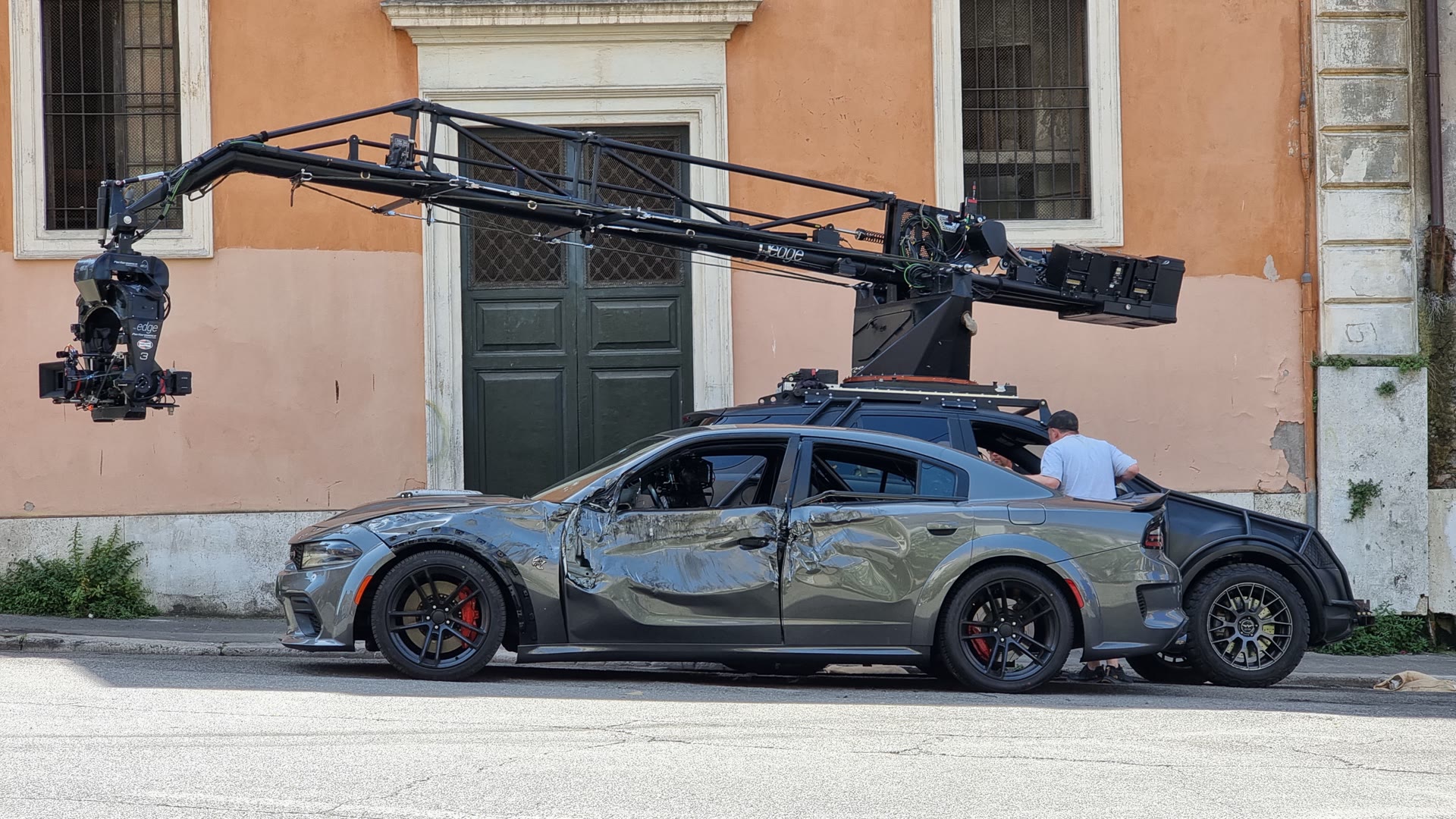
Media: Ferdi Fischer / SlamArtist.com production archive
Owner archive / Multi-view review / 00:14
Movement language is compared across several camera views
Owner reel / Fast & Furious
The finished movement language, seen in motion
Ferdi Fischer's Fast & Furious demo reel is embedded behind STUNT.BLOG's external-media consent layer. The preview remains local; YouTube loads only after consent and an explicit click.
Bad Boys for Life: stability can carry atmosphere
Night action does not have to choose between readable camera geometry and atmosphere. The Bad Boys for Life production photographs show two complementary views: an opened vehicle in which crew, camera position, structure and controlled damage occupy the same working space; and a compact rig isolated against a blue night environment with vehicles and depth behind it.
The lesson is visible rather than procedural. A controlled frame can preserve darkness, colour, reflections and depth while still making the physical camera relationship legible. Mood does not require the audience to lose orientation.
Bad Boys for Life / Owner archive
Night geometry, controlled damage and blue depth
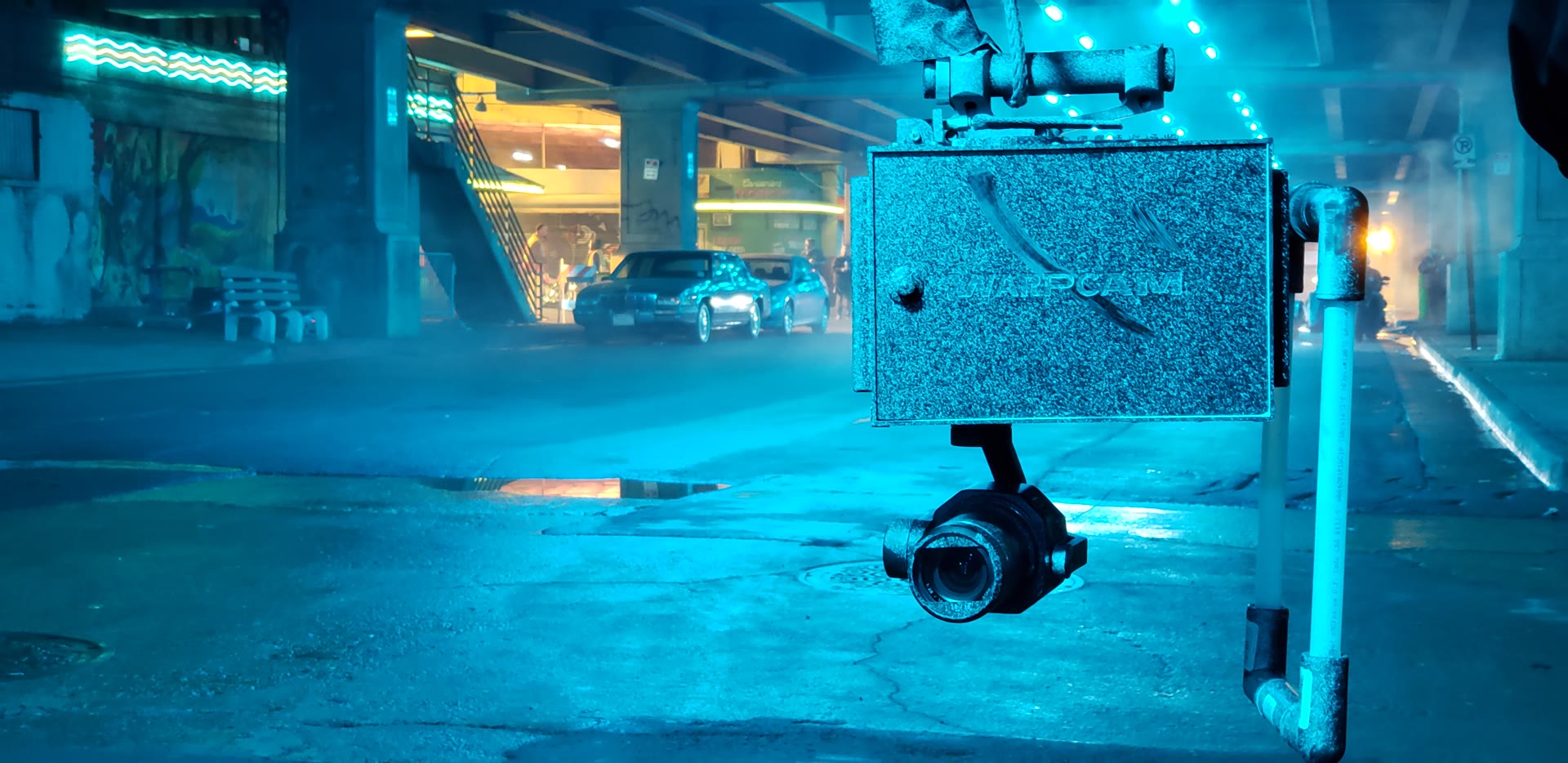
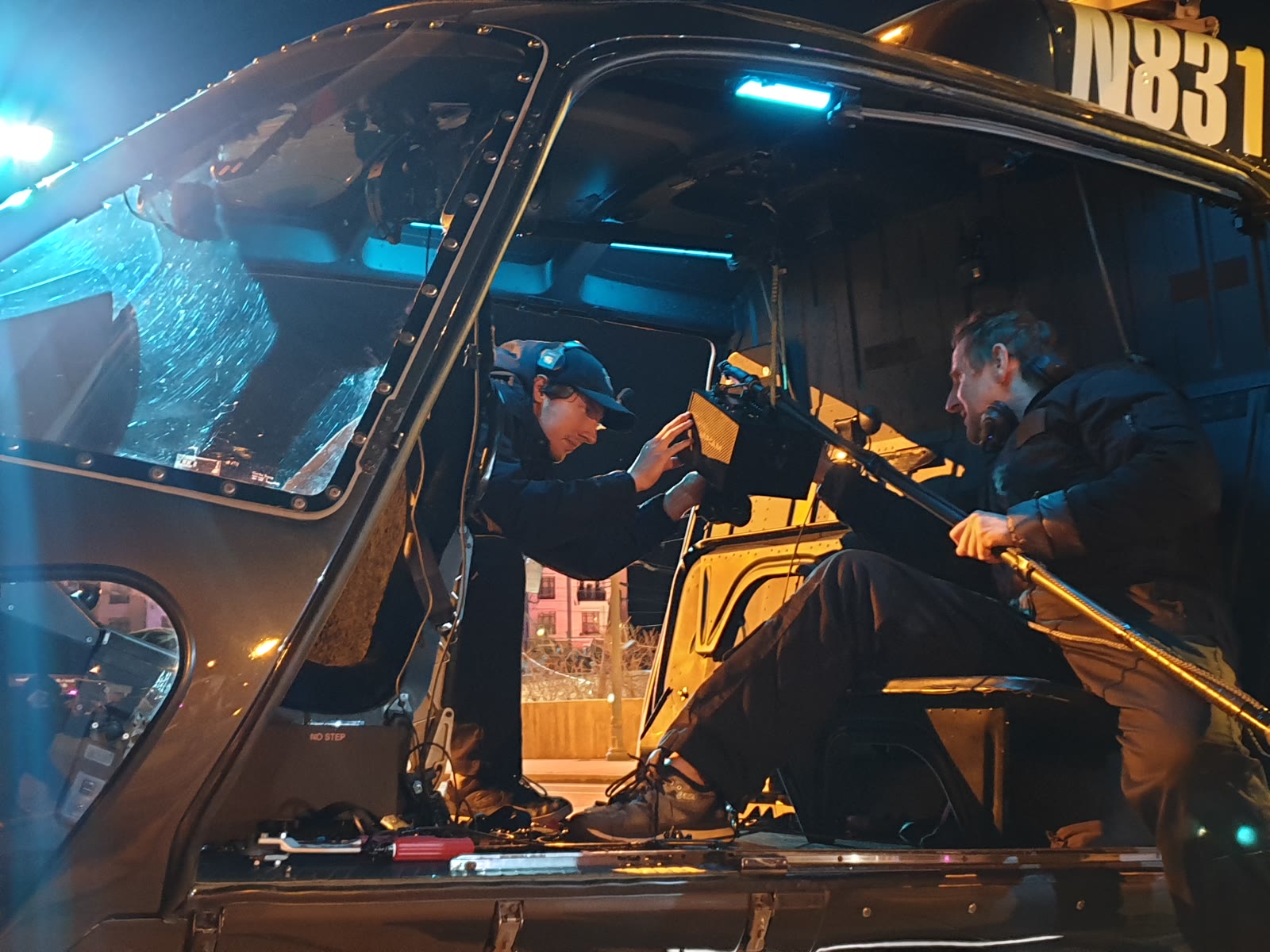
Images: Ferdi Fischer / SlamArtist.com production archive
The Gray Man and 21 Bridges
The tram fight in The Gray Man demonstrates what happens when the camera enters the performers’ choreography. It must know the strikes, turns, corridor, changing direction, moments to advance or retreat and the point at which the next physical route closes. It cannot wait to discover the scene through the monitor.
The New York subway pursuit in 21 Bridges applies the same principle to running. The camera moved at full sprint in Leading and Follow Shots while keeping performance, direction and environment readable. Stability did not reduce intensity; it let the audience see it.
A strong run can be covered through full body, face, leg detail, Leading Shot, Follow Shot or parallel movement. Each reveals different information. The camera must be fast enough to preserve the performance rather than obscure it.
21 Bridges / 05 archive views
Camera route becomes part of performance
The owner-controlled archive moves from the compact camera platform and subway route into three BTS-to-screen comparisons. Each clip makes a different part of the operating relationship readable.
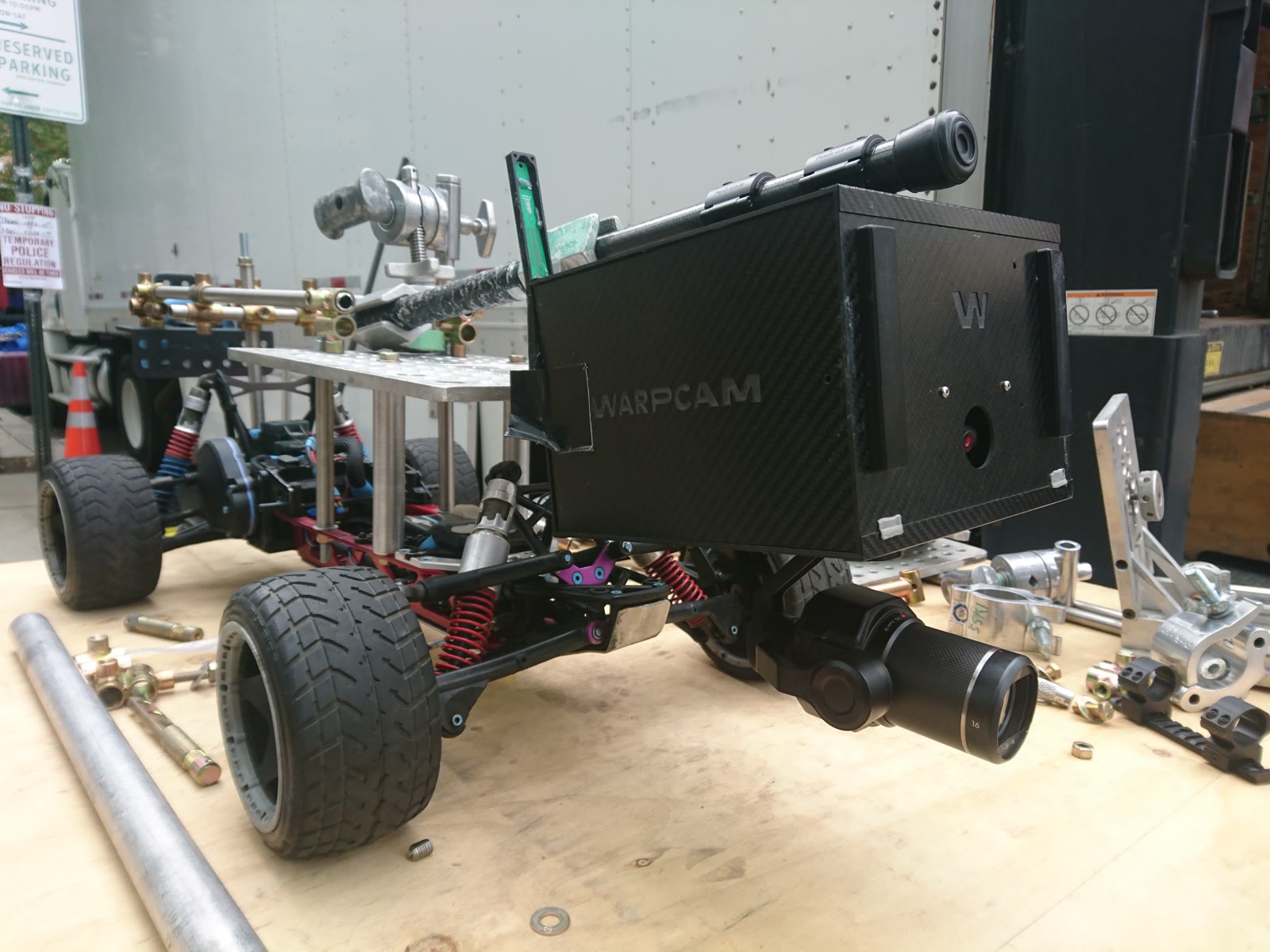
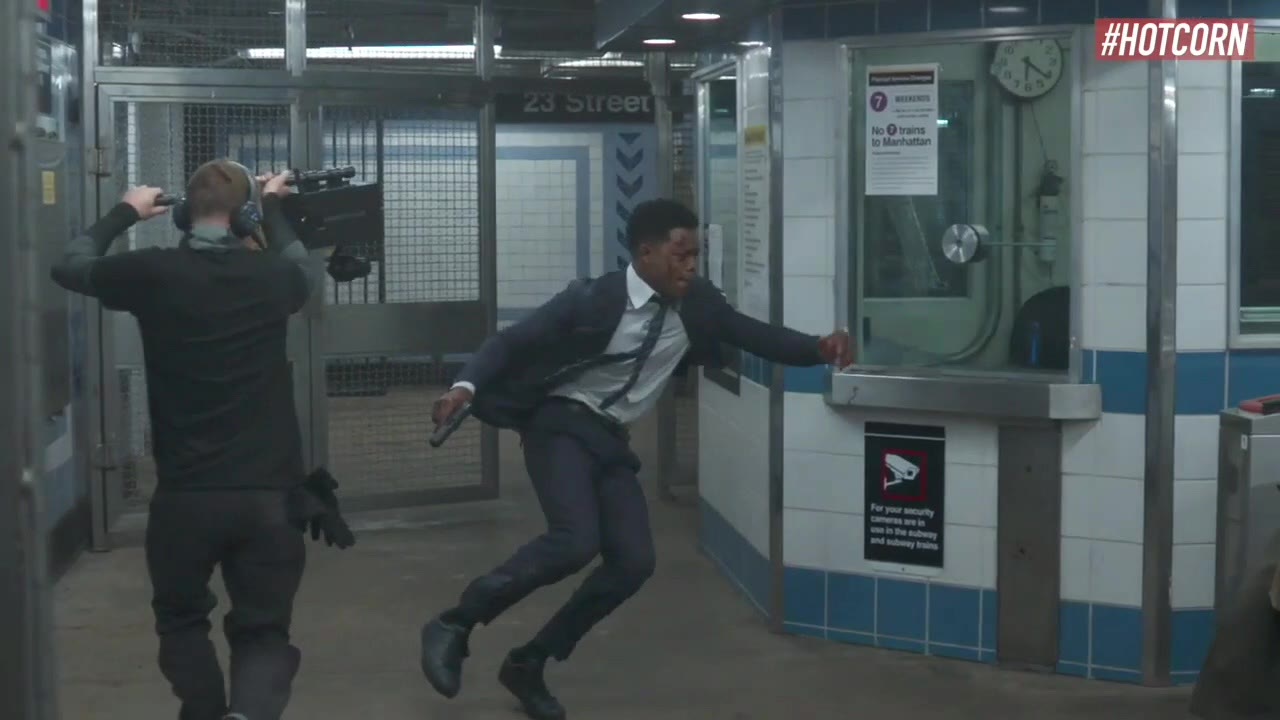
Media: Ferdi Fischer / SlamArtist.com production archive
BTS-to-screen comparison / 00:10
The operator route stays visible beside the finished subway chase
When a stabilized shot still feels forced
Stabilization does not protect a sequence from an over-determined path. The opening attack in The Revenant is a useful critical example. Its extended take is technically controlled, but the route can make coming events predictable because the camera must repeatedly reach the position required for the next beat.
If an event needs a person to fall from a particular direction, the camera has to prepare that direction. The audience begins to read the setup. The problem is not the stable image. The one-take structure starts dictating the visible order of events, and the camera appears to prepare action rather than discover it.
A long take is a tool, not an automatic mark of superior Action Cinematography. This passage is Editorial Desk analysis, not a universal measurement of the film.
The horizon remains controlled unless the story moves it
A correct horizon is the default. A tilt or roll belongs when it communicates a point of view: a character on the ground, controlled body roll, disorientation, return from horizontal to upright or another deliberately subjective movement. Accidentally losing the horizon does not create intensity. The effect must be designed.
Capture the cleaner image first
Precise shake and vibration can be added in postproduction. Uncontrolled shake is harder to remove because stabilization may require cropping, enlargement, lost resolution, altered framing, edge reconstruction, rolling-shutter correction and acceptance of residual wobble or floating backgrounds.
Post-stabilization remains useful for isolated mishaps: clipping a doorway, touching the rig, a stumble, a short Gimbal drop or fatigue tremor. It is a repair tool, not a replacement for movement design.
There is no universal shot matrix
No responsible system can take ‘one actor, two stunt performers and a factory’ and output the correct camera movement. Every sequence changes story, character, tone, performance ability, choreography, location, angles, lighting, background action, lens, distance, height, framerate, practical effects, VFX, operator, reset time and editorial structure. What failed in one film may be exactly right in the next.
If weak footwork is the problem, a longer lens and different height may exclude it without destroying spatial energy. If a hit does not connect in the primary angle, a valid second angle may protect that beat. Shaking the camera is one of the last concealment tools, not the first creative decision.
The correction order for a weak action shot
| Pass | Question | Design response |
|---|---|---|
| 01 | Narrative purpose | Clarify what the beat has to mean |
| 02 | Character perspective | Define who experiences or controls the moment |
| 03 | Choreography | Repair action that does not tell the intended story |
| 04 | Actual performer | Adapt movement to real capability and quality |
| 05 | Camera path | Redesign the relationship to the action |
| 06 | Distance, height and lens | Treat them as one spatial decision |
| 07 | Framing and layers | Fill only the information the frame requires |
| 08 | Operator and timing | Test the person who will actually operate |
| 09 | Stabilization character | Choose mechanical, biological or intentionally unstable movement |
| 10 | Protective coverage | Add specific second angles for defined vulnerabilities |
| 11 | Edit and sound | Use post to support a viable source |
| 12 | Reshoot | Return to set when the source cannot carry the scene |
Camera movement is an Action Design decision
The final decision belongs to the Director. But movement is developed jointly: the operator contributes execution knowledge; the DP defines visual language; the Stunt Department provides choreography, performers, speeds, tolerances, resets and physical constraints; the Action Director connects narrative, choreography and camera; the Director decides how the sequence serves the film.
DP and operator need the complete action: speed, direction, repeatability, performers, spatial tolerances, reset conditions and intended camera relationship. The Stunt Department needs narrative, character, style, frame requirements, framerate, camera system and intended operator. Modern action cannot be designed by one department and merely handed to another.
Previs and Stuntvis must test the actual operator as well as route, Lens Cone, height, proximity, timing, impact response, orientation, system transitions and repeatability. If the operator cannot execute the movement, the design, schedule or assignment must change. The Fight Before the Fight follows that preparation logic into Fight Previs.
Action Design / Collaboration map
One movement, five connected responsibilities
The camera movement is not an isolated technical flourish. It is part of Stunt Design and Action Design.
Operator, DP, Stunt Department, Action Director and Director contribute connected information to one camera-movement decision, with final authority belonging to the Director.
What AI can and cannot contribute
AI can organise a production brief. It can check whether the available information covers narrative purpose, character perspective, geography, performer capability, operator assignment, format, framerate, VFX and practical dependencies, resets and unresolved interdepartmental conflicts. It can preserve terminology and compare stated intent with a proposed method.
It should not prescribe camera movement. It must not convert ‘Action needs shake’, ‘Gimbal footage is dead’, ‘Handheld is more intense’, ‘lower is faster’, ‘wide is more dynamic’, ‘a moving horizon is physical’ or ‘one system fits every sequence’ into universal truths. Its professional value is asking better questions before commitment—not pretending a generic matrix can replace Action Design.
The actual conclusion
Perfectly stabilized action does not feel dead because it is too stable. It feels dead when the camera moves mechanically while the scene demands physical presence; its timing does not match the choreography; it carries no relevant information; it prepares the next event so visibly that action becomes predictable; or clarity exposes a sequence that was never strong enough to survive being seen.
The modern alternative is not chaos. It is stability without stiffness; speed without confusion; Biological Breathing instead of accidental shake; Energy Matching instead of arbitrary movement; anticipation instead of delayed reaction; and intentional instability only when the story requires it.
For specialist context, see Stunt Design in the SlamArtist.com Universe. For the adjacent editorial analysis of camera position as choreography, continue with The Shot Window.
The camera should either match the energy of the scene or deliberately oppose it for a precise narrative reason. Anything in between is not intensity. It is loss of control.— STUNT.BLOG Editorial Desk
Editorial and production record8 entries
- Why Perfectly Stable Action Can Feel Dead — canonical editorial draft — STUNT.BLOG Editorial Desk, 2026-08-18. Accessed 2026-08-20.
- Stabilized action, camera timing and operating-language working record — STUNT.BLOG Editorial Desk. Accessed 2026-08-20.
- Gaze stabilisation and vestibulo-ocular editorial context — STUNT.BLOG Editorial Desk. Accessed 2026-08-20.
- Reaction-time and monitoring-latency editorial model — STUNT.BLOG Editorial Desk. Accessed 2026-08-20.
- Fast X / Johnny FPV / WarpCam® FPV-gimbal milestone record — Ferdi Fischer / SlamArtist.com production archive. Accessed 2026-08-20.
- Production accounts and owner media — Fast X, Bad Boys for Life, The Gray Man and 21 Bridges — SlamArtist.com / WarpCam® production records. Accessed 2026-08-20.
- Owner-provided Fast X / Rome behind-the-scenes video — Ferdi Fischer / SlamArtist.com production archive, 2022-05-07. Accessed 2026-08-20.
- Ferdi Fischer — Fast & Furious action-camera demo reel — Ferdi Fischer / YouTube. Accessed 2026-08-20.

Loading approved comments…