There is no worldwide stunt licence. Public systems range from sports-heavy grading to union-employment thresholds, experience routes, voluntary registers and support networks.
A certificate can provide auditable evidence of discipline and physical control, but it does not automatically test camera timing, character, judgement, communication or readiness for a particular stunt.
Most published rules are formally gender-neutral; documented exceptions include different gymnastics apparatus for men and women in the British 2018 and Irish criteria. Hiring conditions can create additional gender effects after admission.
The strongest model is neither an open door nor a closed club: it combines transparent, stunt-relevant competencies with independent assessment, recognition of equivalent experience, reasoned decisions and a real appeal.
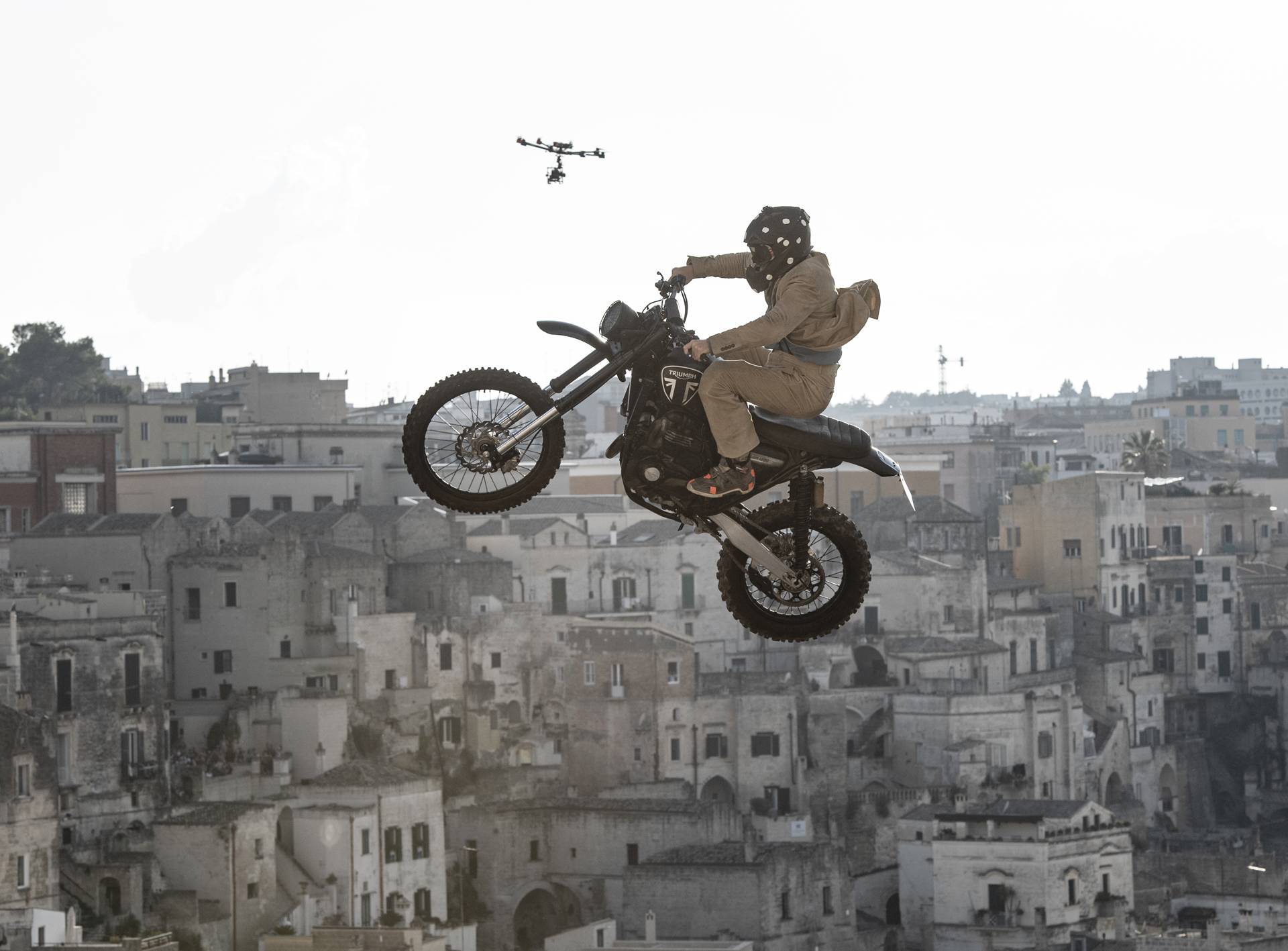
Paul Edmondson's motorcycle is already airborne above Matera. The camera is in position, the landing has been prepared and the finished moment will belong to James Bond. Long before the take, however, another decision has been made: who was allowed into the professional system that put him there?
That question sounds simple until the world's rulebooks are placed side by side. Britain has historically demanded breadth across several sports. SAG-AFTRA admits performers through qualifying employment, then uses a separate covered-workday route for stunt coordinators. Australia's union grading rests on a National Stunt Committee vote. Germany says the occupation itself has no compulsory training route, while its professional association requires experience, insurance, recommendations and credits. France offers a state-registered qualification for a profession the state also says is not regulated.
Every model solves a real problem. Producers need evidence, insurers need signals, coordinators need people whose claims survive contact with a set, and newcomers need a route that means something. Every model also creates power. Somebody writes the list, recognises the certificate, counts the day, grants the exception and hears—or does not hear—the appeal.
So this is not an argument for standards or against them. It is an investigation into a harder question: does a gate measure the work, or merely control the doorway?
No global licence: twelve public routes compared
| Market / body | What opens the gate | Who controls it | Question the system leaves open |
|---|---|---|---|
| United Kingdom / British Stunt Register | The public 2018 pack required 60 paid non-stunt camera days plus six disciplines across four of five skill groups; fighting was compulsory. | The BSR committee, approved examiners and, for some tests, external sports judges. | Where is the complete current applicant pack, and how are equivalence and general appeals handled in 2026? Source ↗ |
| United Kingdom / The Stunt Guild | Its current public route asks for Equity membership, personal accident insurance and three professional stunt credits. | The guild's membership process. | Is a lighter threshold a more proportionate recognition of working professionals, or too little evidence for a safety-critical field? Source ↗ |
| United States / SAG-AFTRA | Performer eligibility comes from covered employment, not a stunt-skill test. For coordinators, 250 days open voluntary mentor enrolment, 350 days create apprentice eligibility and 500 qualifying covered days meet the roster threshold; the first two are not published as mandatory prerequisites. | The union verifies eligibility and covered days. | The union says its coordinator process does not verify competence or speciality. What should fill that gap? Source ↗ |
| Australia / MEAA | A showreel, membership and staged grading; within the MEAA grading framework, the public form says applicants may not work in the applied category until a majority of the National Stunt Committee approves them. | A peer committee of working professionals. | The form makes the decision point clear; the public appeal route is not equally clear. Source ↗ |
| Germany / German Stunt Association | Association membership uses two years' experience, insurance, three coordinator endorsements and 20 varied, verified credits; examinations may substitute for missing credits. | The board. | What review should apply when the association publishes the evidence standard and its board decides membership? Source ↗ |
| Canada / ACTRA | Performer membership is role- and credit-based. A voluntary coordinator registry uses ten years of union tenure and 425 union stunt days. | The union, with special-circumstances and appeal routes. | Does counting union work protect a labour standard, or undervalue equivalent international work? Source ↗ |
| New Zealand / Stunt Guild NZ | A five-level system combining body control, multiple skill categories, set days, productions and recommendations. | Every grading panel has three members, including two graded stunt coordinators; levels 1–4 use majority decisions, level 5 unanimity, and the council can review decisions. | The public manual is structured and appealable, but how often is its 2020 framework validated against current screen work? Source ↗ |
| South Africa / SASA | Published criteria combine body control, fighting and physical disciplines with three other skill areas. | The association, with board discretion over proposed additional skills. | Extra skills may be proposed, but no general public appeal route was located. Source ↗ |
| Ireland / Stunt Register Ireland | Residence, age, performer experience, medical and first aid evidence, compulsory fighting and multi-discipline qualifications. | The committee and named examiners. | Detailed public tests improve predictability, but some examiner decisions are final and gymnastics requirements differ by sex. Source ↗ |
| France / RNCP Cascadeur | A practical qualification assessed by a professional jury, with an experience-recognition route. | An accredited certification system. | The state record explicitly says the profession is not regulated: the credential proves a route, not exclusive permission to work. Source ↗ |
| Japan / Japan Action Guild | The public model emphasises membership support, insurance and training rather than a published national competence grade. | The guild's own membership and support process. | No national stunt-admission grading was verified on the public page. That is a transparency limit, not proof that teams make no private selection. Source ↗ |
| Hong Kong / Hong Kong Stuntman Association | A separate 216-hour 2026 training programme ends with an examination. | The association's training programme. | A course examination is evidence of one training route, not by itself a national occupational licence or a universal admission gate. Source ↗ |
A baseline is useful. A proxy can mislead.
The case for an entry threshold is strong. Stunt work gives a production very little room for invented ability. A recognised sports qualification can be checked. A competition record is harder to fabricate than a showreel cut around mistakes. Repeated training can demonstrate coachability, physical literacy, pressure tolerance and the habit of working to rules. First aid, insurance and supervised set days are even more directly connected to professional risk.
The case against a careless threshold is equally strong. Sport is designed to score sport. Screen action is designed to communicate story to a camera while protecting the people and systems around it. A gymnast may have exceptional air awareness and still need to learn how a character falls. A fighter may dominate a real contest and still telegraph badly, miss an eyeline or fail to sell distance. A driver may hold a competition licence and not yet understand marks, repeatability, lens compression or a picture vehicle's altered handling.
That is the problem of construct validity: is the test measuring the professional capability it claims to predict? The answer need not be all or nothing. A sport test can be excellent evidence of one component and poor evidence of the whole job.
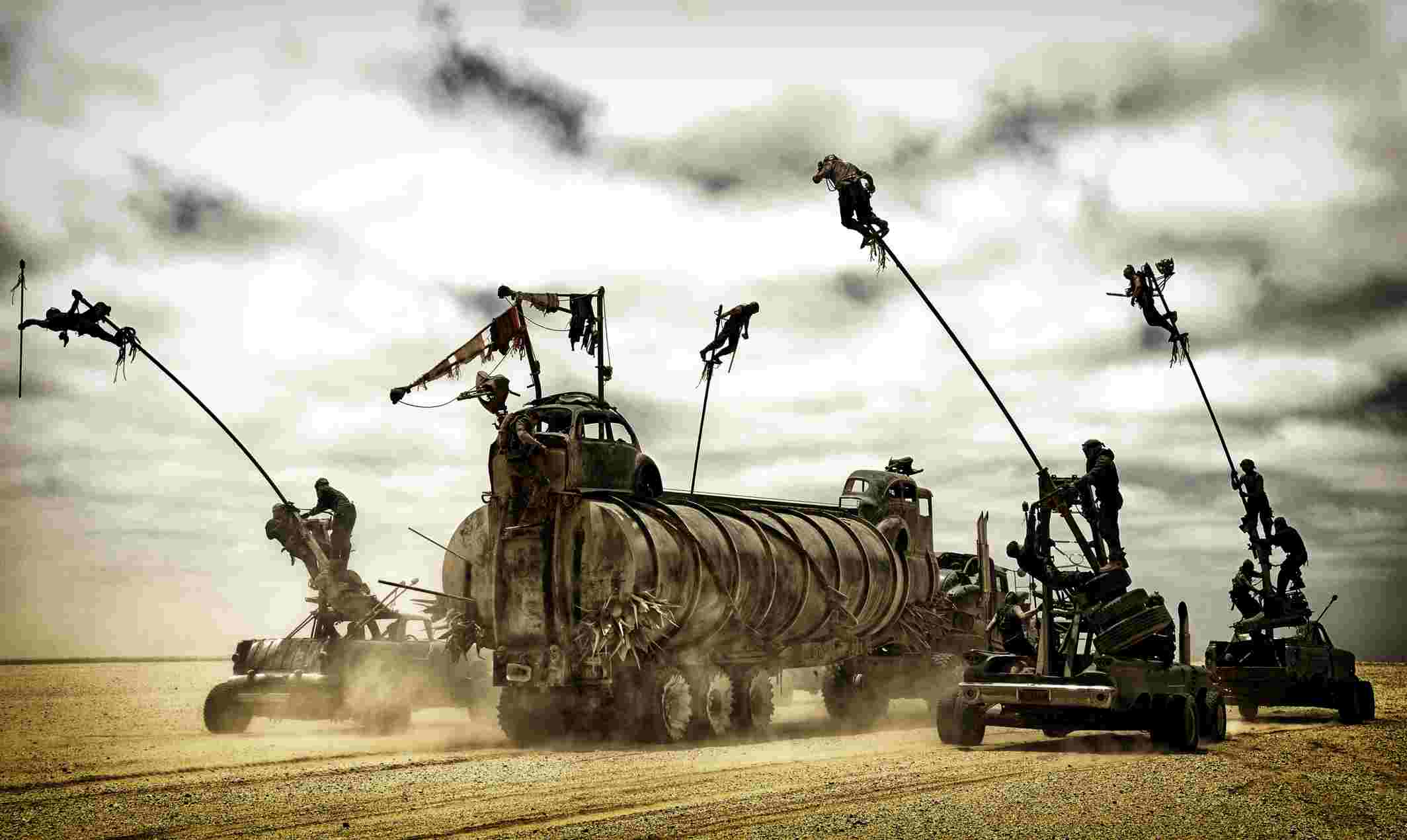
The Polecats of Mad Max: Fury Road make the distinction visible. Apparatus control matters. So do ensemble timing, vehicle paths, costume, character, rigging, camera and recovery. A credible admission system should know which part it is certifying—and stop short of pretending that part is the entire craft.
Britain under the microscope: what the public BSR rules actually say
The British Stunt Register is the natural stress test because its historic criteria are unusually detailed and its influence is unusually visible. Its current public site listed 502 performers and 117 coordinators when this report was prepared. It did not, however, expose a complete current applicant pack. The precise discipline analysis below therefore describes the official document marked “Updated Feb 2018,” not an unverified 2026 rulebook.
That correction matters. The 2018 fighting group was not limited to Judo, Karate and Aikido. It listed Judo at first-kyu brown belt, Aikido at the equivalent level, boxing and wrestling with competition evidence, and an “other martial arts” route one level below black belt. Kung Fu, Karate, Jujitsu, Kendo, Taekwondo and kickboxing appeared as examples. Other styles were left to committee discretion; Tai Chi was excluded.
MMA and Capoeira were not expressly banned. Nor were they automatically accepted by name. An elite MMA fighter or a Capoeira mestre could therefore present compelling real ability yet still depend on an equivalence judgement. The same document allowed one exceptional, unlisted skill—an Olympic or national-champion level example—to substitute for a category at committee discretion. That flexibility can rescue talent from a rigid list. It also transfers decisive power from a published standard to the people interpreting it.
Fighting, falling and the judge's score
Why require a brown belt or competition record at all? Because rank and bouts can show sustained practice, controlled contact, technical vocabulary and accountability to an external body. For a coordinator facing inflated CVs, that is valuable. Why question the named list? Because combat systems evolve, rank structures are inconsistent, and a professional MMA fighter may possess more applicable distance, reaction and pressure experience than somebody whose accepted belt was earned in a narrow syllabus. Capoeira may bring rhythm, inversion and partner awareness that a production needs. The fair question is not whether the old list was foolish. It is whether the equivalence process is public, current and based on the screen task.
The same tension appears in falling. The 2018 BSR high-diving route used nominated British Diving judges, all assessed dives from ten metres and an average score of five out of ten. Some dives were performed in long sleeves, trousers and shoes, bringing the test closer to costume reality. The trampoline route used a scored BSR sequence of somersaults and twists. These are not casual certificates; they are demanding, controlled tests of take-off, rotation, orientation and landing discipline.
But a diving judge awards a dive. A gymnastics examiner awards gymnastics. A screen fall may ask for late character reaction, an ugly line that remains safe, continuity with a previous angle, a specific landing orientation, a concealed pad, a wire cue or a collision shared with another performer. Beautiful form can help. It can also be the wrong performance. Should the sports score remain the gate, become one accepted evidence route, or sit beside a stunt-specific camera assessment?
There is a second paradox. A candidate can train the published sequence until it is test-ready without being set-ready. Another candidate can possess extraordinary usable air awareness but fail the sequence's exact vocabulary. A good system has to control both false positives and false negatives: the person who passes the proxy but not the job, and the person who could do the job but not the proxy.
Image
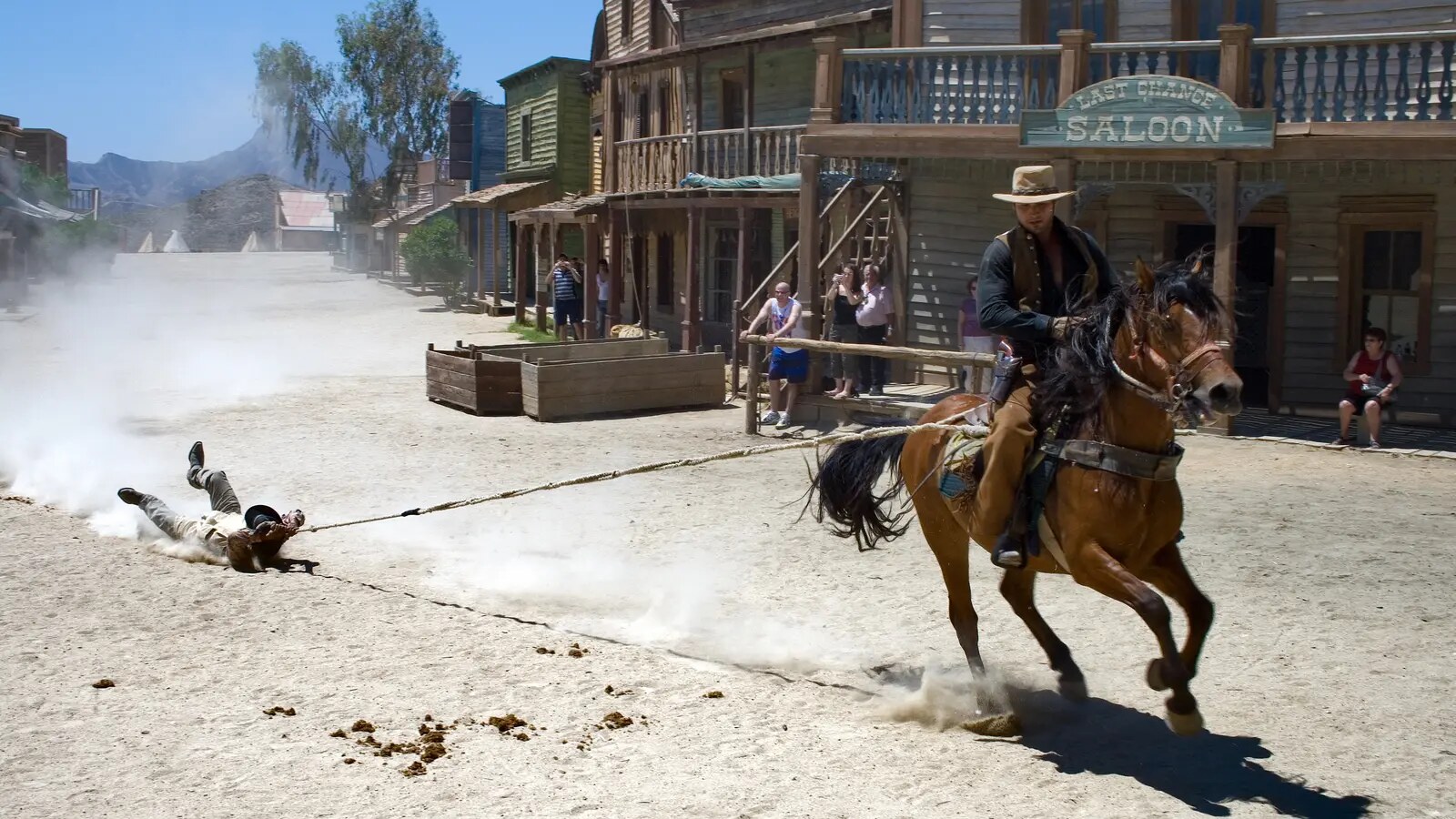
One horse-drag beat, several credential systems
Horses, engines, cliffs and water: when certificates help—and when they hide talent
The 2018 British riding test was not simply “advanced riding.” It used an approved British Horse Society examiner rather than the candidate's own coach and asked for work across several horses, gaits, small jumps, bareback or vaulting, group movement and action with lance, sword and shield. The benefit is obvious: production claims become observable under an independent examiner. The weakness is also obvious: the examiner's decision was final on merit, while a complaint route addressed maladministration rather than whether the performance had been judged correctly.
Vehicle criteria relied on successful competition and the relevant licences of the period. That can demonstrate speed judgement, machinery knowledge and rule-bound performance. Yet precision driving for a lens can reward different things: hitting a mark repeatedly, maintaining a chosen angle at a lower apparent speed, working among camera vehicles and resetting without drama. Stunt drifting can be deeply relevant even when its paperwork does not match an older racing category. Conversely, memorising a test route does not prove judgement inside a changing action unit.
Climbing awards and lead grades can establish rope literacy, exposure management and rescue foundations. They do not automatically qualify a person to design film rigging, supervise others or perform every height stunt. Those should remain separate claims. The same distinction applies to water. The 2018 British route recognised a dedicated swim test or advanced scuba qualifications such as PADI Divemaster. Those qualifications provide standardised evidence of rescue and underwater procedure—critical strengths when something goes wrong.
Now consider a big-wave surfer without the named certificate. Water may be that performer's most fluent environment; breath, current, impact and panic management may be exceptional. The old rules did not automatically qualify surfing, but their exceptional-skill clause created a discretionary route. Is discretion the humane answer to a rigid list, or does it make access depend on who happens to be persuaded? A better system could publish an equivalence rubric: what risks must be understood, what rescue capability must be demonstrated, and what camera-specific task must be performed?
The licensed horse-drag photograph above makes the larger principle visible. Riding matters. Falling matters. Animal work, spacing, camera, costume and recovery matter too. None exists alone once the beat begins. That integrated work is part of Stunt Design, not a collection of sports badges.
Do women and men take the same tests?
The honest answer is: often the framework is the same, but not always the test. Most public systems reviewed for this report state common thresholds or do not publish sex-specific thresholds. The British 2018 gymnastics test is a documented exception. Men were assessed across floor, pommel horse, rings, vault, parallel bars, low/high bar and mini-trampoline. Women used floor, vault, bars, beam and mini-trampoline. The overall pass logic was the same—70 per cent overall and no section below 60—but the apparatus and movements were not identical.
Stunt Register Ireland also publishes different male and female gymnastics content, including different apparatus and vault heights. Historic British rules additionally said members should not double a performer of another gender except in absolutely exceptional circumstances. Such a rule can be defended as an attempt to protect employment and improve body match. It can also harden binary assumptions, reduce casting flexibility and leave little room for performers or characters who do not fit them.
Identical formal entry rules would not create an identical labour market. The UBCP/ACTRA guide describes common female-double size demands, word-of-mouth hiring and the stunt coordinator's powerful role in selection. Those are observations about one market, not universal laws. They nevertheless expose the layer a written exam cannot fix: who is considered a plausible double, who is recommended, whose reel is watched and who gets the qualifying days.
The relevant equality question is therefore not merely “same test or different test?” It is whether any difference is tied to a real job requirement, whether equivalent ability can be demonstrated in another way, and whether outcome data reveal that apparently neutral rules exclude one group in practice.
Image
After admission comes casting

Who controls the gate—and who controls the controllers?
Peer control has a serious defence. Stunt coordinators and experienced performers understand the difference between confidence and judgement in a way a generic regulator may not. They stake their own reputations on recommendations, know how skills degrade under production pressure and can spot weaknesses that a certificate misses. A remote bureaucracy could produce cleaner paperwork and worse decisions.
Peer control also contains an unavoidable structural conflict. The people defining entry may hire the entrants, recommend them, compete with them or belong to teams that do. That does not prove corruption. It does mean that good intentions are not enough. A credible body should publish conflicts, recuse decision-makers, use more than one assessor, give reasons, preserve evidence, offer an independent appeal and report outcomes without exposing applicants. Our stunt-career guide shows how those formal gates meet the newcomer's practical route; the stunt-department map separates admission status from authority on a production.
The systems vary sharply. New Zealand's 2020 manual specifies panel composition and a council review. ACTRA's coordinator registry offers a special-circumstances route and staged appeal. The German association's 2023 statutes say that the board's rejection need not be reasoned and is not appealable. Australia's public application clearly locates power in a committee majority, but does not make a general appeal route equally visible. The British 2018 documents included committee conflict declarations; the riding test's complaint mechanism addressed procedure, not the examiner's merit decision.
Private teams add another layer. The Stuntmen's Association of Motion Pictures describes itself as invitation-only and requires SAG-AFTRA membership. That may create a trusted working unit whose members know one another under pressure. It may also make opportunity depend on an invitation after a performer has already cleared the union gate. Guild, union, register and team are not synonyms—and none should be mistaken for a state licence unless the law actually says so.
The British dispute: allegation, denial and the cost of informal power
The governance question became urgent in April 2026. Deadline reported that The Stunt Guild had been revived and launched with more than 90 members. Its initiator, Lee Sheward, alleged that some people faced pressure or threats of lost work after joining and that 14 withdrew. Deadline said it reviewed messages in which members expressed concern or pulled out.
Those messages establish concern and withdrawal. They do not independently establish who made a threat, whether every account had the same cause, or whether work was actually removed. The British Stunt Register committee told Deadline that it was unaware of the alleged threats and had received no complaints. Both parts belong in the record.
The episode still matters even before disputed facts are resolved. In a relationship-driven labour market, power can be real without being written into a constitution. A performer may react to what they believe a coordinator, team or register member could do. Equally, a professional body cannot investigate complaints it never receives. That makes confidential reporting, anti-retaliation rules, preserved evidence and an independent channel more than administrative decoration.
The newly active Stunt Guild's public threshold—Equity membership, accident insurance and three professional stunt credits—is much lighter than the historic BSR route. Is that sensible recognition of working professionals? Is it too weak a signal for a high-risk field? The existence of two models is an opportunity to compare outcomes, not a reason to assume one side owns safety.
Five years, £30,000—or neither? The price of becoming legible
Time and money are not side issues. They decide who can remain a candidate long enough to pass. Yet the most repeated British figures are not a current official tariff. A 2024 Guardian profile described a two-and-a-half-year route as unusually fast. A commercial training-provider guide from 2018 estimated five to six years and “thousands and thousands” of pounds. A separate 2018 Guardian report quoted a trainer's estimate of about £30,000.
The careful conclusion is a range, not a rule: reported individual paths run from roughly two and a half to six or more years, and one older estimate placed the cost near £30,000. No current public BSR document establishes a universal five-to-eight-year minimum or a total price. Discipline choice, travel, coaching, equipment, insurance, retests and lost earning time can move the total dramatically.
High cost can indicate serious preparation. It can also select for disposable income, geography and schedule flexibility rather than ability. A person working two jobs may be safer and more talented than a person who can train full-time, yet reach the gate later. If a standard is essential to public safety, should access to assessment, recognised coaching and retesting depend almost entirely on private wealth?
The same scrutiny belongs elsewhere. Australia publishes an A$235 assessment fee for some prospective provisional applicants, but says the fee is credited toward membership after a successful application and waived for people who have already been members for at least six months. ACTRA publishes substantial union fees. Japan Action Guild publishes monthly support memberships. None is automatically unreasonable; organisations need administration, insurance and training. Transparency should show what the money funds, whether waivers exist and whether cost predicts a drop-off among otherwise qualified candidates.
Are established performers protecting standards—or protecting work?
It is reasonable to ask whether incumbents have an economic incentive to keep entry tight. Every closed professional market creates that possibility. The UBCP/ACTRA handbook even acknowledges that competition can generate resistance in a word-of-mouth business. It would still be irresponsible to claim, without evidence, that older stunt veterans as a group raise thresholds because they fear younger, better performers.
Motive is the least reliable thing to infer from a rule. A veteran may support a hard test because they have seen inflated skill claims endanger crews. Another may benefit financially from scarcity. The same person may hold both a legitimate safety concern and an economic interest. Governance exists precisely because nobody should have to prove private intent before a conflict is controlled.
The neutral test is observable. Who proposed the rule? What accident, task analysis or outcome data supports it? Who gains or loses? Were newcomers, producers, insurers, performers across genders and independent safety specialists represented? Are failures reasoned? Do successful entrants perform better or work more safely? Is the standard reviewed when screen practice changes?
If a body can answer those questions, a high bar may deserve trust. If it cannot, “safety” risks becoming a word that ends scrutiny instead of beginning it.
The hundred-production paradox
Imagine a stunt performer or coordinator with more than 100 major international productions. Their credits, leadership and specialist record are beyond ordinary doubt. They may still fail a local route because the wrong union covered their days, a locally required certificate or association criterion is missing, a named belt does not match their fighting system, residence rules exclude them or the relevant committee declines an equivalence request.
In the SAG-AFTRA coordinator process, the paradox is not hypothetical as a matter of structure: 500 qualifying covered days are required, there is no grandfathering, and the union says the process does not certify competency or speciality. Extensive non-SAG international work can demonstrate enormous experience without satisfying the defined day count. That protects the integrity of a collectively bargained pathway; it can also make the pathway a measure of jurisdictional history rather than total capability.
The reverse paradox matters too. A person may satisfy every paper category yet remain unready for a complex assignment. Admission should mean “eligible for professional consideration within a defined scope,” not “competent for anything.” Coordinators and producers must still match the actual person to the actual action.
Recognition of prior learning is the obvious bridge. France's registered qualification includes an experience route. New Zealand's manual allows discretion for foreign work. ACTRA permits special circumstances in its coordinator registry. Such routes should not become favours. They need published evidence standards, assessors without a direct competitive interest and reasons that can be appealed.
A better gate: eight tests for the test
| Principle | Why it strengthens safety | Why it limits gatekeeping |
|---|---|---|
| Publish role-specific competencies | Candidates know what judgement, communication, camera and physical skills are actually expected. | Named competencies are harder to replace with taste, reputation or an insider's unwritten rule. |
| Use sport evidence as one route, not the whole claim | External qualifications retain their value as auditable foundations. | Equivalent MMA, Capoeira, surfing, climbing, driving or elite experience can be assessed against the same outcome. |
| Add camera-based stunt assessment | The test can observe repeatability, character, eyelines, partner timing, abort response and technical communication. | Candidates are judged on screen work rather than only the sport's vocabulary. |
| Separate performer and coordinator standards | Leadership, planning and duty of care are assessed in addition to physical execution. | An excellent specialist is not forced to pretend that specialist ability proves supervisory competence. |
| Recognise prior and international learning | Experienced people still demonstrate evidence against a common standard. | A missing local paragraph does not automatically erase 100 productions. |
| Independent panels and declared conflicts | Peer knowledge remains in the room alongside production, safety or external assessment. | No direct competitor should quietly control an applicant's fate. |
| Reasoned decisions and external appeal | Errors and inconsistent scoring can be corrected before they become safety assumptions. | Power becomes reviewable without turning every failed test into an automatic pass. |
| Publish outcome and access data | Bodies can test whether qualifications predict safe, durable professional work. | Time, cost, gender and other exclusion patterns become visible enough to improve. |
The gate should have to pass its own test
Removing every threshold would not make the profession fair. It would shift more verification onto individual coordinators and productions, reward persuasive self-presentation and expose crews to invented competence. A transparent baseline can protect newcomers as much as employers: it tells them what to learn, gives legitimate stunt-performance practice a portable form and can stop a private team from moving the goalposts.
Freezing one historical list would not make the profession safe either. Screen action changes. Fighting systems change. Vehicles, rigging, virtual production and camera practice change. The people qualified to work may arrive through elite sport, theatre, circus, military service, dance, motorsport, surf, climbing, parkour or years on sets in another country. The system has to recognise what transfers and test what does not.
The decisive question is not whether entry is hard. Some work should be hard to enter. The question is whether the difficulty is relevant, proportionate, affordable, transparent and reviewable—and whether the people who set it can show why they are the right people to hold that power.
Would you trust a register with demanding external tests but broad committee discretion? A union with auditable workdays that expressly do not prove speciality? A lighter guild built around existing credits and insurance? Or a layered model that makes all three answer to the same public competencies?
There is no honest one-line answer. That is precisely why the gate should never be allowed to mark its own exam in private.
Sources and public rulebooks26 entries
- British Stunt Performers Face Alleged Threats After Joining New Professional Body — Deadline, 2026-04-22. Accessed 2026-07-27.
- British Stunt Register — British Stunt Register. Accessed 2026-07-27.
- British Stunt Register Current Joining Criteria — Updated February 2018 — British Stunt Register, 2018-02-01. Accessed 2026-07-27.
- British Stunt Register Upgrade Criteria — Updated February 2018 — British Stunt Register, 2018-02-01. Accessed 2026-07-27.
- Engaging Stunt Co-ordinators and Stunt Performers — Equity. Accessed 2026-07-27.
- The Stunt Guild Application — The Stunt Guild. Accessed 2026-07-27.
- Steps to Join — SAG-AFTRA. Accessed 2026-07-27.
- Stunt Coordinator Eligibility Process — SAG-AFTRA. Accessed 2026-07-27.
- About the Stuntmen's Association of Motion Pictures — Stuntmen's Association of Motion Pictures. Accessed 2026-07-27.
- MEAA Stunt Grading Application — Media, Entertainment & Arts Alliance. Accessed 2026-07-27.
- Professionally Trained Qualification Information — Stunt Book Australia. Accessed 2026-07-27.
- Support, Entry and Membership — German Stunt Association. Accessed 2026-07-27.
- German Stunt Association Statutes — 4 March 2023 — German Stunt Association, 2023-03-04. Accessed 2026-07-27.
- Admission Examination for Stuntwomen and Stuntmen — 16 April 2018 — German Stunt Association, 2018-04-16. Accessed 2026-07-27.
- How to Join ACTRA Toronto — ACTRA Toronto. Accessed 2026-07-27.
- Stunt Coordinator Registry — ACTRA Toronto. Accessed 2026-07-27.
- How to Get into Stunts — UBCP/ACTRA, 2024-08-01. Accessed 2026-07-27.
- Stunt Guild New Zealand Grading Manual — 2020 — Stunt Guild New Zealand, 2020-01-01. Accessed 2026-07-27.
- South African Stunt Association Joining Criteria — South African Stunt Association. Accessed 2026-07-27.
- Qualifications — Stunt Register Ireland. Accessed 2026-07-27.
- RNCP40285 — Cascadeur — France Compétences. Accessed 2026-07-27.
- Membership and Support — Japan Action Guild. Accessed 2026-07-27.
- Hong Kong Stuntman Association Training Programme — Hong Kong Stuntman Association. Accessed 2026-07-27.
- Why Stuntwomen Are Angry about 'Wigging' — The Guardian, 2018-11-27. Accessed 2026-07-27.
- Risk and Reward: Life as a Stunt Double — The Guardian, 2024-05-12. Accessed 2026-07-27.
- Guide to Becoming a Stunt Performer in the UK — British Action Academy, 2018-01-01. Accessed 2026-07-27.

Loading approved comments…