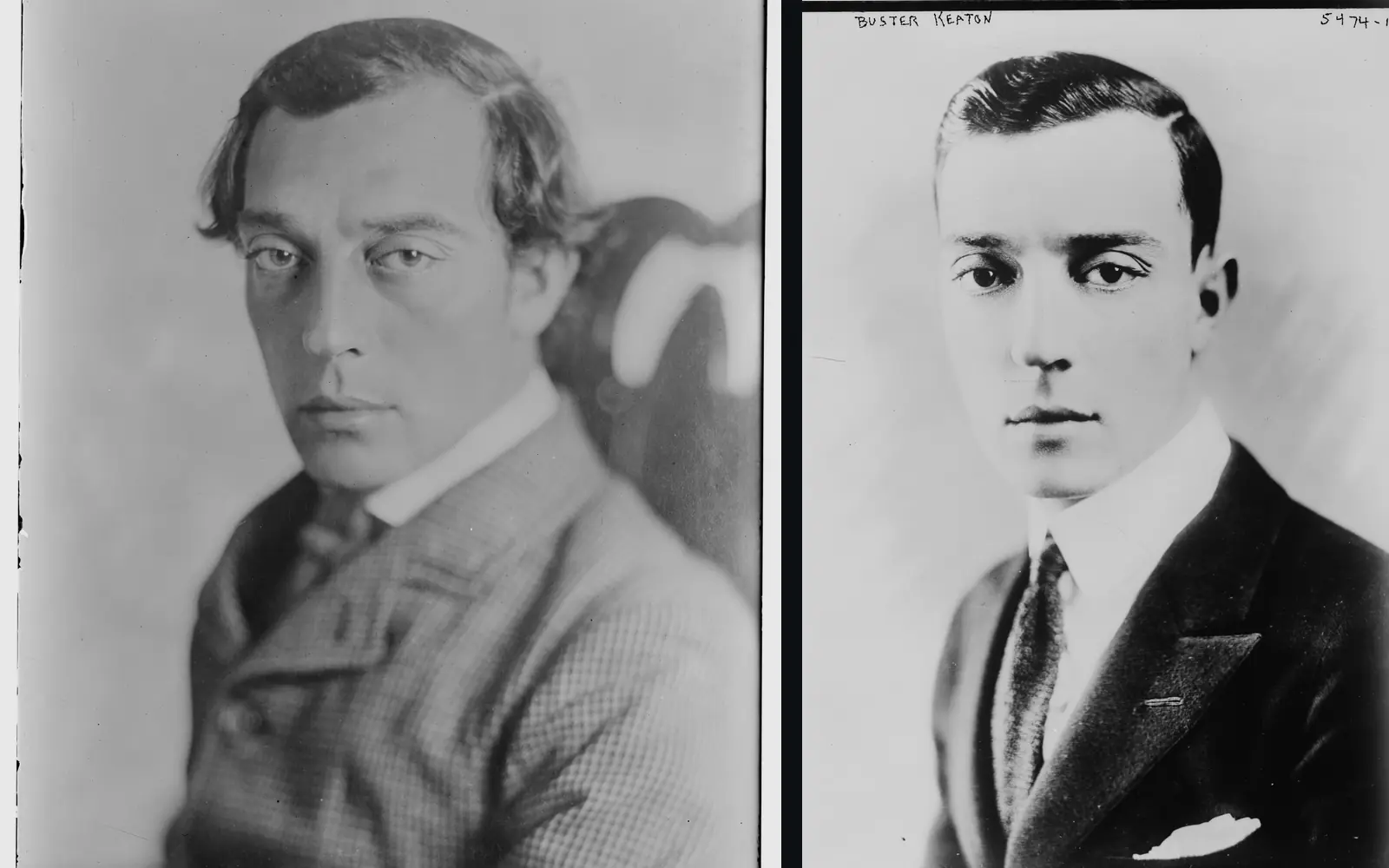
This analysis does not argue for a return to uncontrolled exposure. It examines how modern safety systems changed who can authorise a stunt and what the camera can prove about specialist talent.
Historical facts, current guidance, anonymous testimony and editorial analysis are separately labelled.
The available evidence does not establish a generational decline in stunt ability or injury rates; that remains an open question.
In 1928, Keaton stood on two nail marks and let a house front fall around him. On a major contemporary production in 2026, the same decision would travel through departments, insurers, contracts and risk-assessment documents before a performer moved. More control did not simply change danger. It changed power—and which kinds of talent the camera can still prove.— STUNT.BLOG Editorial Desk
Analysis
For a moment, the wall occupies the whole sky. Buster Keaton does not run.
It is 1928. A two-storey house front hangs above a street built for Steamboat Bill, Jr. The facade is timber and hardware, not masonry, but that distinction will mean little if it falls a few inches from where it is meant to fall. There is one empty space in it: an attic window. Keaton has to be standing exactly where that window will land.
Two nails mark the ground. He places his shoes between them. The camera holds. The facade comes down. For an instant, Keaton disappears inside the geometry of the wall. Then the dust settles and he is still standing in the opening.
The shot lasts seconds. The argument inside it has lasted a century.
Most accounts ask how much nerve it took to remain on the mark. The more disruptive question is who possessed the authority to put the mark there. Keaton was the performer, the star and one of the principal creative powers inside a small independent unit. The body accepting the consequence sat unusually close to the voice authorising it.
Cut forward one hundred years. Before a contemporary performer moves, the decision has already travelled: through action design and stunt coordination, production management and safety meetings, rigging calculations and insurer questions, contracts and risk-assessment documents. The finished frame may still show one body making one decisive movement. The power behind that movement has been divided among many hands.
The familiar history is often told as progress measured in protection. That is only part of the story. More safety can control exposure without producing a better stunt. More rules can raise the floor while lowering the ceiling on what an exceptional performer is permitted to reveal. More technology can preserve the image while making the specialist inside it harder to see. Our field guide to modern stunt rigging shows how those controls distribute responsibility across systems and teams. This is the controversy: a system built to protect stunt performers may also be compressing their differences—and, in some parts of the frame, designing away the reason to hire them.
The man inside the aperture
The facade stunt was not chaos captured by luck. Technical director Fred Gabourie and Keaton’s unit built a mechanism. The wall had to rotate cleanly. The attic opening had to arrive over the marks. The aircraft-engine wind used elsewhere in the storm sequence had to be controlled so it did not redirect the fall. Keaton’s task was brutally simple: occupy the only safe geometry in the shot and do not abandon it.
Planning did not remove consequence. It defined a margin. Accounts from Keaton and later historians describe only inches around the opening. If the structure twisted, if the mark moved, if the performer broke position, the design offered no second version of the outcome.
This is where the mythology needs its first correction. Silent Hollywood was not a legal vacuum. California’s Workmen’s Compensation, Insurance and Safety Act had taken effect in 1914. It imposed broad workplace duties, created compensation and insurance structures and empowered an Industrial Accident Commission. Keaton’s unit existed inside law, budgets, engineering and responsibility.
What it did not possess was the stunt apparatus now standardised across many union and studio productions and in specified jurisdictions: a coordinator with formally described responsibilities; stunt-specific written assessments; assigned safety meetings and abort authority; dedicated advisers on qualifying productions; insurer review; and an approval chain long enough to separate the person imagining an action from the person absorbing its physical remainder.
The difference was not planning versus madness. It was how close final permission sat to the body taking the consequence.
Keaton also used protection and deception whenever the image required them. For One Week, the unit concealed a straw-filled pit beneath restored turf. In Our Hospitality, sets, miniatures, camera orientation and controlled water built a landscape the audience never encountered as one literal place. These were not betrayals of physical comedy. They were part of its engineering.
The falling wall gives us neither pure danger nor pure trickery. It gives us a deliberately constructed envelope with almost no visible margin—and a performer-filmmaker whose judgement remained close enough to operational authority to accept it. The astonishing part is not only that the wall fell. It is where the power to let it fall was located.
Law was not immunity
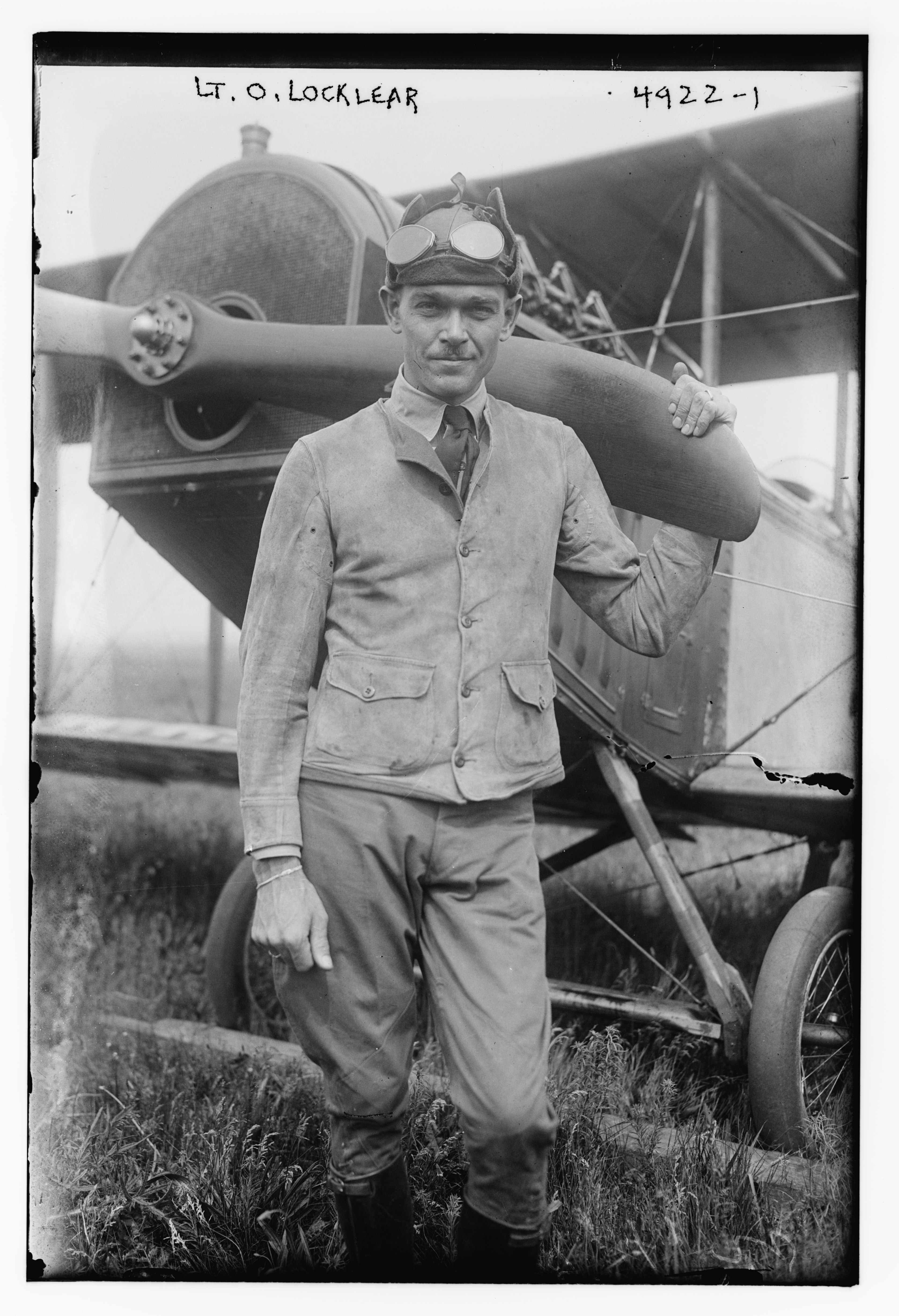
The safety law surrounding silent Hollywood did not make physical consequence disappear. Stunt pilot and actor Ormer Locklear built a screen career from aviation feats after the First World War. In 1920, Locklear and his flying partner Milton Elliott were killed while filming another stunt for The Skywayman, according to the Smithsonian National Air and Space Museum.
Locklear is not a substitute for Keaton, and his death does not explain the falling wall. His portrait matters for a more precise reason: it stops the era from becoming a sepia fantasy of freedom without cost. Formal law existed. So did fatal exposure. The historical argument has to hold both facts at once.
Bain archive / 1915
Ormer Locklear and the consequence outside the frame
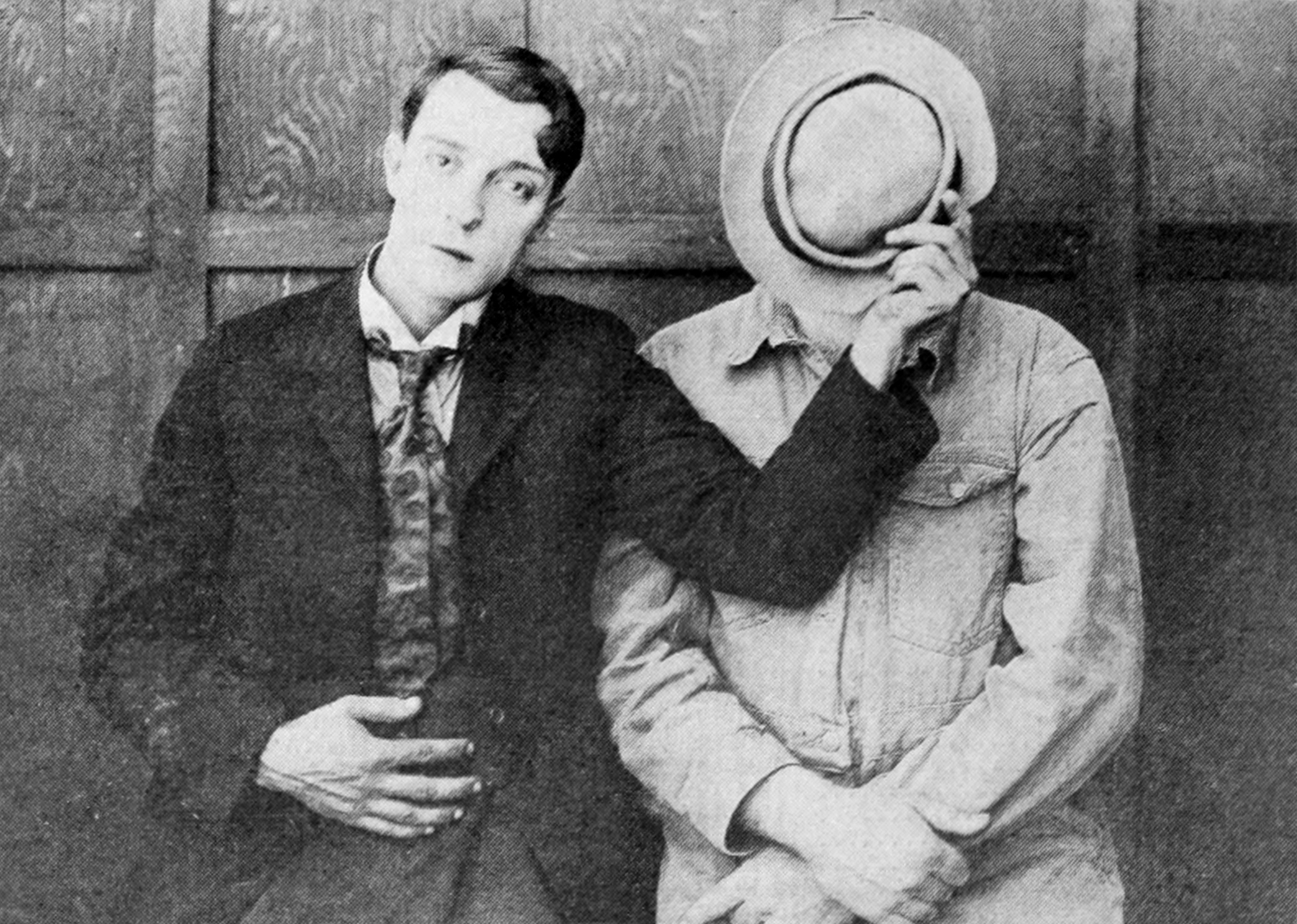
The collaborator inside the legend
The 1920 Metro Pictures photograph below pairs Keaton with filmmaker Edward F. Cline while, according to its original Wid’s Year Book caption, they were making two-reel films for producer Joseph M. Schenck. It does not show a stunt, and it does not prove that the two men held equal authority. Its value is narrower and more revealing: it records the working partnership that the lone-daredevil legend usually crops away.
Keaton’s physical authorship was real. So were the collaborators who helped turn a gag into a mechanism, a set and a frame. The modern argument begins there—not with a solitary body, but with the changing distance between that body and the people empowered to approve what happens to it.
Wid’s Year Book / 1920
Buster Keaton and Edward F. Cline at work
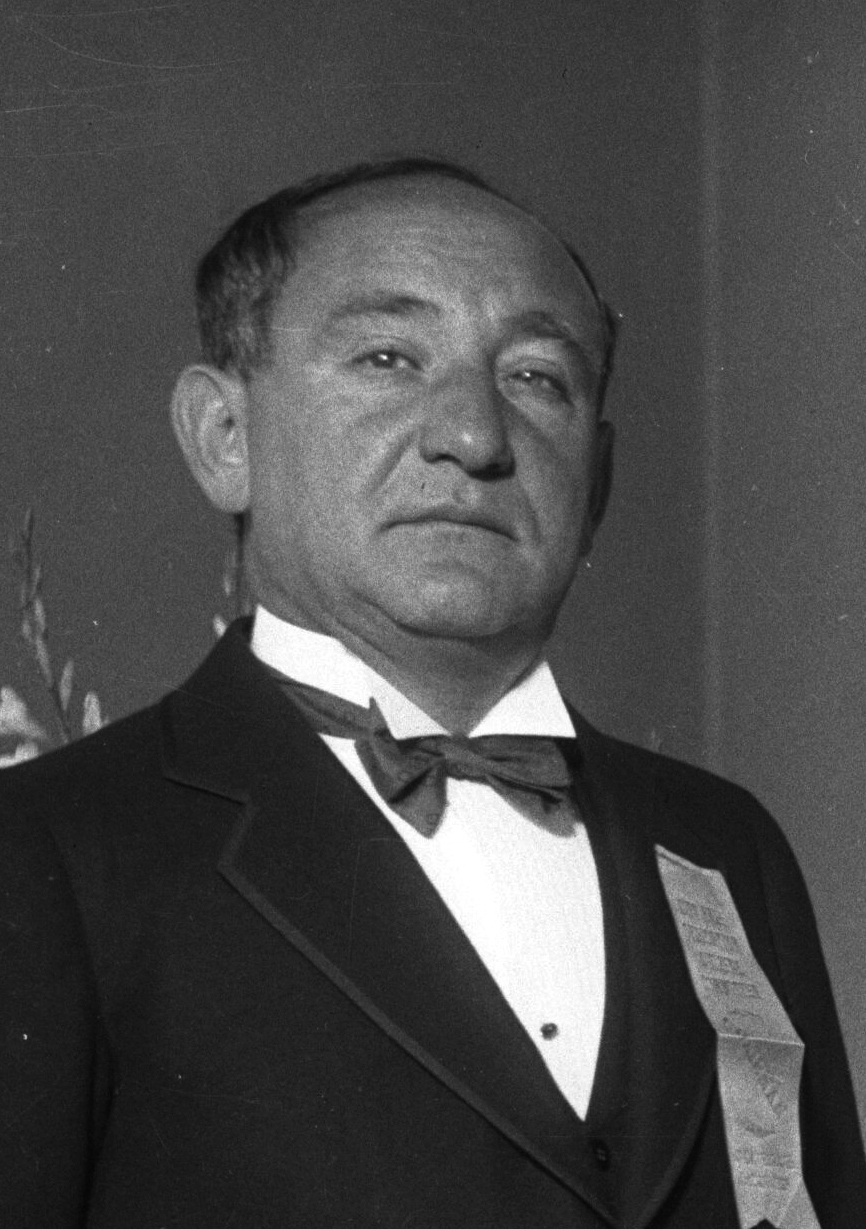
Two limits on the myth
The two archival photographs below pin down two different limits on Keaton’s freedom. Producer Joseph M. Schenck, photographed in 1928, represents the authority above the unit: Keaton could push an idea unusually far, but Schenck could still reject an ending or close a financial door.
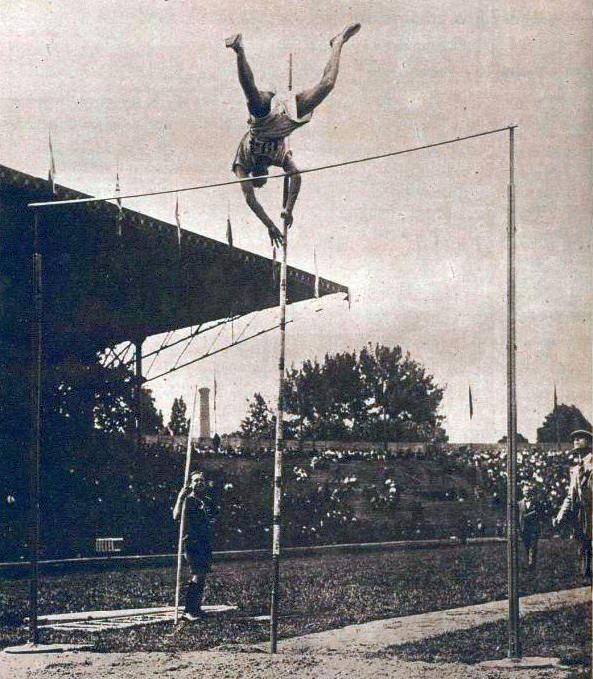
Lee Barnes represents a different boundary. The 1924 Olympic pole-vault champion supplied the successful vault in College because Keaton did not pretend that authorship required him to master somebody else’s discipline for one shot. Schenck marks the limit of permission. Barnes marks the limit of skill—and the intelligence of hiring the person who already has it.
Archive evidence / 1924–1928
The producer above the unit; the specialist inside the shot
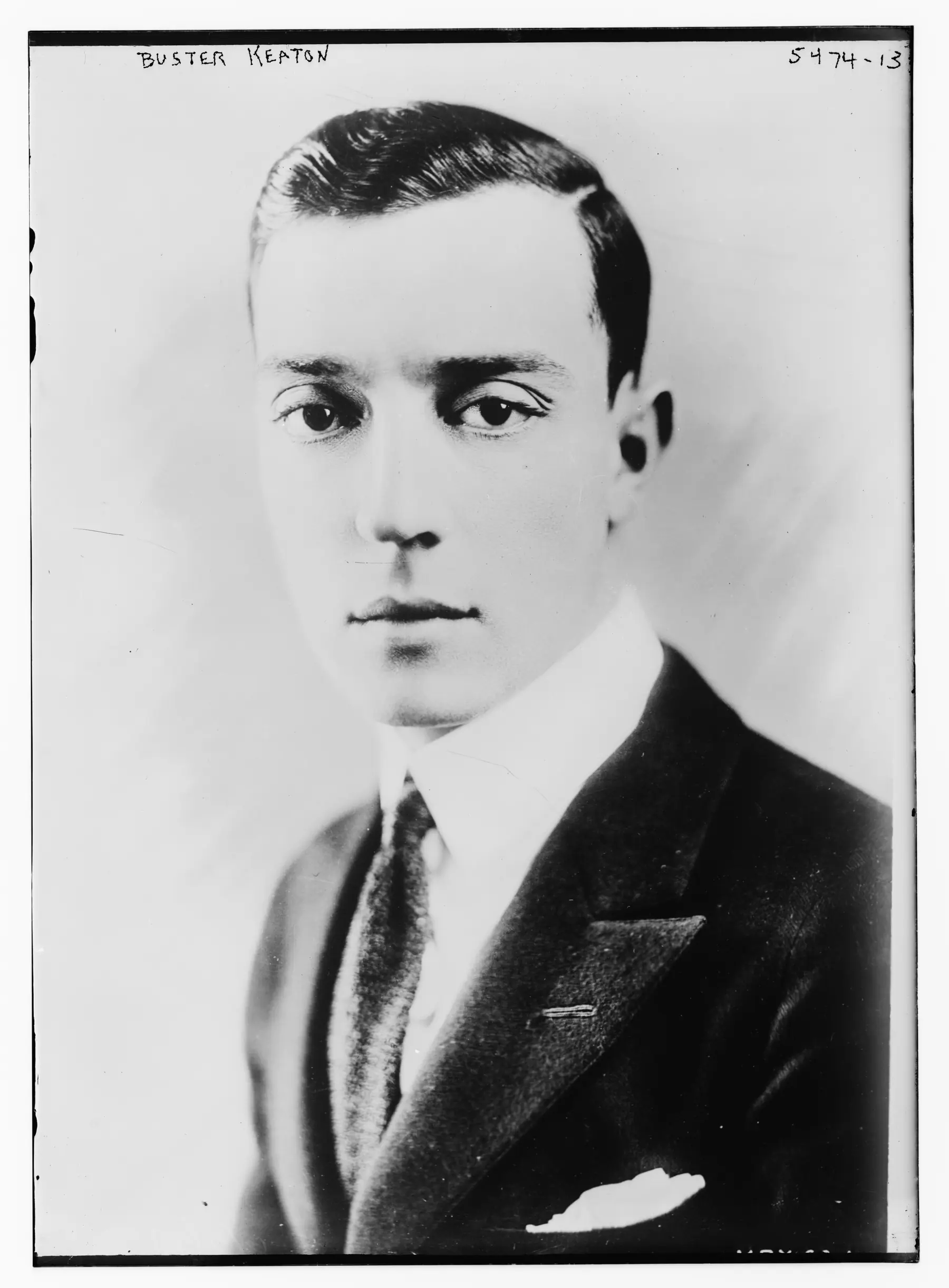
Two original archival photographs make visible the limits that the lone-genius version of the story tends to erase.
Bain archive / Portrait
The face before the system
Before anyone falls
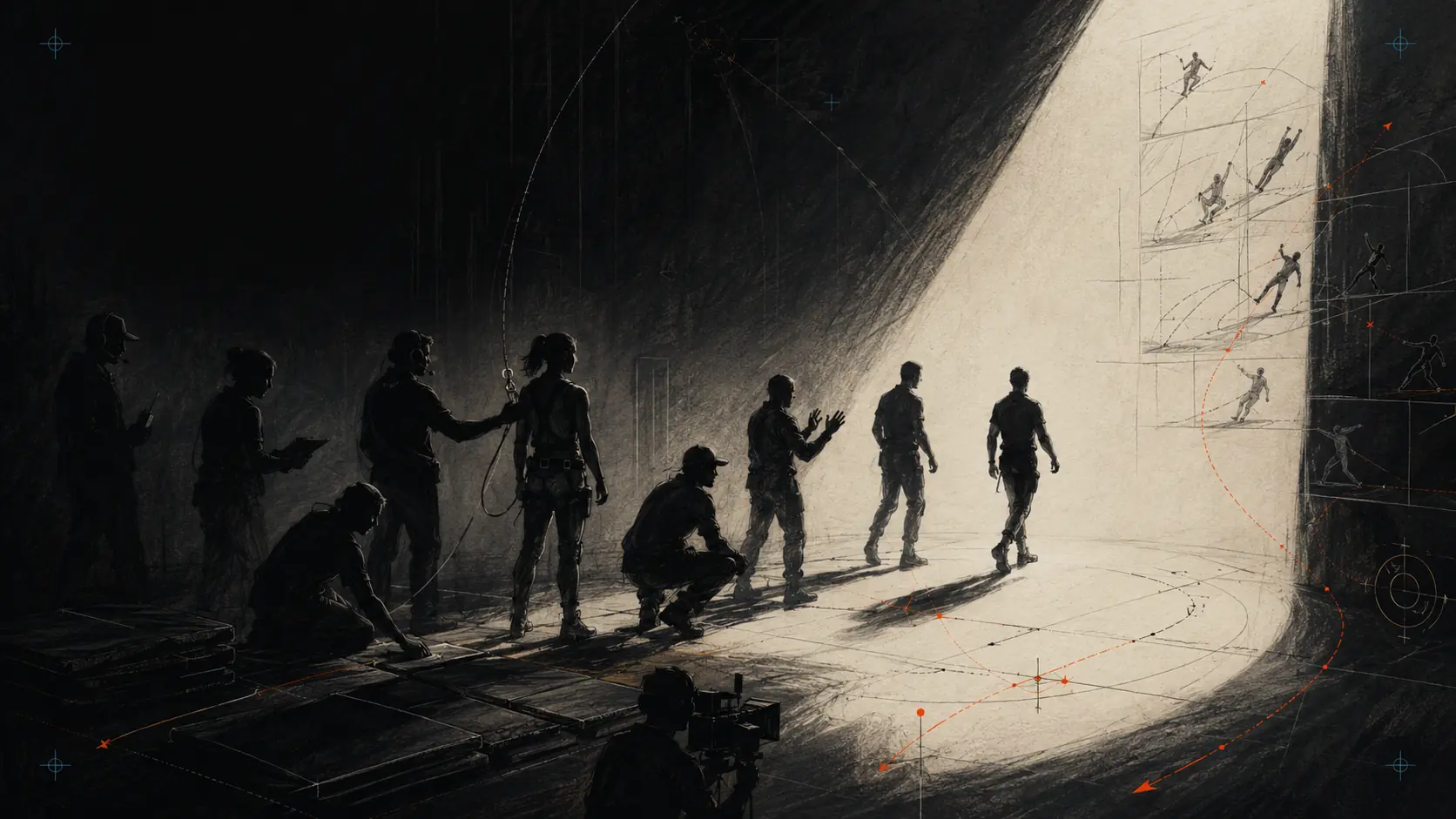
Cut forward almost a century. Before the body moves, the decision has already travelled.
The 2025 U.S. Industry-Wide Labor-Management Safety Committee bulletin reads like the route map. Production management must provide time, qualified people and accepted equipment. The stunt coordinator reviews the script and location, designs, tests, rehearses, modifies, selects personnel, places cameras, oversees rigging and defines protection. The first assistant director gathers the safety meeting. The performer must be informed, consulted and comfortable proceeding. A cast member who does not agree may request a double.
That bulletin is recommended guidance, not a universal law. It preserves a right to inspect, question and decline. But performer consent is now one necessary permission inside a larger machine. It is not the machine. A coordinator, producer, rigger, safety professional or employer can carry duties that personal willingness cannot erase.
For productions receiving California Film and Television Tax Credit Program 4.0 credits, the state’s 2025–2030 pilot adds a dedicated qualified safety adviser, daily meetings and written script-specific assessments; major stunts receive their own assessment. The adviser can temporarily halt production. The programme does not cover every California set, but it reveals the direction of travel: authority is formalised, documented and placed partly outside the creative chain.
The United Kingdom states the burden more plainly. The HSE says the employer—usually the producer or production company—retains a legal duty that cannot simply be handed to a consultant. Its stunt guidance treats the image and the method as separable. A production can preserve the intended effect while changing exposure through set construction, camera position, cutaways, engineering controls or CGI.
A written risk assessment is not a prophecy. It is a record of what a production believed it could foresee. Bodies miss by centimetres. Cables stretch. Vehicles move across inconsistent ground. Weather enters without reading the call sheet. The official frameworks know this; they require assessments to change when the activity or location changes. The paper is supposed to follow the event.
The veteran performer describes the failure mode from current production experience: physical action can evolve faster than its paperwork, while a completed form can acquire the authority of proof. The boxes are ticked. The live situation has changed. The document still looks finished.
The unsigned report reaches the same pressure point through a broader accusation. When an advance model is treated as fixed reality, it argues, institutional compliance can overrule the performer’s live adaptability—the very judgement the production hired when it decided the action needed a specialist.
Then finance enters. Allianz describes underwriters reviewing scripts, schedules, cast, stunts and locations and, in some cases, requesting a double or a rewritten action. That is one insurer’s account, not a commandment for the entire industry. The mechanism is enough: a creative option can become an underwriting problem before the performer who could execute it is in the room.
By the time the performer is asked to say yes, other people may already have decided what kind of yes the production can afford. The modern stunt is not the disappearance of judgement. It is a collision of judgements—bodily, technical, legal, financial, reputational—and the performing body no longer owns the final vote.
Two decision architectures
| Dimension | Keaton’s independent unit | Contemporary production | Visible consequence |
|---|---|---|---|
| Creative authority | Star-filmmaker and small trusted unit could develop action together. | Creative responsibility may be split among director, action or stunt design, coordination, units, studio and postproduction. | One screen action may now carry several forms of authorship. |
| Decision to proceed | Performer judgement could sit close to operational approval. | Performer consent remains important, while coordinator, production, safety and other approvals also operate. | A performer’s unused capacity may remain outside the authorised action. |
| Protection | Local engineering, marks, pits, lightweight props, dummies, scale and editing. | Formal planning plus specialised rigging, PPE, engineered surfaces, medical provision and digital removal. | The protective layer can become more capable and less visible. |
| Change control | A small group could adapt the gag during production. | Substantive changes can trigger reassessment, another safety meeting and renewed approval. | Improvisation enters a wider decision network. |
| Liability | Broad employment law and compensation structures already existed. | Duties, documentation, insurance and regulatory exposure are explicitly assigned and reviewed. | The record of why a stunt proceeded becomes part of the production object. |
Imagine a sprint with a fixed maximum speed. Once several runners can reach the cap, the race no longer reveals who could have gone faster. It reveals who reaches the limit cleanly, holds the line and performs most precisely inside it. — The veteran performer — paraphrased from a German-language background interview · Veteran stunt performer — confidential background record
The safety ceiling
Any safety system that defines an approved method does at least two things. It controls consequence. It also defines the boundary of the action it will permit. The first function is discussed constantly. The second is where the industry becomes uncomfortable.
Call the first boundary the safety floor: competence, tested equipment, rehearsal, communication, protective systems, escape or abort procedures and a shared understanding of the intended movement. The floor reduces dependence on luck and on private assumptions no other department can see.
Above it sits a ceiling: the maximum physical exposure the production will authorise for that action. It is not a ceiling on imagination or dramatic effect. Cinema can make the fall look higher, the surface harder and the impact more violent. It is a ceiling on what the body is allowed to encounter while producing the image.
A performer may possess the control, impact tolerance or recovery to work beyond that boundary and still be prohibited from displaying it. The ability does not vanish. Its evidence does. The production has decided that the camera will never find out how much farther that performer could go.
The veteran performer explains the effect as a race with a speed limit. Once several runners can reach the permitted maximum, the race no longer identifies the fastest human being. It identifies who reaches the cap cleanly and performs best inside it.
The unsigned report separately uses the same structure and pushes it harder: the elite performer is held below full capacity while equipment, softened environments and digital intervention raise the authorised version into reach for a broader group. The two people may remain radically different off camera. On camera, the system can make them look closer together.
A stunt is not a sporting contest, and danger is not a score. Nobody deserves artistic credit merely for accepting more harm. But that truth does not cancel the occupational consequence. If one major axis of ability is capped for everyone, the most exceptional outlier on that axis loses the chance to separate from the field.
Difference migrates. Timing, spatial accuracy, body line, character, reaction, continuity, repeatability, camera awareness and collaboration with riggers, coordinators and visual-effects teams carry more of the visible result. A protected fall may demand less impact tolerance and more centimetre-level placement. A wire may control the consequence while making synchronisation and shape decisive. A digitally assembled hit may remove bodily collision and demand that separate performances share intention and rhythm.
That work can be exacting. It can also be beautiful. But more controllable does not automatically mean better, just as more dangerous did not automatically mean better in 1928. The ceiling changes the visible hierarchy of talent. It determines what the screen can still prove about the human being inside the system—and what it can no longer distinguish at all.
The soft world
The unsigned report offers a simple image. A performer lands on green. The audience sees concrete. Both statements can be true.
Protection no longer has to sit beneath one body. It can replace the world around it. The veteran performer describes rooms sheeted with mats for extended fight work, staircases softened or rebuilt, edges exchanged for rubber and hard architecture recreated so bodies can repeat contact.
The unsigned report connects that practice to the famously physical filmmaking associated with Jackie Chan: the performance may remain punishing even as a room is quietly prepared to receive it. In the report’s account, padding is not new. What has changed is how much of the environment can be softened, how precisely it can be engineered and how completely the protection can disappear from the finished frame.
For the alley fight in Karate Kid: Legends, director Jonathan Entwistle and stunt coordinator Peng Zhang described walls and floor made of rubber. The set could support long phrases and repeated collisions while changing what those collisions meant to the bodies. The audience reads brick and pavement. The performer meets a designed surface.
Road House separates the action further. Production VFX supervisor Grant Hewlett described selected fights built through A/B passes. An attacker struck a pad placed where another performer’s head or body would appear. The receiving performance was recorded separately. Clean plates and slower passes supplied missing regions. Tracking, roto, paint and compositing removed the pads, restored furniture and joined the preferred pieces into one violent exchange.
The result is not one unbroken collision. It is also not an absence of physical performance. Human beings provide acceleration, follow-through, reaction, camera relationship and body dynamics. Postproduction changes which bodies met, what they met and whether they met at all.
John Wick: Chapter 4 makes the layers almost diagrammatic. For a window-to-van fall, stunt double Vincent Bouillon jumped from a third-storey window onto boxes built to the height of the van roof. In another element, he fell onto a hydraulically collapsing roof. The boxes disappeared. The van arrived. VFX joined the pieces. Elsewhere, performers struck soft car-shaped sleds covered in green material; the final image supplied the vehicles. The performer provided timing and contact. The photographed object provided controlled resistance. The screen provided the world.
Now ask five questions. Did a human body travel through space? Which body was it? What force did it actually encounter? What protection was present? Which environment did the audience see? The words real and fake are too blunt to survive the answers.
Face replacement adds the final split. The motion can belong to a stunt performer while the visible identity belongs to the actor. The specialist’s authorship has not vanished, but the proof has been peeled away from the face. An audience can admire the actor. A campaign can sell the actor. The body that designed the movement may be present everywhere except in recognition.
Keaton’s cinema was already hybrid: real water and a designed set, a real run and engineered boulders, a full locomotive and a dummy engineer, a physical balance completed by a cut. Contemporary production did not invent the gap between event and illusion. It industrialised the number of layers that can be separated, reassigned and hidden after the body has done its part.
Five layers inside the word ‘real’
| Layer | Question | Possible answer | What the final image may conceal |
|---|---|---|---|
| Captured movement | Did a human body perform the motion? | Actor, double, several performers, partial digital body or a blend. | Separate takes can appear continuous. |
| Visible identity | Whose character or face appears? | The photographed performer or a digitally transferred identity. | Motion authorship may be detached from visible identity. |
| Physical consequence | What did the body actually encounter? | Impact, deceleration, boxes, pad, wire, softened object or no contact. | Concrete may have been rubber; a vehicle may have been a green sled. |
| Safety intervention | What controlled the event? | Rigging, PPE, mats, breakaway construction, marks, rehearsals and abort systems. | The controls are designed to disappear. |
| Digital reconstruction | What changed after photography? | Paint-out, environment, height, surface, object, face, timing or full transition. | The perceived event can exceed the captured consequence. |
What the voter cannot see
A voter receives the finished fall. The voter does not receive the floor beneath it.
By the time an awards reel begins, the event has passed through the whole machine: camera position, edit, sound, paint-out, environment work and the removal of whatever was never meant to survive into the frame. The body may be unmistakably real. The consequence the audience reads from that body may be a composite.
The 2026 Emmy rules try to hold the category to a physical centre. A stunt-performance entry may run no longer than three minutes and must show a single stunt or a single completed stunt sequence from one aired episode. The credited performer must identify the work performed. Non-aired material is excluded, and the submitted stunt cannot be completely generated by AI or VFX: a practical performance must actually have aired.
That rule secures a human event inside the image. It does not turn the image into a forensic record. The voter is not shown the raw plate, the wire path, the pad layout or the breakaway specification. The voter sees what the audience saw. The practical contribution is present; its physical consequence is not necessarily legible.
The Taurus World Stunt Awards draw the boundary differently but expose the same problem. Their current rules reject stunt performances digitally altered in post while allowing apparatus such as wires, ramps and cages to be removed, subject to eligibility review. Separate official descriptions of 2024 nominees and winners document recognised sequences involving box rigs, wires, blue screen, digital environments, CG objects and face replacement. The hybrid is not an exception hidden outside stunt culture. It is part of the work stunt culture now knows how to honour.
There is no contradiction in recognising that work. A protected hybrid can demand exact timing, spatial judgement, rigging, performance and coordination. But it changes the question an award answers. Is the trophy recognising the body’s encounter, the designed illusion built around that body, or the success with which the two were made impossible to separate? Our analysis of the Academy’s Stunt Design award follows that distinction into recipient rules and judging evidence. Those are related achievements. They are not identical evidence.
The distinction becomes occupational when the face in the frame matters more than the specialist outside it. A SAG-AFTRA-published practitioner account explains that doubling is used when a scene presents potential injury risk or requires a skill the actor does not possess. Reverse the mechanism: when rigging, softened surfaces, rehearsal and camera design move the authorised action inside an actor’s practical range, one traditional reason to place a double in the shot becomes narrower.
The unsigned report takes that mechanism to its most provocative conclusion. If the industry keeps engineering consequence out of the photographed event, it asks, at what point does the stunt profession engineer away its own clearest hiring argument? The report presents that as a structural forecast, not as proof that specialist work has already disappeared.
The veteran performer describes a nearer pressure. As controls enlarge the group able to complete the authorised version, productions can keep more action on a principal actor’s face. The exceptional performer may still possess a much larger physical range, but range outside the approved design has no screen value if the production will not permit it to be used.
The work can migrate rather than vanish. Specialists may design the action, test the system, rig it, teach the actor, perform the irreducible fragments and make the protected version read as consequential. Coordination, rigging and digital-interface work can expand while some doubling opportunities contract. What moves is not merely employment. It is authorship—and whether that authorship remains visible, credited and paid.
This is talent compression in its cleanest form. A system can increase the number of people able to produce the approved image while reducing how much that image can tell us about the difference between them. More people may reach the mark. The camera may no longer be allowed to show who could have gone beyond it.
What the body remembers
A body becomes fluent in what it repeats. It learns the floor, the rotation, the moment to release tension and the moment to brace. Change the work it repeats and the body prepares for a different world.
The veteran performer says that difference is already visible among newer entrants encountered on current productions: on average, less conditioning for repeated routine impacts, less durability across ordinary fall work and more injuries from actions that earlier cohorts in the performer’s experience absorbed more consistently. This is firsthand field testimony from one long career. It is not a census of a global profession.
Here the evidence thins precisely where the argument becomes most explosive. The editors found no public longitudinal dataset that follows comparable stunt cohorts across generations and establishes that performers entering in 2026 are injured more often than performers entering in 1996 or 1926. The absence of that dataset does not erase the veteran performer’s observation. It limits the distance the article can carry it.
The strongest published numbers answer a different question. In an exploratory Canadian survey of 216 performers, 173—80.1 percent—reported at least one career head impact or head whip related to stunt work. Among those 173, 86.1 percent reported concussion-like symptoms, 37.6 percent had received a concussion diagnosis and 65 percent reported continuing to work while symptomatic. The study was cross-sectional and self-reported. It measured accumulated experience, not a generational trend or an annual injury rate.
A later qualitative analysis examined comments from 87 of those 216 respondents. Researchers grouped the responses around injury-reporting stigma, ‘cowboy culture’ and the quality of the work environment. Performers described fear of losing future work, pressure to continue and concern about readiness and inexperienced hiring. The sample was self-selected, regionally bounded and not longitudinal.
The numbers are serious. They are not proof of decline. Reporting changes. Diagnosis changes. Work volume, action style, entry routes and the threshold for naming an incident change. A higher recorded count can mean more injuries, more recognition, more disclosure or several of those things at once. A lower count can hide silence.
The unsigned report proposes a mechanism the studies do not test. It argues that repeated impact work develops technique, reflex and physical tolerance, and that more insulated environments can reduce the stimulus for that conditioning. It also argues that wire-driven acceleration and deceleration can relocate exposure towards head whip and cervical loading even when a harness prevents a fall. The published studies document head impacts and head whips. They do not establish either causal chain or a generation-to-generation decline.
The unsigned report also invokes Wolff’s law: bone adapts to the loads placed upon it. The principle is real; the claimed history is not measured here. It does not prove that an older stunt cohort had greater bone density, nor that a contemporary cohort is mechanically weaker. At most, it supports a narrower occupational proposition: people adapt to the loads their work repeatedly asks them to manage.
Robustness is not contempt for injury. It is not staying quiet after a concussion and it is not treating damage as proof of character. In stunt work it can mean fall technique, tissue conditioning, spatial orientation, repeatability under fatigue, judgement during deviation and the ability to recognise when the body is no longer executing the plan. Some of those capacities remain visible under every system. Others reveal themselves only when the system departs from its model.
That is the unresolved fault line. If the environment absorbs more of the planned consequence, the performer may train for a different distribution of load. If a control then fails, the body meets the remainder the design promised to contain. Protection can reduce, move or distribute consequence. It cannot, by itself, tell us what capacities the next deviation will demand.
Who gets to say yes
There is still a mark on a contemporary set. What the modern system largely rejects is the idea that one person owns the yes.
A formal right and the economic freedom to exercise it are not the same thing. A SAG-AFTRA-published practitioner account says an actor may request a stunt double. Current safety guidance gives performers consent and abort roles. Yet the head-trauma research records a labour market in which some performers fear that reporting an injury will make them look weak, disappoint a coordinator or cost the next job. A right can exist on paper while the price of invoking it remains personal.
The production carries pressure in the other direction: schedule, finance, legal duty, insurance and the possibility of enforcement or a claim. Allianz describes an underwriting process that examines scripts, schedules, cast, stunts and locations and can seek doubles or scene changes. UK guidance says a producer’s legal responsibility cannot simply be handed to a consultant. A performer may be willing to proceed while the entity carrying the exposure refuses. Personal willingness is no longer sufficient authorisation.
The result is not a clean contest between courageous bodies and cautious offices. It is a conflict between different kinds of consequence, held by people who do not carry them in the same way.
The veteran performer locates the daily conflict in the gap between the written model and the live event. Weather moves. Timing shifts. Equipment behaves differently after repetition. A body reads those changes in real time. The production hires that judgement, then places final permission in a system that cannot allow the performer’s judgement to be the only gate.
The unsigned report states the accusation more sharply: when safety planning, production pressure and insurance conditions converge, institutional compliance can overrule the adaptability that justified hiring a specialist in the first place. The report does not argue that the performer should own every decision. It argues that expertise can become operationally subordinate to the evidence of a completed process.
So the image is redesigned. Lower the exposure. Add a line. Soften the set. Split the event into passes. Put one fragment on the double and another on the actor. Replace the environment. Record every change. The screen idea may survive almost intact while the physical proposition, the authorship and the consequence beneath it are divided among departments.
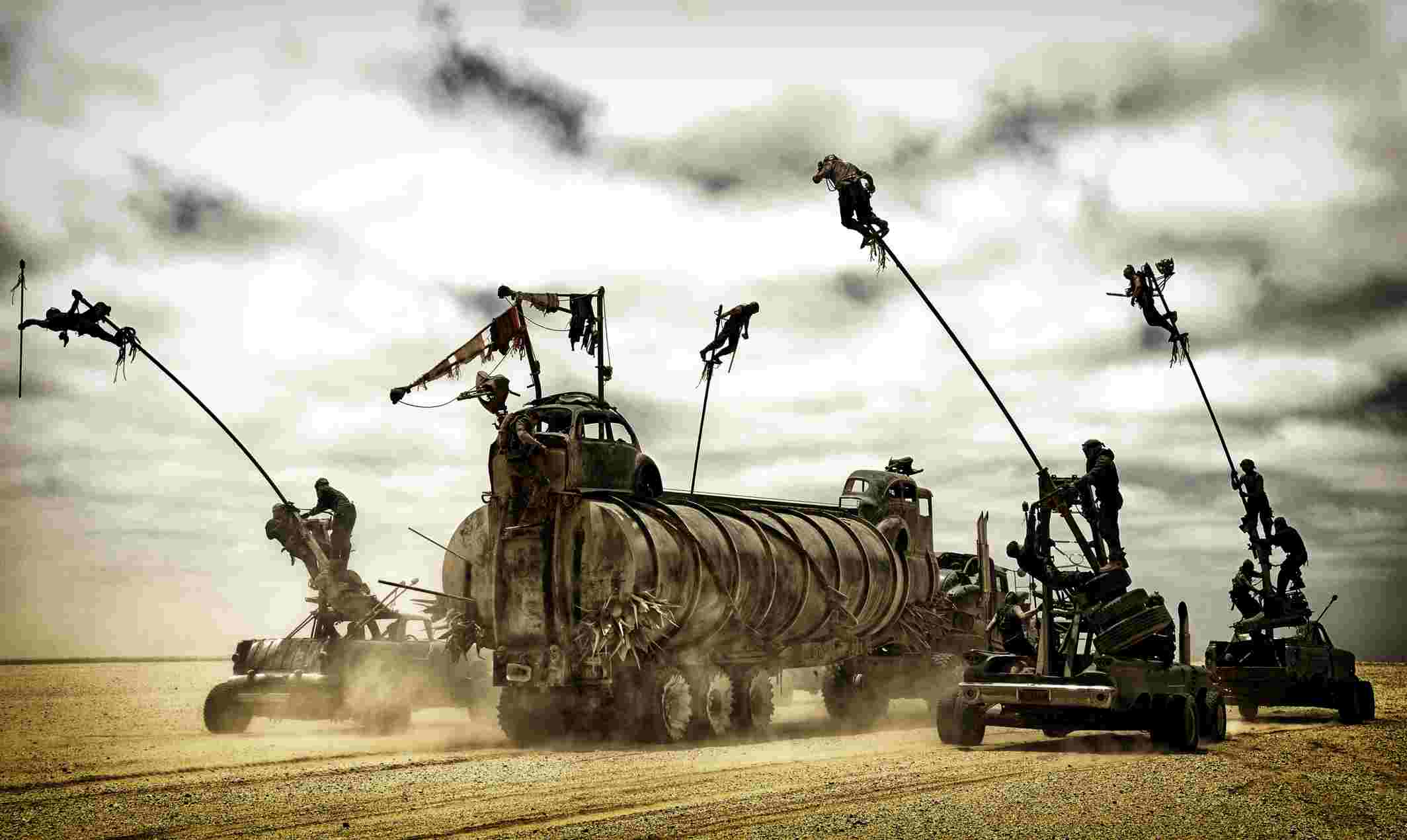
Fast X gives that redistribution of authorship a machine the audience can actually feel. In its Rome-set chase, a massive spherical bomb barrels through the streets while cars flip, burn and scatter around it. The sequence combines a controlled practical bomb prop and real vehicle action with digital assembly. Its camera work is exceptional because it refuses the spectator’s distance: the lens seems to run with the stunt instead of merely watching it.
The relevant change is organizational rather than proprietary. In modern stunt design, action direction can integrate physical camera placement, framing, focus, action timing and postproduction across specialists. Keaton’s camera largely waited outside the geometry while his body entered it; a contemporary lens can move through that geometry because control over the shot is divided. Our tactical authenticity report examines that distributed camera–action literacy across a wider set of productions.
That is the paradox a simple safer-or-less-safe comparison misses. Institutional control can narrow what one performer is permitted to demonstrate while technical invention expands what a production can photograph. An actor’s face can remain visible through controlled movement. A rig can carry a performer farther while governing the end of the line. Postproduction can preserve the strongest body performance from several protected elements. One freedom contracts. Another opens. The vocabulary expands even as sole discretion disappears.
Then the wall returns. Keaton’s facade was planned, engineered and built to miss. But the performer-filmmaker, his technical collaborators and the unit held the authority to accept its narrow geometry close to the body standing beneath it. Today, there may still be a wall and there may still be a mark. Around them stand departments, contracts, meetings, calculations, approvals and the possibility that the wall will become foam, a separate pass or pixels.
This is not a verdict on which century made the better bargain. It is a record of what moved. Physical capacity is now fenced by more institutional boundaries than the camera can show. The specialist remained responsible for execution while authority over permission spread outward. The image could become more controllable at the same moment the performer’s exceptional range became harder to prove.
The facade fell once. The decision to let it fall is the part of the story that changed.
Keaton stood where the nails told him to stand. A century later, the mark is still there. What has moved is the authority around it.
Sources and further reading
- Veteran stunt performer — confidential background record — STUNT.BLOG Editorial Desk, 2026-07-14. Accessed 2026-07-14.
- Unsigned industry report — retained source document — Confidential source material supplied to STUNT.BLOG, 2026-07-14. Accessed 2026-07-14.
- Workmen’s Compensation, Insurance and Safety Act of 1913 — State of California, 1913-05-26. Accessed 2026-07-14.
- My Wonderful World of Slapstick — Buster Keaton with Charles Samuels / Doubleday, 1960-01-01. Accessed 2026-07-14.
- Buster Keaton Visits the Today Show — The New Yorker, 1963-04-27. Accessed 2026-07-14.
- Steamboat Bill, Jr. — San Francisco Silent Film Festival. Accessed 2026-07-14.
- Sherlock Jr. — National Film Registry Essay — Library of Congress. Accessed 2026-07-14.
- College (1927) — Production Notes — Turner Classic Movies. Accessed 2026-07-14.
- Lee Barnes — Olympedia. Accessed 2026-07-14.
- Seven Chances (1925) — Production Notes — Turner Classic Movies. Accessed 2026-07-14.
- The General (Film) — The Oregon Encyclopedia. Accessed 2026-07-14.
- Safety Bulletin #4 — Stunts — Industry-Wide Labor-Management Safety Committee / Contract Services, 2025-03-27. Accessed 2026-07-14.
- Safety in Motion Picture Productions — SB 132 Frequently Asked Questions — California Division of Occupational Safety and Health. Accessed 2026-07-14.
- Safety in Film, TV and Broadcasting — UK Health and Safety Executive, 2026-06-11. Accessed 2026-07-14.
- Stunts, Fights and Other Potentially Hazardous Production Activities — UK Health and Safety Executive. Accessed 2026-07-14.
- Stunts and Connectivity — SAG-AFTRA, 2017-02-14. Accessed 2026-07-14.
- Lights! Camera! Insurance! — Allianz Commercial. Accessed 2026-07-14.
- Fast X — Rome Bomb Sequence Behind the Scenes — Universal Pictures. Accessed 2026-07-15.
- How Road House Fight Performances Were Built with Pads, Multiple Passes and VFX — befores & afters, 2024-05-14. Accessed 2026-07-14.
- Inside John Wick: Chapter 4’s Practical and Digital Action Layers — befores & afters, 2023-05-04. Accessed 2026-07-14.
- Building the Karate Kid: Legends Alley Fight — CinemaBlend, 2025-07-09. Accessed 2026-07-14.
- 2026 Emmy Awards Rules and Procedures — Television Academy, 2026-04-07. Accessed 2026-07-12.
- Taurus World Stunt Awards Rules — Taurus World Stunt Awards. Accessed 2026-07-12.
- Taurus World Stunt Awards — 2024 Winners and Nominees — Taurus World Stunt Awards. Accessed 2026-07-14.
- Head Trauma and Concussions in Film and Television Stunt Performers: An Exploratory Study — Journal of Occupational and Environmental Medicine, 2022-11-04. Accessed 2026-07-14.
- Stunt Performers’ Reluctance to Self-Report Head Trauma: A Qualitative Study — Journal of Occupational Medicine and Toxicology, 2024-01-31. Accessed 2026-07-14.
- Buster Keaton in ‘The General’ — Bain News Service catalog record — Library of Congress. Accessed 2026-07-14.
- Buster Keaton in ‘The General’ — Commons rights record — Wikimedia Commons. Accessed 2026-07-14.
- Buster Keaton portrait — Bain News Service catalog record — Library of Congress. Accessed 2026-07-14.
- Buster Keaton portrait — Commons rights record — Wikimedia Commons. Accessed 2026-07-14.
- Buster Keaton and Edward F. Cline — 1920 Metro Pictures publicity photograph — Metro Pictures / Wid’s Year Book 1920 / Wikimedia Commons, 1920-01-01. Accessed 2026-07-18.
- Lt. O. Locklear — Bain News Service catalog record — Library of Congress, 1915-01-01. Accessed 2026-07-18.
- Barnstorming — Ormer Locklear — Smithsonian National Air and Space Museum. Accessed 2026-07-18.
- Joseph Schenck at the Los Angeles City Hall dedication — 27 April 1928 — Los Angeles Times Photographic Collection / UCLA Library / Wikimedia Commons, 1928-04-27. Accessed 2026-07-18.
- Lee Barnes, 1924 Olympic pole-vault champion — published action photograph — Le Miroir des sports / Wikimedia Commons, 1924-07-16. Accessed 2026-07-18.


Loading approved comments…