Opinion
Best Picture should judge the picture. The Academy's RAISE gate violates that principle, and it should be abolished—not refined, audited or made more efficient.
RAISE does not measure artistic achievement. It allows internships, training schemes, company executives or hired consultants to qualify a picture whose cast and production team do not meet the on-screen or crew standards. The filing is confidential, so the public cannot see which route any film used.
This is the institutional form of DEI pressure in cinema: demographic compliance is written into eligibility for the Academy's highest prize. Calling it encouragement is evasive. A film company either satisfies the rule or its picture cannot compete for Best Picture.
The result is indefensible from both directions—opaque, coercive in principle, porous in practice and corrosive to creative trust. The Academy turns identity into an awards credential, then lets corporate bureaucracy detach that credential from the film.
For the 99th Academy Awards, Best Picture contenders must satisfy two of four RAISE standards and submit a confidential company-confirmed form. Other categories do not face this gate.
Standards C and D can qualify a film through company programs, executives and consultants even when it does not satisfy the on-screen or production-team standards A and B.
Snow White shows the commercial cost of letting ideological conflict overwhelm story, brand and audience trust; The Odyssey shows how RAISE places even auteur casting under avoidable quota suspicion.
RAISE cannot be repaired into an appropriate artistic test. Best Picture eligibility should return to the picture.
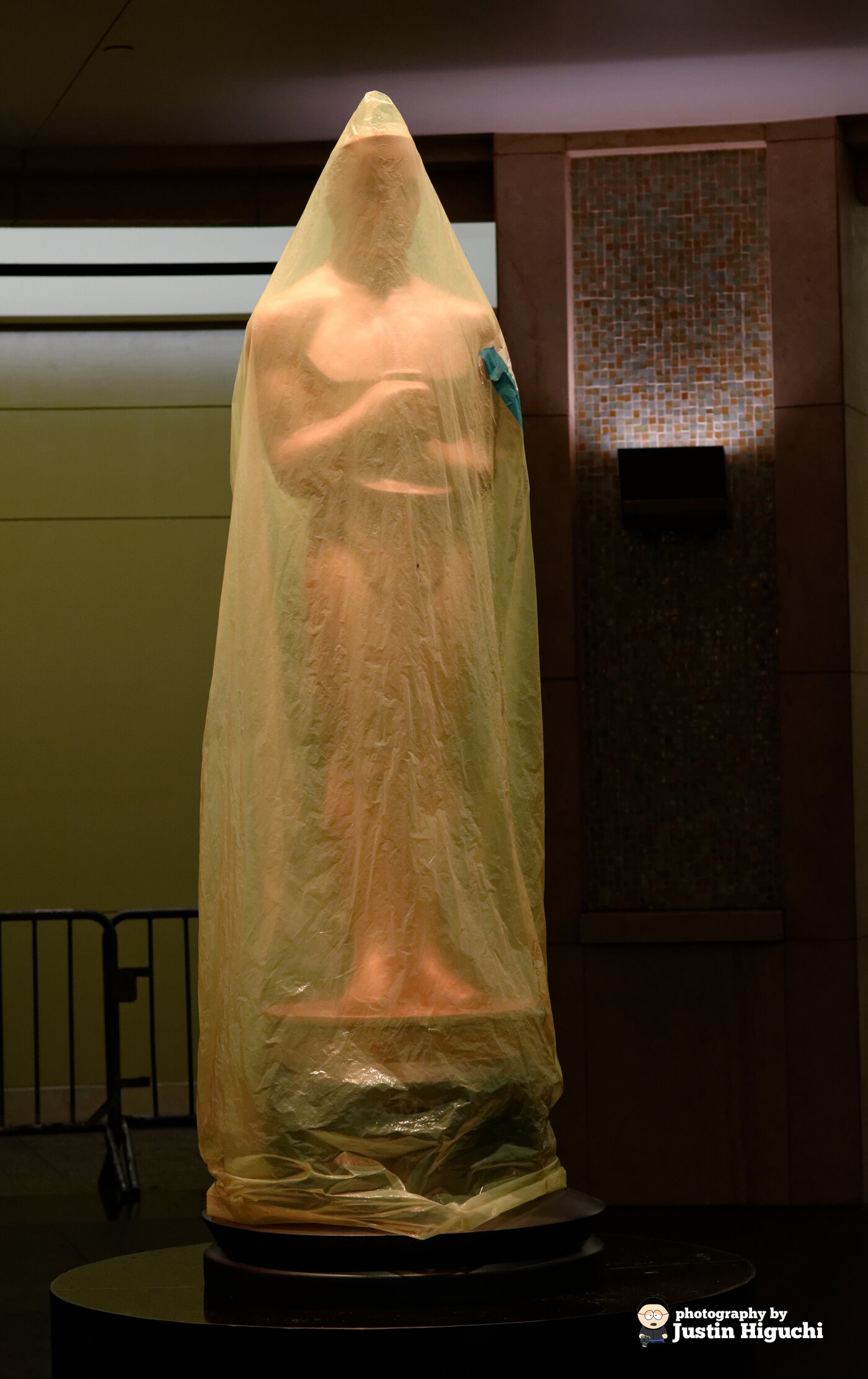
Documentary photograph / Academy ceremony preparations
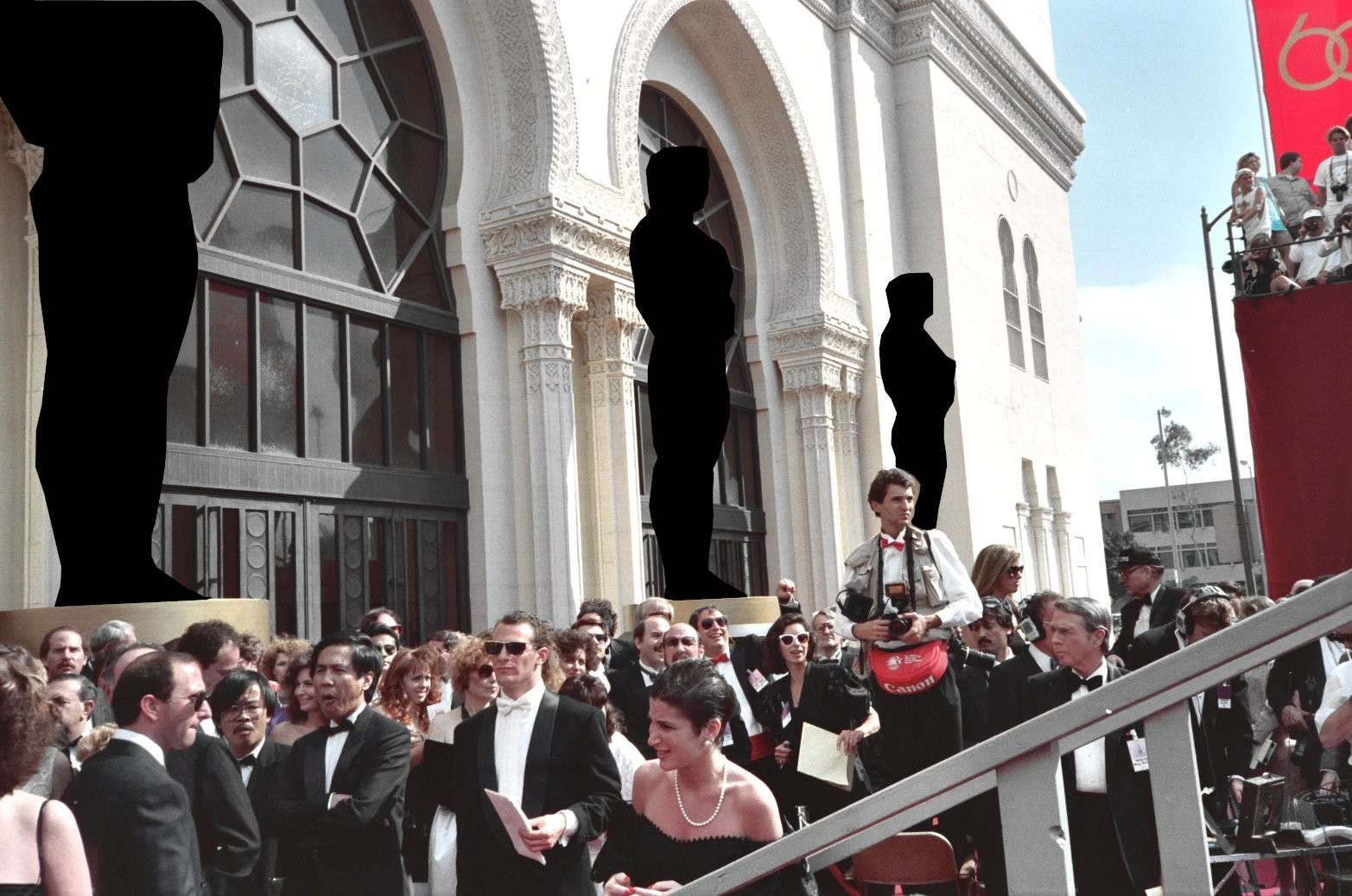
An artistic prize now has a demographic entrance test
What the gate actually tests
Standard A has three routes. A1 requires at least one lead or significant supporting actor submitted for Oscar consideration from a racial or ethnic group underrepresented in the country or territory of production. A2 requires at least 30 percent of all actors not submitted for Oscar consideration to come from at least two underrepresented groups. A3 requires the main storyline, theme or narrative to centre on an underrepresented group.
Standard B also has three routes. B1 requires two distinct creative leaders or department heads from underrepresented groups, including at least one person from an underrepresented racial or ethnic group. B2 requires six distinct other crew, team or technical personnel—excluding production assistants—from an underrepresented racial or ethnic group. B3 requires at least 30 percent of the crew to come from at least two underrepresented groups.
Standard C is met through C1 or C2. C1 covers paid apprenticeships or internships maintained by the film's distribution or financing company. C2 covers below-the-line training or work opportunities offered by a production, distribution or financing company; the public C2 criterion states no explicit minimum headcount, duration, completion, placement outcome or pay requirement.
Standard D requires at least two distinct in-house senior executives or hired consultants who collectively belong to at least two underrepresented groups, including at least one person from an underrepresented racial or ethnic group. They must work on creative or development, marketing, publicity or distribution teams.
A contender needs any two standards. That single design choice separates the compliance result from the artistic work.
Four standards, two fundamentally different objects
| Standard | Object examined | Connection to the finished picture |
|---|---|---|
| A — On screen | Lead or supporting actors, ensemble composition, storyline, theme or narrative | Direct: people and subject matter visible in the film Source ↗ |
| B — Production | Creative leaders, department heads, key technical roles or overall crew | Direct: people who made the film Source ↗ |
| C — Access programs | Company apprenticeships, internships, training or work opportunities | Indirect: a financing, production or distribution company can supply the criterion Source ↗ |
| D — Audience development | Company senior executives or hired consultants in qualifying functions | Indirect: the qualifying people may sit outside the film's cast and production team Source ↗ |
The C-plus-D escape route breaks the artistic link
RAISE permits a picture that fails both on-screen Standard A and production Standard B to clear the gate through C plus D: one qualifying company-access route, plus qualifying executives or consultants. Neither route measures the finished film. The picture can qualify without changing one character, theme, leading performance, department head or crew percentage.
That is not a narrow exception hidden in a footnote. It is the architecture of the rule. The Academy's answer—that a film can qualify off screen—concedes the case against RAISE. If the test can be satisfied without changing the picture or the people who made it, the test is unrelated to the merit the prize is supposed to recognize.
At best, C and D are corporate-employment indicators. Attaching them to Best Picture is a category error. A rule detached from the prize has no place in eligibility.
“A lot of loopholes.” “The battlefield for me is the rarefied air of the gatekeepers.”— Spike Lee — interview reported by Vanity Fair, 7 October 2020 · Source ↗
Standard C was weakened; Standard D's eligible pool broadened
In September 2020, Standard C required a company to meet both C1, paid apprenticeships or internships, and C2, training or skills-development opportunities. The current rule requires only one. That is an unequivocal loosening.
Standard D now counts hired consultants and creative or development teams as well as in-house executives in marketing, publicity and distribution. The current D rule also expressly requires the qualifying people to span at least two underrepresented groups and include at least one person from an underrepresented racial or ethnic group.
The precise charge is serious enough: C was weakened, while D's eligible pool was broadened. The Academy made its corporate bypass more flexible after announcing the standards as a catalyst for change.
We believe these inclusion standards will be a catalyst for long-lasting, essential change in our industry.— Academy President David Rubin and Academy CEO Dawn Hudson — official announcement, 8 September 2020 · Source ↗
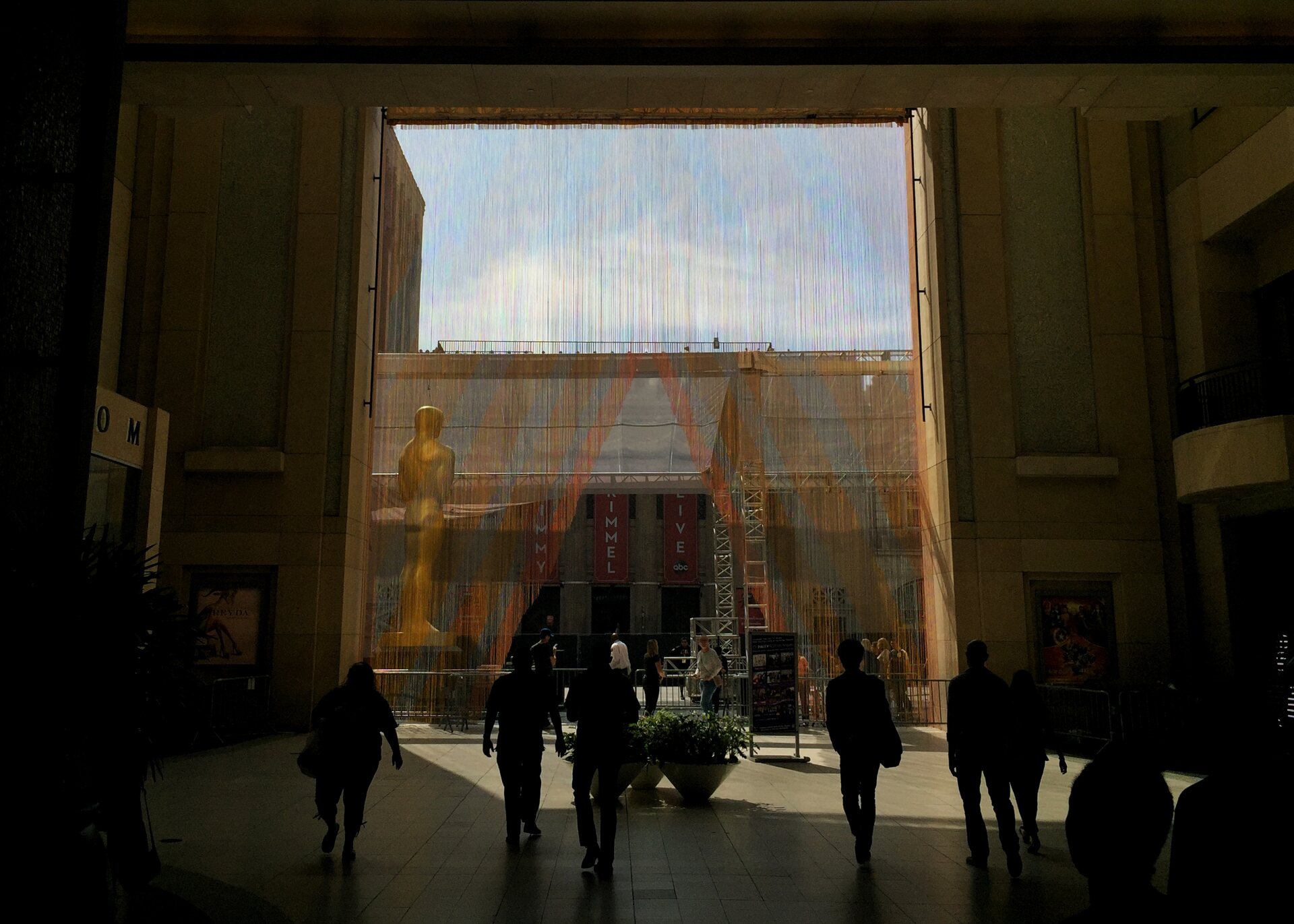
Documentary photograph / Dolby Theatre aftermath
After the ceremony, the policy result is still hidden
The corporate advantage is built in
The Academy recognizes a difference between majors and smaller companies. Major studios and distributors are expected to operate substantive, ongoing paid programs across many departments. Mini-majors and independents can satisfy C1 with at least two qualifying apprentices or interns, including at least one person from an underrepresented racial or ethnic group, in at least one listed department.
The published criterion is company-level: it asks whether the distributor or financier has the program, not whether that program changed this film. It does not require the program to be new or film-specific. Company infrastructure therefore becomes an eligibility input without proving anything about Best Picture merit.
Whether an independent can qualify another way is beside the point. Best Picture admission should never turn on the human-resources infrastructure or consultant roster of the company behind a film. An artistic prize should not become easier to enter because the distributor has a better compliance department.
Confidentiality protects data—and defeats accountability
Personal identity data can remain private; eligibility outcomes and reasoning need not. The Academy publishes neither the two standards each contender used nor whether a title qualified through cast, crew, a training program, its distributor or hired consultants.
Internal checking cannot substitute for public accountability when secret demographic information helps decide admission to the Academy's top prize. The public sees the consequence but not the proof.
RAISE therefore creates a closed compliance system: the Academy writes the test, receives the confidential filing, resolves eligibility and publishes no film-level route. An artistic prize should not demand trust in an identity audit it refuses to expose.
No one should be telling me as an artist that I have to give in to the latest, most current idea of what morality is.— Richard Dreyfuss — PBS Firing Line, 5 May 2023 · Source ↗
RAISE imposes a quota-suspicion tax
Once the Academy declares demographic characteristics relevant to eligibility, every conspicuous casting choice can be recast as an awards calculation. Audiences see a performer; they cannot see a confidential C-plus-D filing. The vacuum fills with speculation: Was the actor the director's first choice? Was the story altered for the Academy? Was a role offered to clear a threshold?
Those questions may be unfair. That is exactly the harm. The Academy has placed an official compliance incentive in the background while refusing to disclose whether it mattered in a particular case. The rule gives culture-war claims an institutionally plausible premise and gives the public no film-level evidence with which to test it.
RAISE does not protect the legitimacy of diverse casting; it burdens it. Once demographics become an eligibility variable and the filing stays secret, performers can be treated as suspected compliance instruments. That stigma is created by the rule, not by the performers. Abolish the rule and judge the performance.
Official film still / Frame-specific critical analysis
Snow White: a brand promise fractured before release

Snow White: when corporate identity politics became the story
Disney's 2025 Snow White grossed $205.679 million worldwide and fell 66 percent in its second domestic weekend. Forbes, using the latest UK accounts of Disney production vehicle Hidden Heart Productions, reported $336.5 million in cumulative production spending before $64.9 million in UK reimbursement, or $271.6 million net. The filings do not disclose every title-level revenue and cost line, so any ultimate studio-loss figure must remain attributed. But worldwide ticket sales were about $65.9 million below even net production spend—and exhibitors retained part of those ticket sales.
The release arrived after delays, expensive production, arguments over changes to the original, criticism of the digital characters, politically polarizing remarks and competing boycott calls. Disney then restricted access at the Hollywood premiere. Variety reported that the red carpet would not include the usual dozens of outlets interviewing cast and creatives; coverage was limited to photographers and a house crew. The studio's restriction of normal premiere interviews showed a publicity operation trying to contain the story surrounding its own film.
Disney had approved a public reinvention of a foundational brand, but near release it limited unscripted questions around the people expected to explain that reinvention. The company had turned the film into an ideological argument and then failed to sell either the argument or the entertainment.
There’s a big focus on her love story with a guy who literally stalks her. Weird, weird.— Rachel Zegler — Extra at D23, September 2022 · Source ↗
Creative freedom does not excuse contemptuous brand messaging
Disney did not merely update the romance. Its lead publicly reduced a central element of the original to a stalker joke and called it “weird.” That clip gave critics a permanent frame for the remake: a company asking audiences to buy nostalgia while advertising contempt for what they remembered.
No public ledger can assign an exact ticket count to one remark. None is needed to identify the clip as a self-inflicted breakdown between creative intent, talent messaging and brand stewardship.
The seven characters exposed the policy contradiction
Peter Dinklage, an actor with achondroplasia, called the inherited premise a “backward story about seven dwarfs living in a cave together.” Disney answered that it was “taking a different approach with these seven characters” after consulting members of the dwarfism community. The completed film used digital characters, with Martin Klebba voicing Grumpy.
That response did not create consensus. Reacting in July 2023 to leaked set images from the production approach then in use, performer Jason “Wee Man” Acuña said Disney was “replacing jobs that people could have as little people.” Dinklage's critique targeted stereotype and story; Acuña's critique targeted paid roles. Both concerns came from performers with dwarfism, and they pointed in different directions.
The record shows Disney responding to representation criticism with a different character approach; it does not show that the Academy ordered or caused that choice. The case demonstrates contradictory corporate representation management, not a documented RAISE instruction. Avoiding one criticism created another access criticism, and a demographic checklist cannot resolve a conflict between characterization, authorship, technology and employment.
Snow White is the warning
The box office cannot assign an exact percentage of rejection to budget, reviews, remake fatigue, delays, digital characters, story changes, marketing or the surrounding culture war. It can show the scale of the rejection—and no serious account can pretend the political backlash was imaginary or commercially irrelevant.
Snow White belongs at the centre of this debate because Disney allowed identity-driven repositioning to dominate the creative and promotional story of an enormously expensive remake. The source material, visual choices, public statements and press strategy pulled against audience trust while management treated controversy as something to contain rather than a warning to understand.
This was not an audience rejecting a demographic category. It was an audience rejecting a confused corporate proposition. DEI-era brand management helped turn a family film into a referendum on correction, representation and corporate virtue before the entertainment could speak for itself.
We have to entertain first. It’s not about messages.— Disney CEO Bob Iger — DealBook Summit, 29 November 2023 · Source ↗
Official trailer frame / Frame-specific critical analysis
Every casting choice now carries a quota accusation
The Odyssey: RAISE makes sincere casting look like compliance
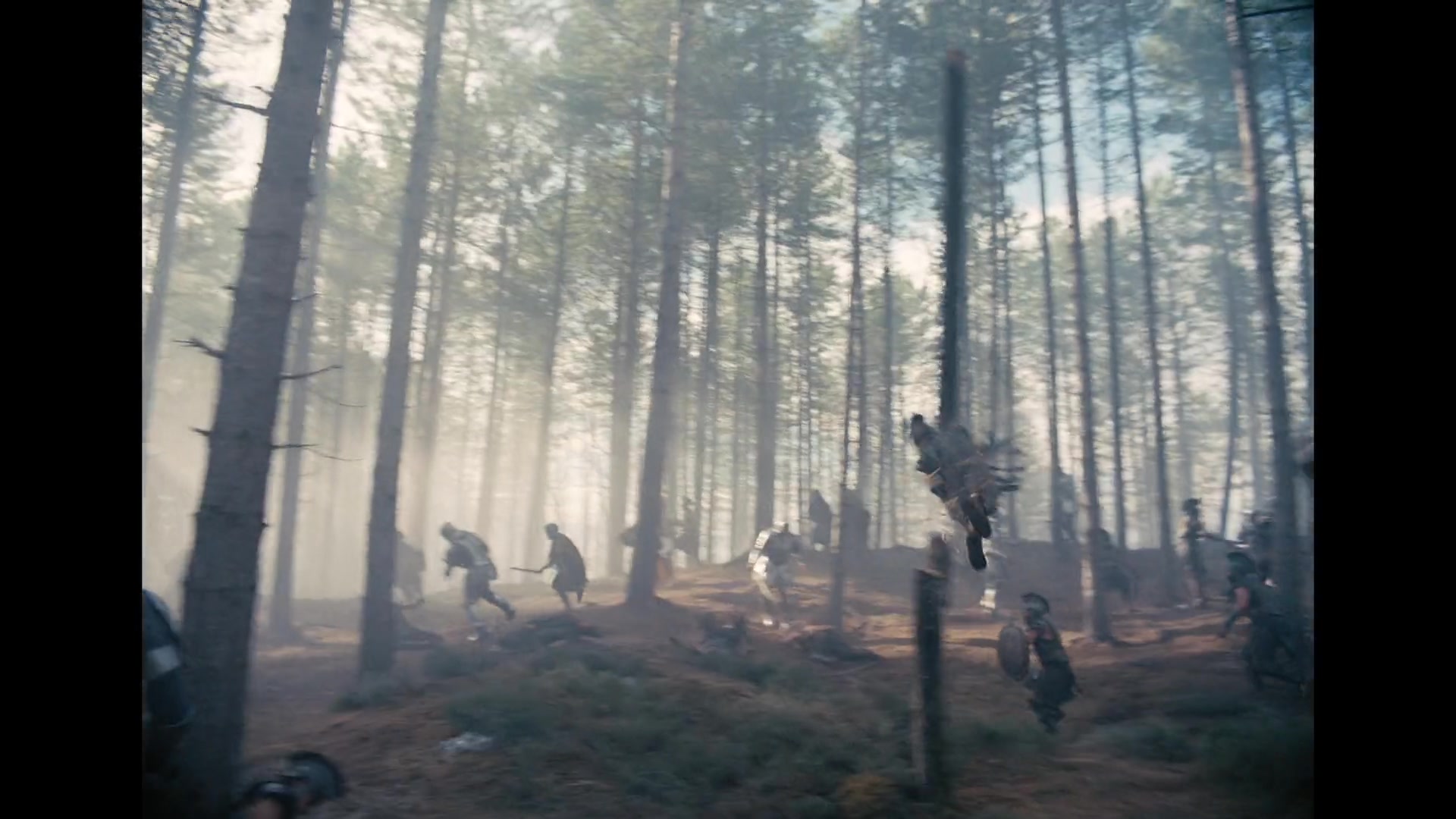
The trailer frame above shows an airborne fighter crossing a smoke-filled forest while armoured combat continues below. It is reproduced for that exact visual record: the image displays performance, staging, costume, atmosphere and physical screen action—the creative work an artistic prize can judge directly, unlike a confidential demographic filing.
Before release, Elon Musk publicly claimed that Nolan cast Lupita Nyong’o as Helen because “he wants the awards,” Variety reported. He supplied no evidence of Nolan's motive. RAISE does not require on-screen compliance: C plus D can qualify a film without Standard A. The existence of a diverse cast therefore cannot establish an Academy motive.
STUNT.BLOG found no published evidence that Nolan cast the film to satisfy RAISE, and the Academy's confidential process makes the accusation impossible to test at film level.
That is not a defence of the rule. It is an indictment. RAISE gives quota speculation an institutional basis and leaves artists and performers to rebut it without access to the filing that created the suspicion.
Nolan's answer—“All I can do is make the best film I possibly can in the most sincere way”—states the principle the Academy abandoned when it made demographics an eligibility variable.
Universal reported a $264.1 million worldwide opening, including $124.5 million in the United States and Canada. Reuters reported an A CinemaScore, a 97 percent Rotten Tomatoes audience rating at the time and that half of North American ticket buyers chose an enhanced format, including 23 percent IMAX. Our separate IMAX analysis examines that format choice. The success belongs to the film and its execution, not to RAISE.
RAISE neither caused the result nor deserves credit for it. It merely attached a secret compliance theory to public creative choices. If the work succeeds, the form adds nothing. If the work fails, the form saves nothing.
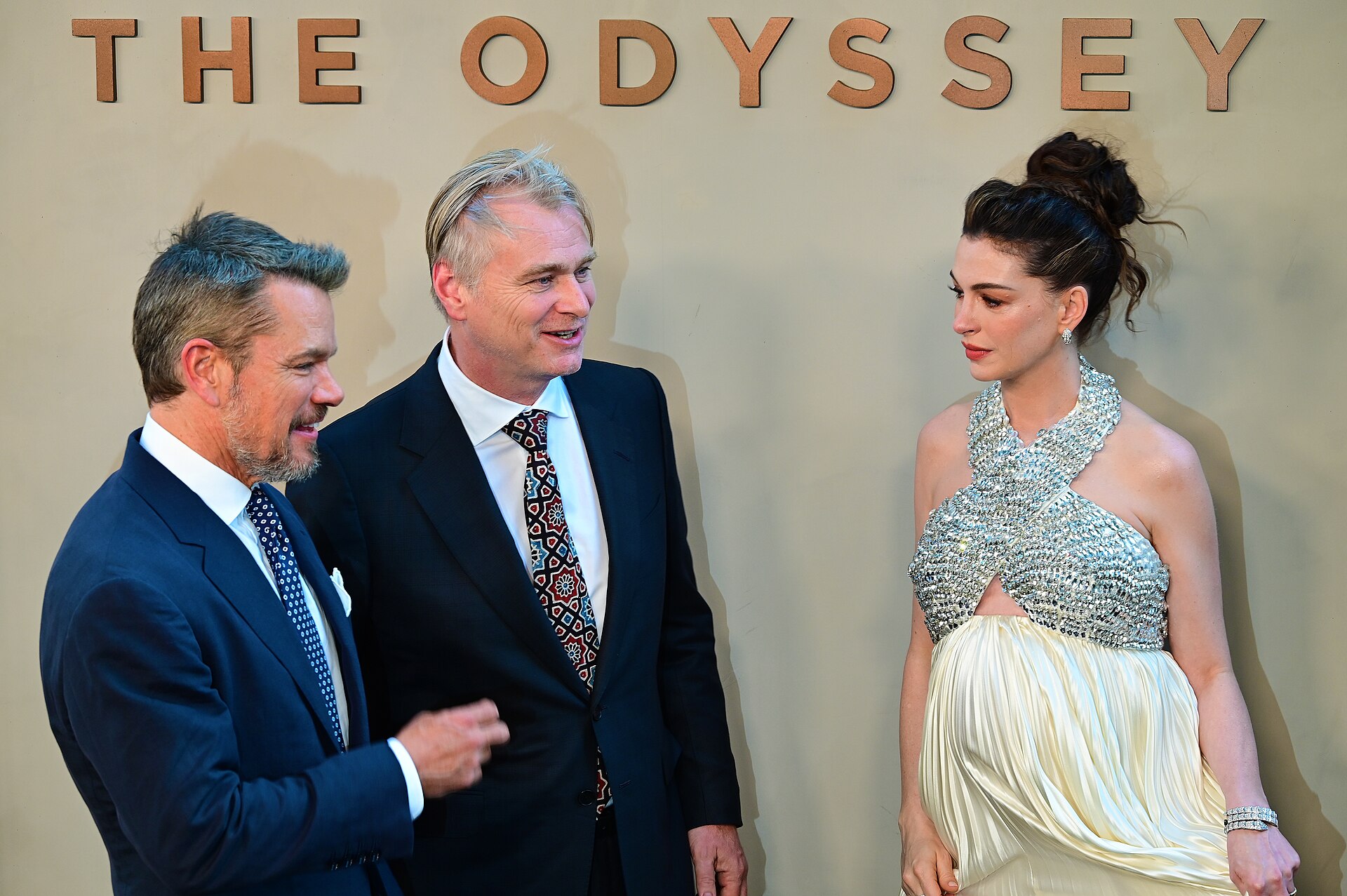
Documentary photograph / The Odyssey premiere, 2026
Success belongs to the film, not the form
The rule is intrusive and ineffective
Richard Dreyfuss attacked the intrusion on artistic independence. Spike Lee, from a radically different position, identified loopholes and the unchanged power of gatekeepers.
Their political disagreement does not save RAISE. It exposes the same structural failure from opposite directions: the rule is coercive enough to politicize eligibility and weak enough to leave institutional power untouched.
A rule condemned for both intrusion and ineffectiveness should not be tuned. It should be abolished.
The remedy is abolition
Remove Standards A through D from Best Picture eligibility before the next awards cycle. Do not replace them with another demographic certification. Publishing each film's compliance route would make RAISE less secret but no more legitimate. A public demographic entrance test is still a demographic entrance test.
The Academy's coming Stunt Design award states the proper principle: define a craft contribution and judge the work placed on screen. The difficult questions concern authorship, design, execution and responsibility—not whether a distributor can supply a consultant.
STUNT.BLOG is published within the SlamArtist.com Universe, which includes a Stunt Design practice area.
Best Picture should mean best picture
RAISE is not a defective version of a sound eligibility principle. It is the wrong principle for an artistic prize. It makes identity an official eligibility variable, lets corporate machinery bypass the film, hides the qualifying route and places sincere casting under permanent suspicion.
The Academy should abolish RAISE before the next cycle and reject any renamed substitute. Stories should be chosen by filmmakers, performances judged as performances and films judged by Academy members on their creative merits.
Abolish the gate. Best Picture should mean best picture.
Sources and evidence record18 entries
- Representation and Inclusion Standards — Academy of Motion Picture Arts and Sciences. Accessed 2026-07-26.
- Special Rules for the Best Picture of the Year Award — 99th Academy Awards — Academy of Motion Picture Arts and Sciences, 2026-05-01. Accessed 2026-07-26.
- Academy Establishes Representation and Inclusion Standards for Oscars Eligibility — Academy of Motion Picture Arts and Sciences, 2020-09-08. Accessed 2026-07-26.
- Spike Lee: The Academy’s Inclusion Standards Have ‘A Lot of Loopholes’ — Vanity Fair, 2020-10-07. Accessed 2026-07-26.
- Richard Dreyfuss — PBS / Firing Line with Margaret Hoover, 2023-05-05. Accessed 2026-07-26.
- DealBook Summit 2023 Bob Iger Interview Transcript — New York Times DealBook / Rev transcript, 2023-11-30. Accessed 2026-07-26.
- Disney’s Snow White (2025) — Box Office and Financial Information — The Numbers. Accessed 2026-07-26.
- Disney Loses $170 Million on ‘Snow White’ as Studio Reveals Movie Blew Its Budget — Forbes, 2026-02-10. Accessed 2026-07-26.
- Statham’s ‘A Working Man’ upsets ‘Snow White’ to take No. 1 at the box office — Associated Press, 2025-03-30. Accessed 2026-07-26.
- Disney Scales Back ‘Snow White’ Premiere Amid Zegler and Gadot Controversies — Variety, 2025-03-11. Accessed 2026-07-26.
- Rachel Zegler on ‘Snow White’ at D23 Expo 2022 — Extra. Accessed 2026-07-26.
- Disney Responds to Peter Dinklage’s ‘Snow White’ Criticism — Good Morning America / ABC News, 2022-01-26. Accessed 2026-07-26.
- Wee Man Rips Disney for Not Casting ‘Dwarves’ in ‘Snow White’ — TMZ, 2023-07-21. Accessed 2026-07-26.
- Disney Showcases Magical Look at ‘Snow White’ — The Walt Disney Company, 2023-10-27. Accessed 2026-07-26.
- ‘The Odyssey’ brings in $264.1 million in worldwide ticket sales, studio says — Reuters, 2026-07-19. Accessed 2026-07-26.
- Christopher Nolan: ‘If I owned a smartphone I’d be horribly distracted’ — The Telegraph, 2026-07-10. Accessed 2026-07-26.
- Elon Musk Slams Christopher Nolan Over Lupita Nyong’o’s ‘Odyssey’ Casting — Variety, 2026-07-10. Accessed 2026-07-26.
- The Odyssey — Official Trailer — Universal Pictures. Accessed 2026-07-26.



Loading approved comments…